. 2016 Jun:8:173-183.
doi: 10.1016/j.ebiom.2016.04.038. Epub 2016 May 13.

Genomic Profiling of Adult and Pediatric B-cell Acute Lymphoblastic Leukemia

Affiliations

Genomic Profiling of Adult and Pediatric B-cell Acute Lymphoblastic Leukemia

Yuan-Fang Liu et al. EBioMedicine. 2016 Jun.

Abstract

Genomic landscapes of 92 adult and 111 pediatric patients with B-cell acute lymphoblastic leukemia (B-ALL) were investigated using next-generation sequencing and copy number alteration analysis. Recurrent gene mutations and fusions were tested in an additional 87 adult and 93 pediatric patients. Among the 29 newly identified in-frame gene fusions, those involving MEF2D and ZNF384 were clinically relevant and were demonstrated to perturb B-cell differentiation, with EP300-ZNF384 inducing leukemia in mice. Eight gene expression subgroups associated with characteristic genetic abnormalities were identified, including leukemia with MEF2D and ZNF384 fusions in two distinct clusters. In subgroup G4 which was characterized by ERG deletion, DUX4-IGH fusion was detected in most cases. This comprehensive dataset allowed us to compare the features of molecular pathogenesis between adult and pediatric B-ALL and to identify signatures possibly related to the inferior outcome of adults to that of children. We found that, besides the known discrepancies in frequencies of prognostic markers, adult patients had more cooperative mutations and greater enrichment for alterations of epigenetic modifiers and genes linked to B-cell development, suggesting difference in the target cells of transformation between adult and pediatric patients and may explain in part the disparity in their responses to treatment.

Keywords: Adult B-ALL; MEF2D fusions; Next-generation sequencing; Pediatric B-ALL; ZNF384 fusions.


Figures

Fig. 1
Fig. 1
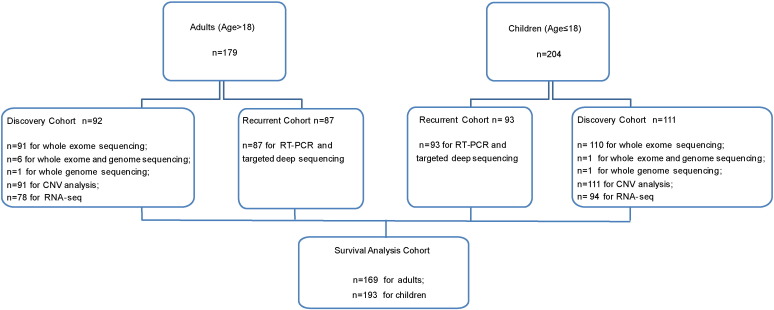
Flow chart of B-ALL patients in this study. A total of 383 patients including 179 adults (> 18 years) and 204 children (≤ 18 years) with newly diagnosed B-ALL were enrolled in this study. The 92 adults and 111 children with sufficient samples for next-generation sequencing formed the discovery cohort. An additional 87 adults and 93 children, designated the recurrent cohort, were screened for recurrent gene mutations and fusion genes.
Fig. 2
Fig. 2
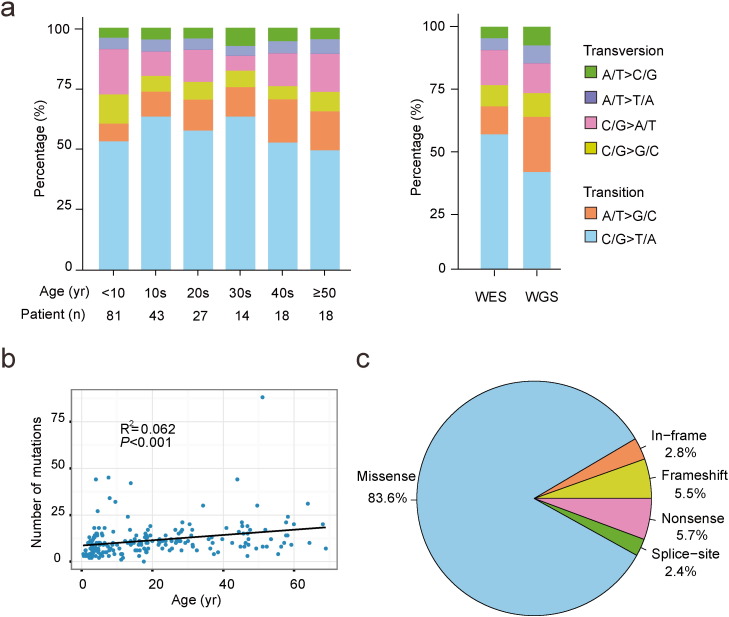
Patterns of somatic non-silent mutations identified by whole-exome sequencing (WES) and whole-genome sequencing (WGS) in B-ALL. (a) The percentages of distinct transitions and transversions of all non-silent SNVs in WES and WGS. (b) Correlation of mutation burdens and the age of B-ALL patients. A linear regression model was applied to calculate R2 and significant level, and a fitting curve was drawn to indicate the trend. (c) Proportions of non-silent mutation types according to their effects on protein coding.
Fig. 3
Fig. 3
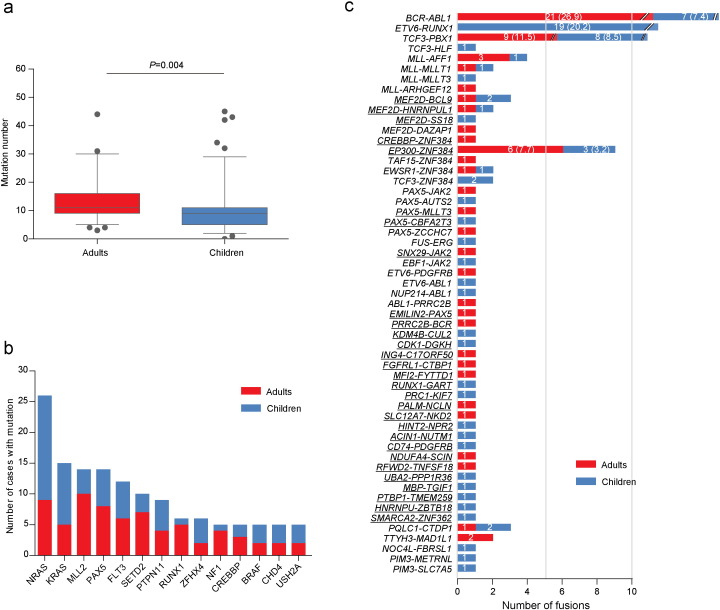
Comparison of non-silent mutations identified by whole-exome and whole-genome sequencing, and gene fusions identified by RNA-seq between adult and childhood samples. (a) Box plot of the numbers of non-silent mutations detected by whole-exome and whole-genome sequencing. (b) The distribution of the most frequently mutated genes. (c) All of the in-frame fusions identified by RNA-seq. The fusion events underlined represent novel fusion genes. The numbers in the bars are the exact numbers of cases with each fusion. For more commonly identified fusion genes, frequencies are indicated in the parenthesis after the numbers.
Fig. 4
Fig. 4
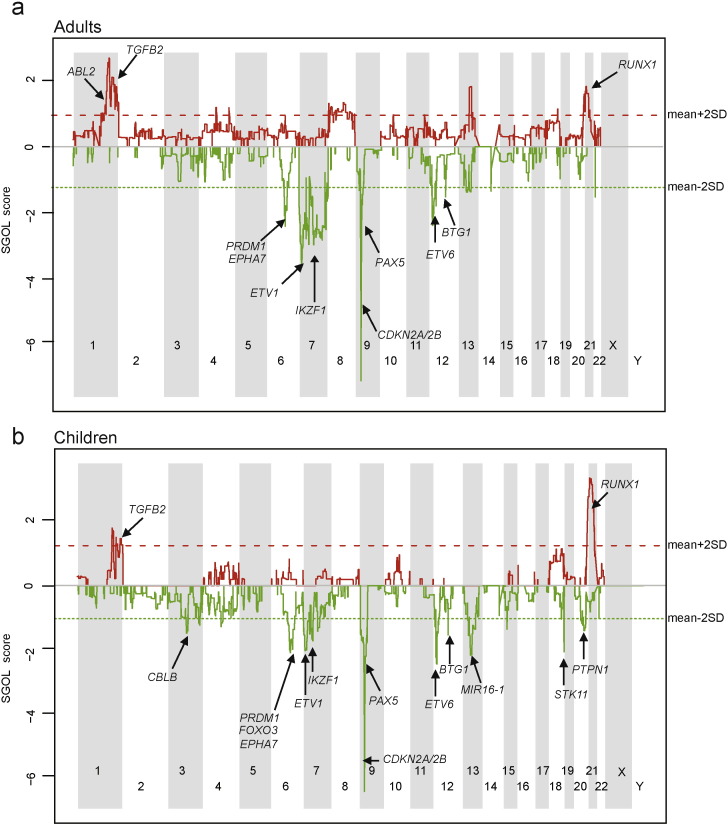
Spectrum of acquired CNVs between adult (a) and childhood (b) samples. Copy number gain and loss were indicated red or green separately.
Fig. 5
Fig. 5
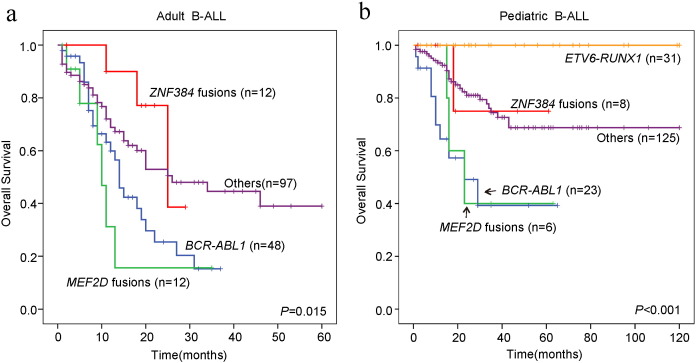
Overall survival of adult and pediatric B-ALL with the fusions involving MEF2D and ZNF384 genes. (a) Kaplan-Meier survival curves of adult B-ALL patients. (b) Kaplan-Meier survival curves of pediatric B-ALL patients.
Fig. 6
Fig. 6
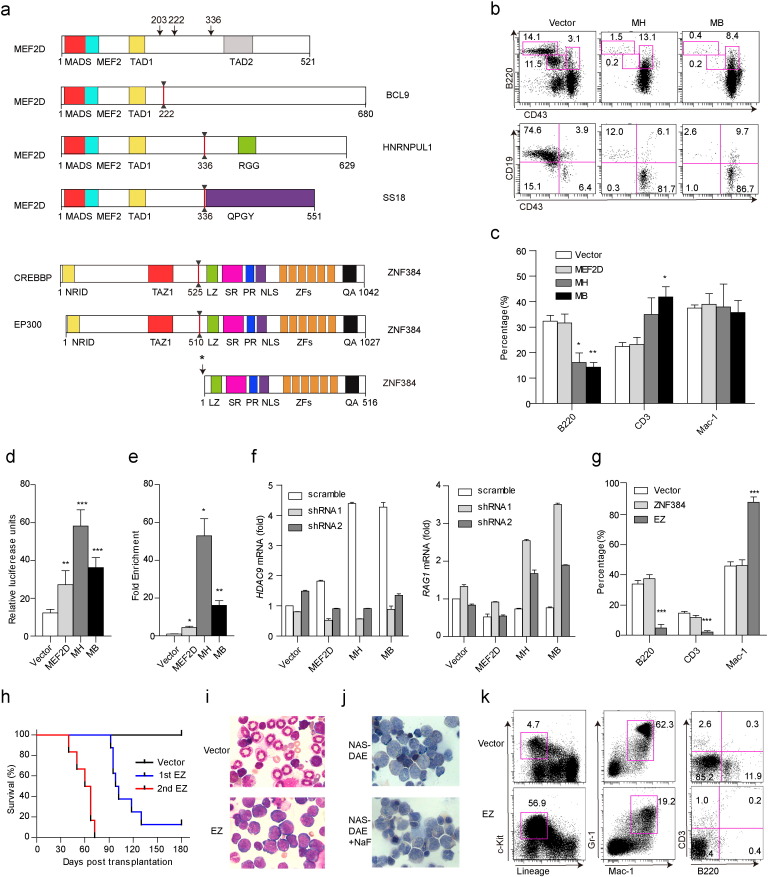
Schema of the wild-type and fusion proteins involving MEF2D and ZNF384 and results of functional studies. (a) Structural and functional domains of wild-type proteins and the most frequently identified fusion proteins. Arrows indicate breakpoints of the wild-type proteins. * labeled beside ZNF384 indicated two fusion points upstream of the coding region of ZNF384 (5 bp or 65 bp). (b) Representative flow cytometry results of the B-cell population of GFP+ bone marrow (BM) cells in vector control (Vector), MEF2D-HNRNPUL1 (MH) and MEF2D-BCL9 (MB) mice. The upper panel showed different B-cell subsets in total GFP+ cells (B220 vs. CD43), and bottom panel showed subsets in B220+ B-cell fraction (CD19 vs. CD43). (c) The percentages of B220, CD3 and Mac-1 in GFP+ peripheral blood (PB) cells in Vector, MEF2D, MH and MB mice. * and ** denote differences between MH and MB with Vector. (d) Responsiveness of the HDAC9 promoter to wild-type MEF2D and MEF2D fusions. 293T cells were cotransfected with a pGL4.15-Luc reporter containing the promoter region of HDAC9 and wild-type MEF2D or MEF2D fusions. Compared to wild-type MEF2D, MEF2D fusions displayed stronger transcriptional activity (MH vs. MEF2D, P < 0.001; MB vs. MEF2D, P = 0.03). (e) ChIP assays revealed MEF2D fusions had enhanced binding activity of HDAC9 promoter in 293T cells (MH vs. MEF2D, P = 0.01; MB vs. MEF2D, P = 0.02). ChIP DNA, immunoprecipitated with an anti-Myc tag antibody or goat IgG, was quantified with primers flanking HDAC9 promoter. (f) Cotransfection of wild-type MEF2D or MEF2D fusions plasmids and HDAC9 shRNA in JM1. Transfection of MEF2D fusions led to the upregulation of HDAC9 and the downregulation of RAG1, by contrast, reduced expression of HDAC9 mRNA level with transient transfection of HDAC9 shRNA caused remarkable rebound of RAG1 expression. (g) Flow cytometry analysis of different lineage markers of GFP+ PB in Vector, ZNF384, EP300-ZNF384 (EZ) four weeks after transplantation. (h) Kaplan-Meier survival curves of EZ mice (1st transplantation, n = 8; 2nd transplantation, n = 6). (i) Wright's staining of BM cytospin samples from control and EZ mice. (j) Naphthol AS-D acetate esterase (NAS-DAE) staining (up) and inhibition of NAS-DAE staining by sodium fluoride (NaF) (bottom) of the BM of EZ mice. (k) Flow cytometry analysis of the BM of EZ mice versus vector control. *P < 0.05; **P < 0.01; ***P < 0.001.
Fig. 7
Fig. 7
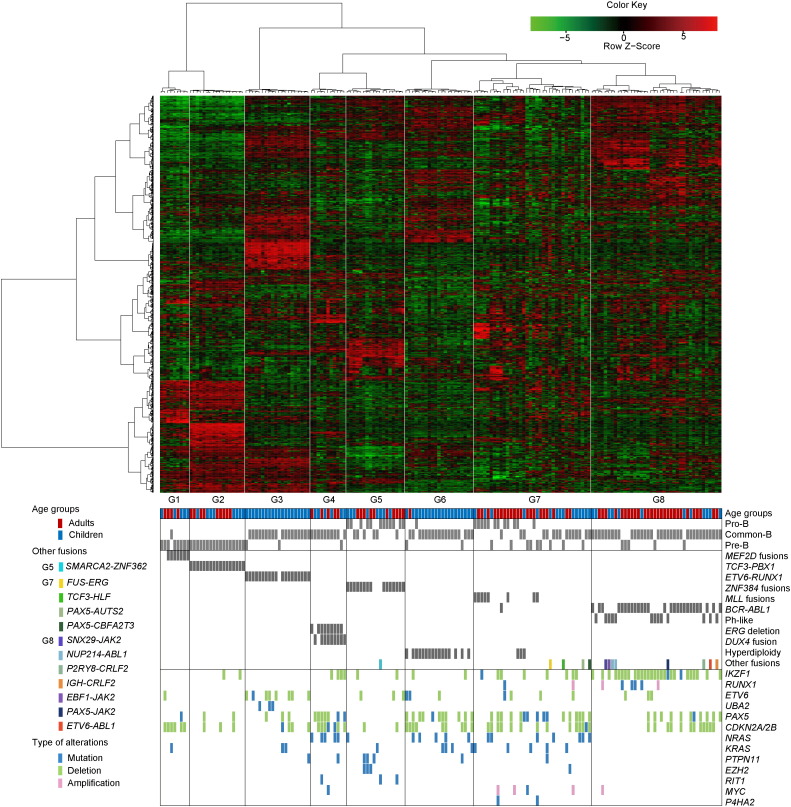
Unsupervised hierarchical clustering identified specific subgroups of patients with shared gene expression patterns. Columns indicate ALL patients and rows are genes. The bottom panels show immunophenotype and genotype for each sample as well as significantly altered genes (Fisher's exact P < 0.05) within each of the eight unique gene expression subgroups. The immunophenotypes were determined according to the recommendation of European Group for the Immunological Characterization of Leukemias (EGIL).
Fig. 8
Fig. 8
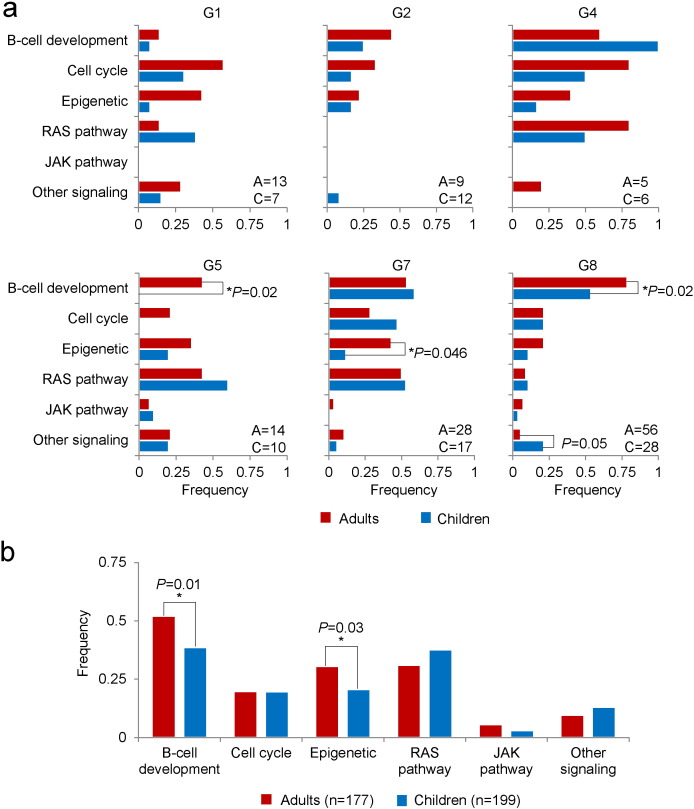
Comparisons between adult and pediatric B-ALL patients with regard to gene pathways. (a) Comparisons within each cluster subgroup excluding G3 and G6. A: number of adults; P: number of children. (b) Comparison of all the patients.

References

    1. Adzhubei I.A., Schmidt S., Peshkin L. A method and server for predicting damaging missense mutations. Nat. Methods. 2010;7:248–249. - PMC - PubMed
    1. Andersson A.K., Ma J., Wang J. The landscape of somatic mutations in infant MLL-rearranged acute lymphoblastic leukemias. Nat. Genet. 2015;47:330–337. - PMC - PubMed
    1. Bassan R., Hoelzer D. Modern therapy of acute lymphoblastic leukemia. J. Clin. Oncol. 2011;29:532–543. - PubMed
    1. Chalandon Y., Thomas X., Hayette S. Randomized study of reduced-intensity chemotherapy combined with imatinib in adults with Ph-positive acute lymphoblastic leukemia. Blood. 2015;125:3711–3719. - PubMed
    1. Chen B., Wang Y.-Y., Shen Y. Newly diagnosed acute lymphoblastic leukemia in China (I): abnormal genetic patterns in 1346 childhood and adult cases and their comparison with the reports from Western countries. Leukemia. 2012;26:1608–1616. - PubMed

MeSH terms

Substances