


State of the art of diagnosis of rickettsial diseases: the use of blood specimens for diagnosis of scrub typhus, spotted fever group rickettsiosis, and murine typhus
- PMID: 27429138
- PMCID: PMC5029442
- DOI: 10.1097/QCO.0000000000000298
State of the art of diagnosis of rickettsial diseases: the use of blood specimens for diagnosis of scrub typhus, spotted fever group rickettsiosis, and murine typhus
Abstract
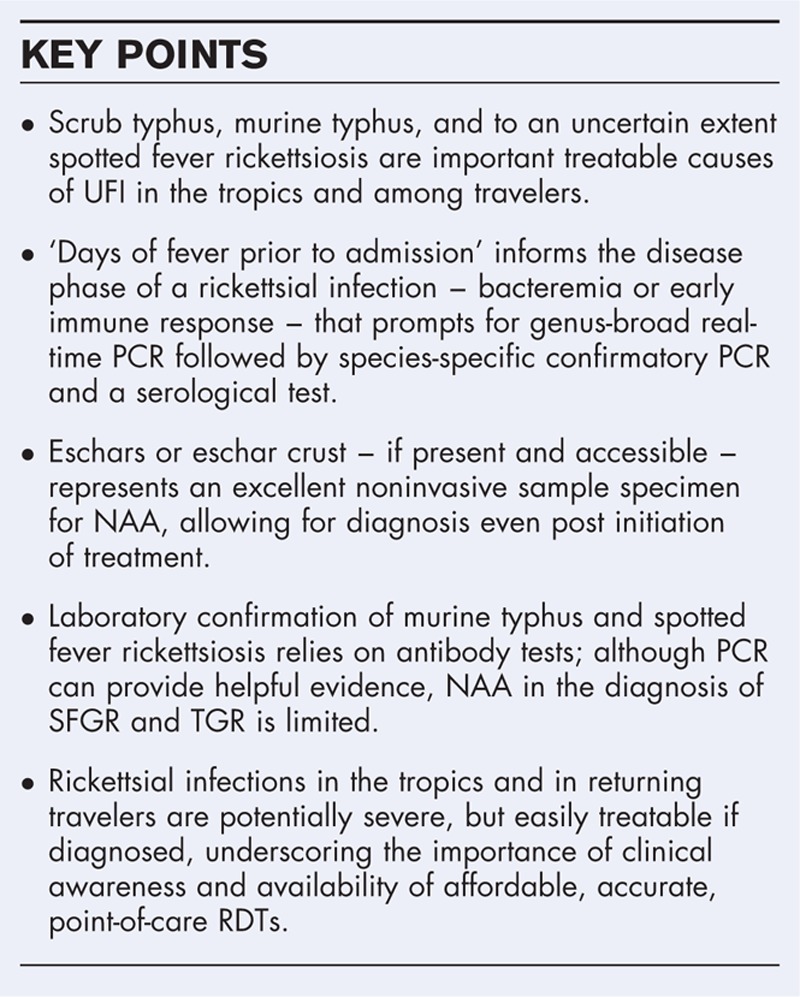
Purpose of review: With improved malaria control, acute undifferentiated febrile illness studies in tropical regions reveal a startling proportion of rickettsial illnesses, especially scrub typhus, murine typhus, and spotted fever group rickettsioses. Laboratory diagnosis of these infections evolved little over the past 40 years, but combinations of technologies like PCR and loop-mediated isothermal amplification, with refined rapid diagnostic tests and/or ELISA, are promising for guidance for early antirickettsial treatment.
Recent findings: The long-term reliance on serological tests - useful only late in rickettsial infections - has led to underdiagnosis, inappropriate therapies, and undocumented morbidity and mortality. Recent approaches integrate nucleic acid amplification and recombinant protein-based serological tests for diagnosing scrub typhus. Optimized using Bayesian latent class analyses, this strategy increases diagnostic confidence and enables early accurate diagnosis and treatment - a model to follow for lagging progress in murine typhus and spotted fever.
Summary: A laboratory diagnostic paradigm shift in rickettsial infections is evolving, with replacement of indirect immunofluorescence assay by the more objective ELISA coupled with nucleic acid amplification assays to expand the diagnostic window toward early infection intervals. This approach supports targeted antirickettsial therapy, reduces morbidity and mortality, and provides a robust evidence base for further development of diagnostics and vaccines.
References
-
- Mayxay M, Castonguay-Vanier J, Chansamouth V, et al. Causes of nonmalarial fever in Laos: a prospective study. Lancet Glob Health 2013; 1:e46–e54. - PMC - PubMed
-
Comprehensive ‘causes of febrile illness study,’ which contributed significantly to the discovery of the importance of rickettsial illnesses, and introduced the aspect of targeting ‘doxycycline-treatable illnesses,’ which cover rickettsioses and leptospirosis.
Publication types
MeSH terms
Grants and funding
LinkOut - more resources
Full Text Sources
Other Literature Sources
Research Materials
Miscellaneous
