Schistosomiasis Sustained Control Program in Ethnic Groups Around Ninefescha (Eastern Senegal)
- PMID: 27430549
- PMCID: PMC5014268
- DOI: 10.4269/ajtmh.15-0125
Schistosomiasis Sustained Control Program in Ethnic Groups Around Ninefescha (Eastern Senegal)
Abstract
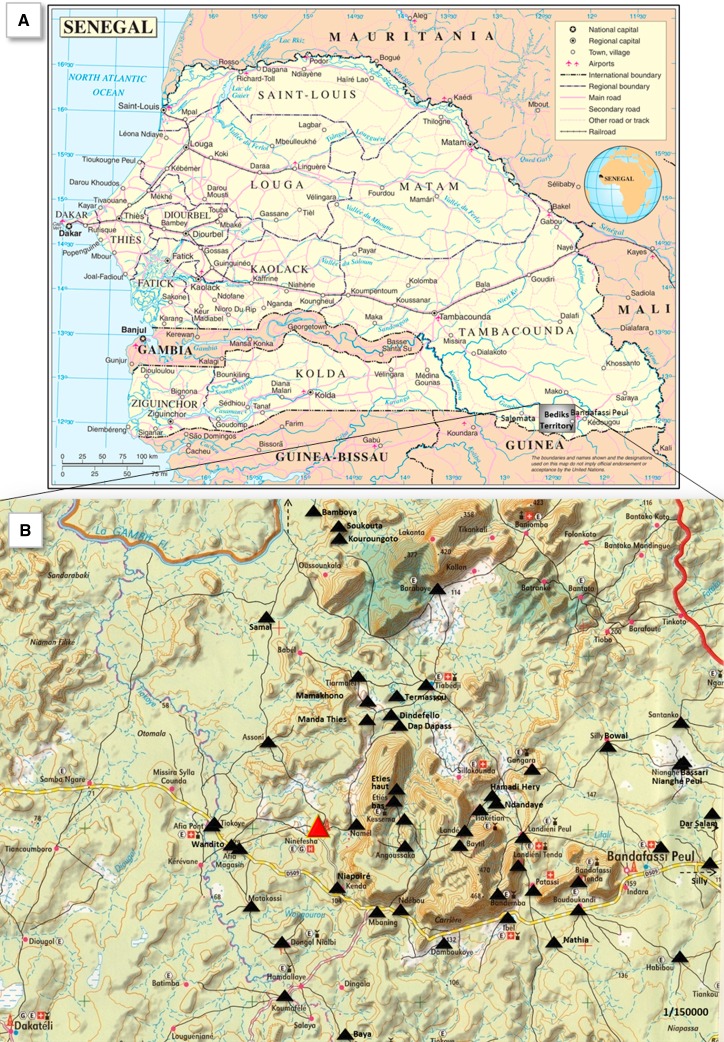
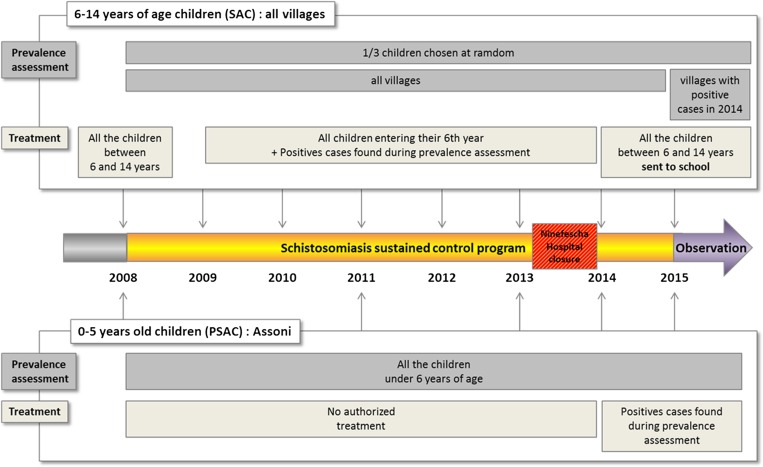
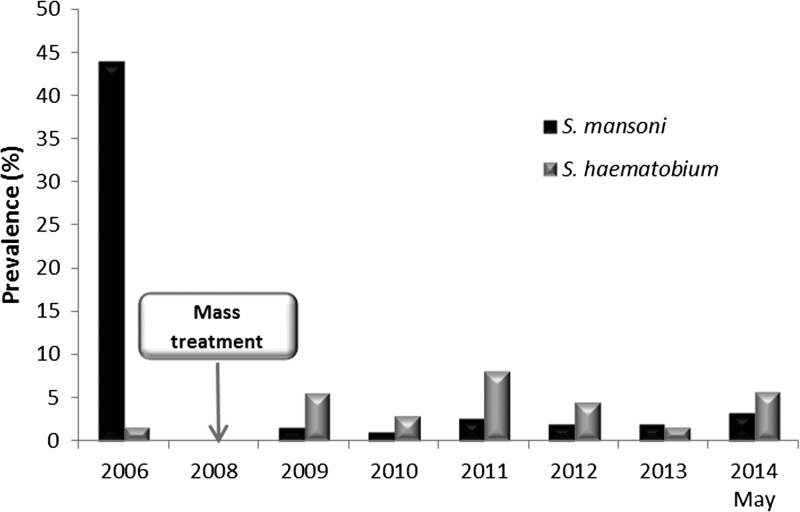
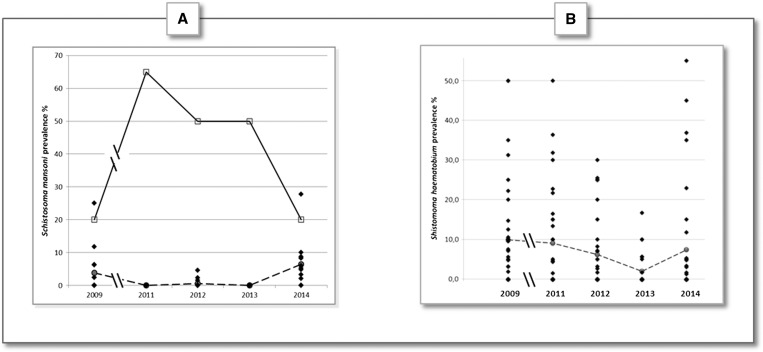
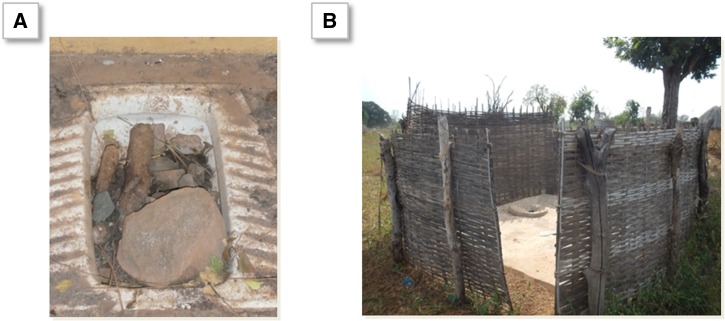
Schistosomiasis is the second most significant parasitic disease in children in several African countries. For this purpose, the "Programme National de Lutte contre les Bilharzioses" (PNLB) was developed in partnership with the World Health Organization (WHO) to control this disease in Senegal. However, geographic isolation of Bedik ethnic groups challenged implementation of the key elements of the schistosomiasis program in eastern Senegal, and therefore, a hospital was established in Ninefescha to improve access to health care as well as laboratory support for this population. The program we have implemented from 2008 in partnership with the PNLB/WHO involved campaigns to 1) evaluate schistosomiasis prevalence in children of 53 villages around Ninefescha hospital, 2) perform a mass drug administration following the protocol established by the PNLB in school-aged children, 3) monitor annual prevalence, 4) implement health education campaigns, and 5) oversee the building of latrines. This campaign led to a drop in schistosomiasis prevalence but highlighted that sustainable schistosomiasis control by praziquantel treatment, awareness of the use of latrines, and inhabitants' voluntary commitment to the program are crucial to improve Schistosoma elimination. Moreover, this study revealed that preschool-aged children, for whom praziquantel was not recommended until 2014 in Senegal, constituted a significant reservoir for the parasite.
© The American Society of Tropical Medicine and Hygiene.
Figures
References
-
- Lai YS, Biedermann P, Ekpo UF, Garba A, Mathieu E, Midzi N, Mwinzi P, N'Goran EK, Raso G, Assaré RK, Sacko M, Schur N, Talla I, Tchuenté LA, Touré S, Winkler MS, Utzinger J, Vounatsou P. Spatial distribution of schistosomiasis and treatment needs in sub-Saharan Africa: a systematic review and geostatistical analysis. Lancet Infect Dis. 2015;15:927–940. - PubMed
-
- Gray DJ, McManus DP, Li Y, Williams GM, Bergquist R, Ross AG. Schistosomiasis elimination: lessons from the past guide the future. Lancet Infect Dis. 2010;10:733–736. - PubMed
-
- Duthe G, Faye SH, Guyavarch E, Arduin P, Kanté AM, Diallo A, Laurent R, Marra A, Pison G. Change of protocol in the verbal autopsy method and measure of malaria mortality in rural areas in Senegal [in French] Bull Soc Pathol Exot. 2010;103:327–332. - PubMed
MeSH terms
Substances
Grants and funding
LinkOut - more resources
Full Text Sources
Other Literature Sources