


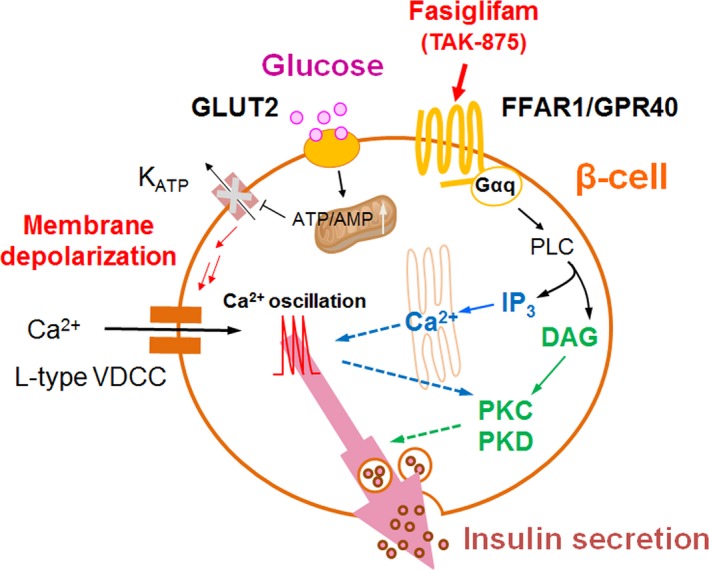
Fasiglifam (TAK-875) has dual potentiating mechanisms via Gαq-GPR40/FFAR1 signaling branches on glucose-dependent insulin secretion
- PMID: 27433346
- PMCID: PMC4876146
- DOI: 10.1002/prp2.237
Fasiglifam (TAK-875) has dual potentiating mechanisms via Gαq-GPR40/FFAR1 signaling branches on glucose-dependent insulin secretion
Abstract
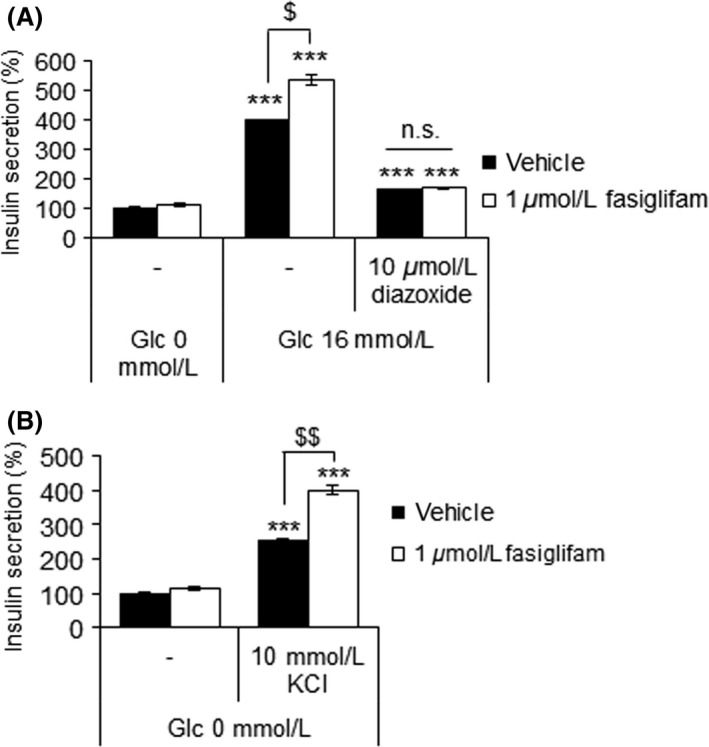
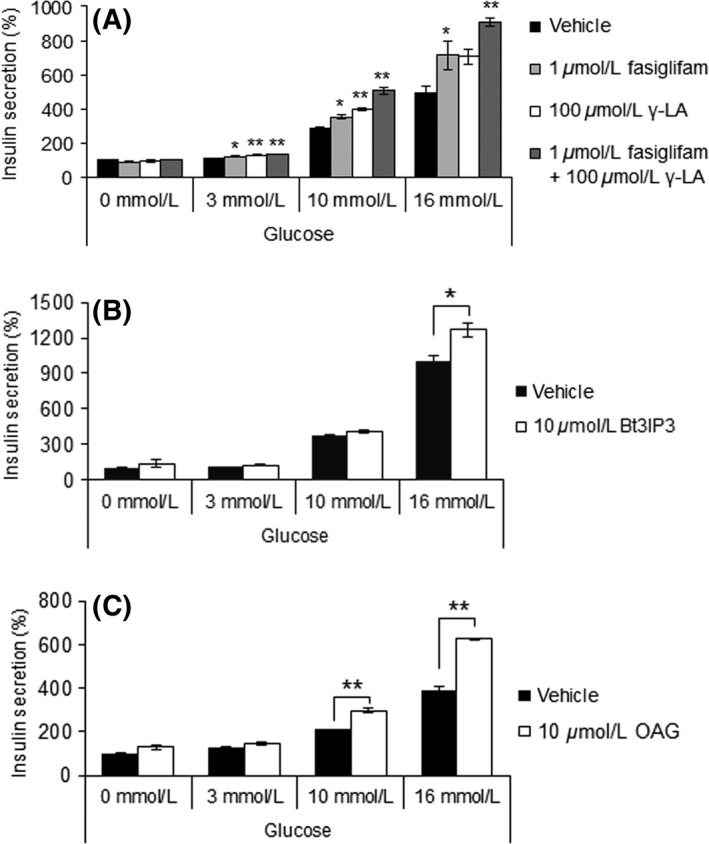
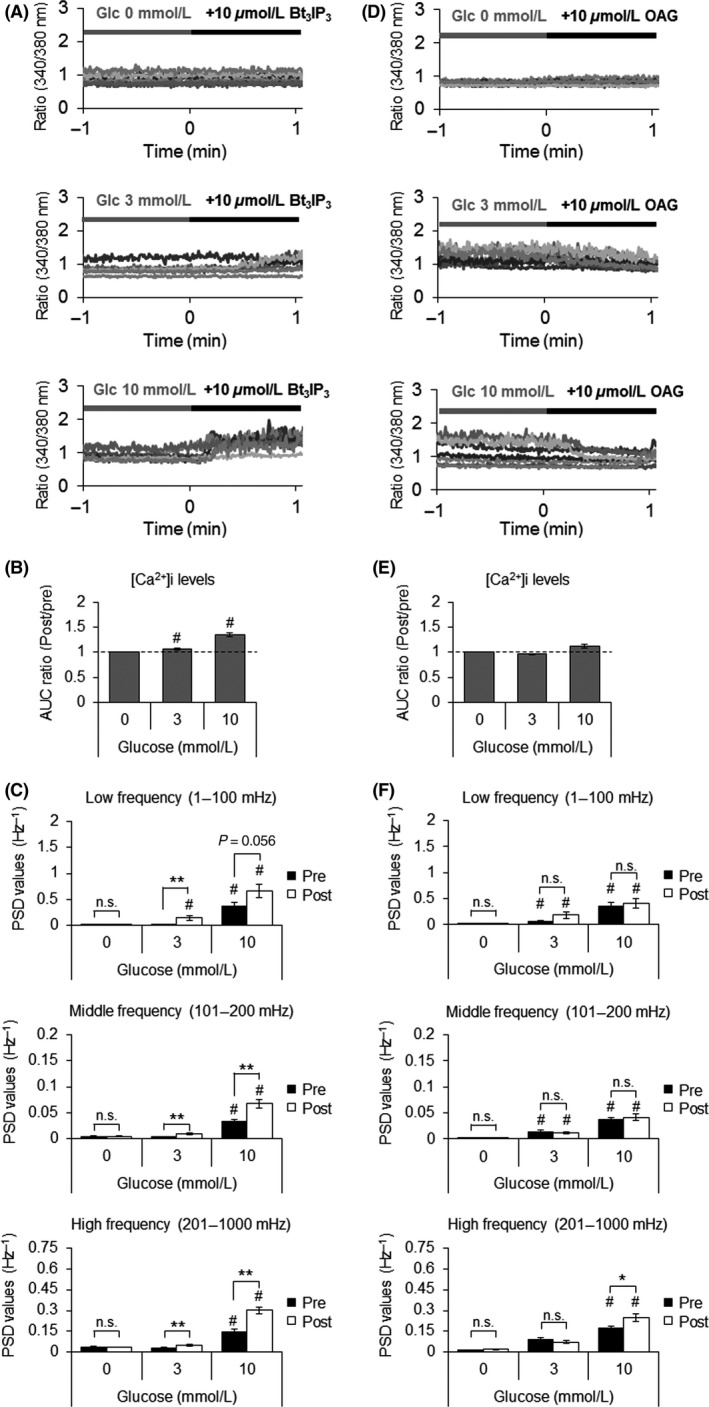
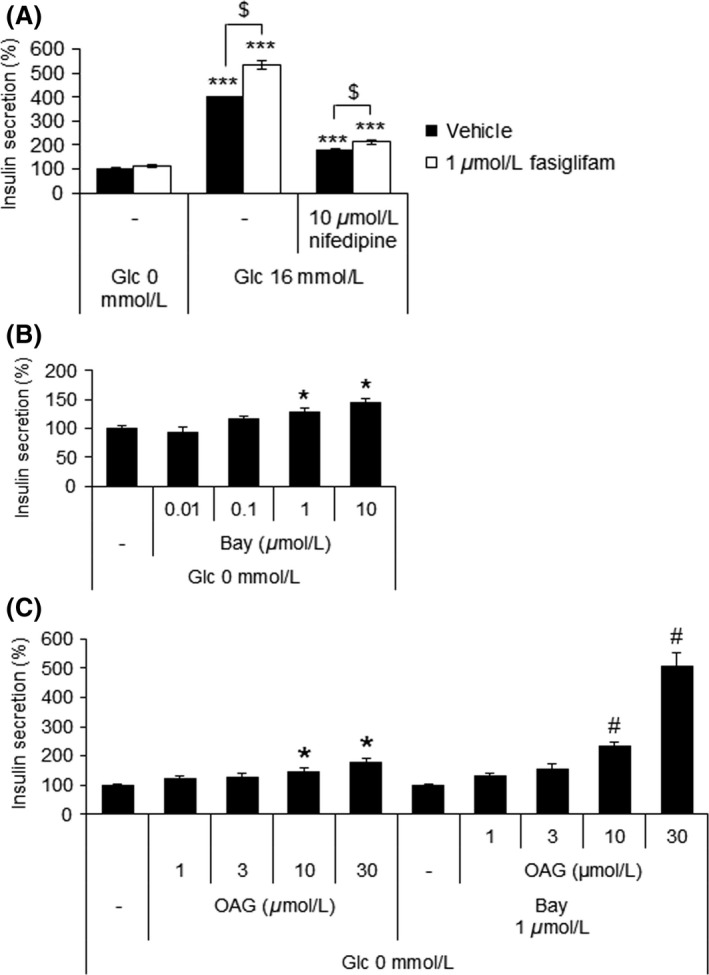
Fasiglifam (TAK-875) is a free fatty acid receptor 1 (FFAR1)/G-protein-coupled receptor 40 (GPR40) agonist that improves glycemic control in type 2 diabetes with minimum risk of hypoglycemia. Fasiglifam potentiates glucose-stimulated insulin secretion (GSIS) from pancreatic β-cells glucose dependently, although the precise mechanism underlying the glucose dependency still remains unknown. Here, we investigated key cross-talk between the GSIS pathway and FFAR1 signaling, and Ca(2+) dynamics using mouse insulinoma MIN6 cells. We demonstrated that the glucose-dependent insulinotropic effect of fasiglifam required membrane depolarization and that fasiglifam induced a glucose-dependent increase in intracellular Ca(2+) level and amplification of Ca(2+) oscillations. This differed from the sulfonylurea glimepiride that induced changes in Ca(2+) dynamics glucose independently. Stimulation with cell-permeable analogs of IP3 or diacylglycerol (DAG), downstream second messengers of Gαq-FFAR1, augmented GSIS similar to fasiglifam, indicating their individual roles in the potentiation of GSIS pathway. Intriguingly, the IP3 analog triggered similar Ca(2+) dynamics to fasiglifam, whereas the DAG analog had no effect. Despite the lack of an effect on Ca(2+) dynamics, the DAG analog elicited synergistic effects on insulin secretion with Ca(2+) influx evoked by an L-type voltage-dependent calcium channel opener that mimics glucose-dependent Ca(2+) dynamics. These results indicate that the Gαq signaling activated by fasiglifam enhances GSIS pathway via dual potentiating mechanisms in which IP3 amplifies glucose-induced Ca(2+) oscillations and DAG/protein kinase C (PKC) augments downstream secretory mechanisms independent of Ca(2+) oscillations.
Keywords: Ca2+ oscillation; FFAR1/GPR40; fasiglifam (TAK‐875); glucose‐stimulated insulin secretion (GSIS); type 2 diabetes mellitus (T2DM).
Figures

References
-
- American Diabetes Association (2015). Standards of medical care in diabetes–2015: 7. Approaches to Glycemic Treatment. Diabetes care 38(Suppl. 1): S41–48. - PubMed
-
- Berggren PO, Yang SN, Murakami M, Efanov AM, Uhles S, Kohler M, et al. (2004). Removal of Ca2+ channel beta3 subunit enhances Ca2+ oscillation frequency and insulin exocytosis. Cell 119: 273–284. - PubMed
-
- Bergsten P (1995). Slow and fast oscillations of cytoplasmic Ca2+ in pancreatic islets correspond to pulsatile insulin release. Am J Physiol 268: E282–E287. - PubMed
-
- Bergsten P (2002). Role of oscillations in membrane potential, cytoplasmic Ca2+, and metabolism for plasma insulin oscillations. Diabetes 51(Suppl 1): S171–S176. - PubMed
LinkOut - more resources
Full Text Sources
Other Literature Sources
Miscellaneous
