


The Association between ESR and CRP and Systemic Hypertension in Sarcoidosis
- PMID: 27433355
- PMCID: PMC4940541
- DOI: 10.1155/2016/2402515
The Association between ESR and CRP and Systemic Hypertension in Sarcoidosis
Abstract
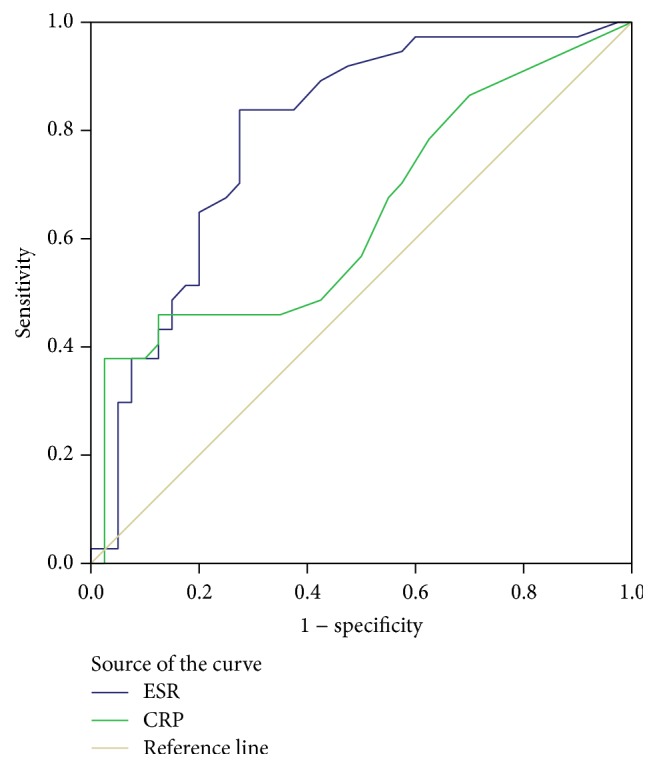
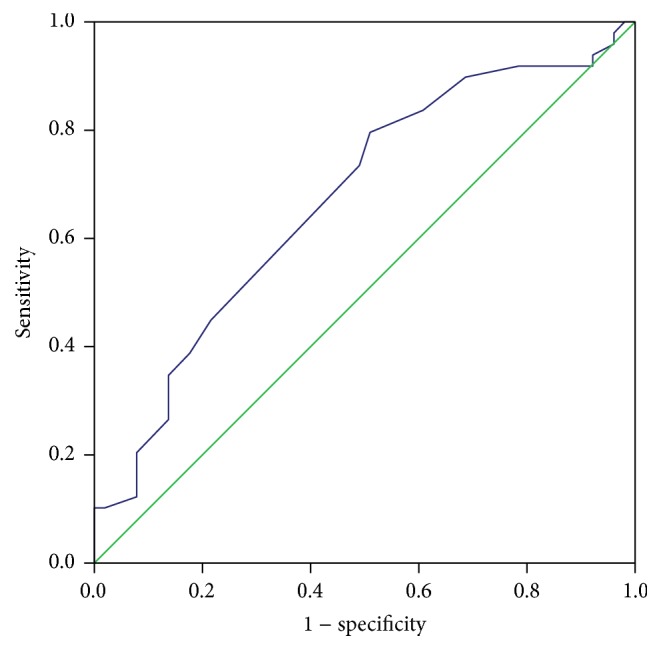
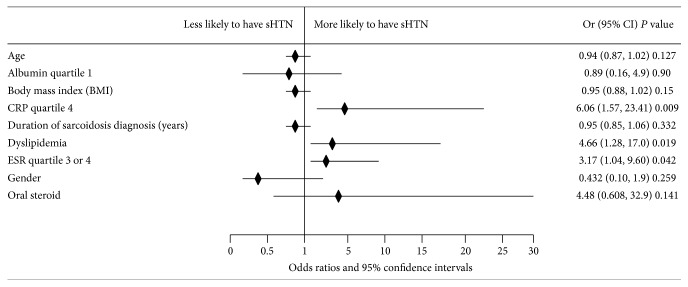
Introduction. The association between the level of systemic inflammation and systemic hypertension (sHTN) among subjects with sarcoidosis has not been previously explored. Methods. A retrospective study was conducted to investigate the relation between the level of systemic inflammation in sarcoidosis, measured by various serum inflammatory markers, and sHTN. Results. Among a total of 108 cases with sarcoidosis (mean age: 53.4 years, 76.9% females), 55 (50.9%) had sHTN and 53 (49.1%) were normotensive. ESR was highly associated with sHTN. The patients with sHTN had higher mean ESR levels compared with normotensives (48.8 ± 35 versus 23.2 ± 27 mm/hr, resp.; P = 0.001). ROC curve analysis for ESR revealed an AUC value of 0.795 (95% CI: 0.692-0.897; P = 0.0001). With regard to CRP, there was a trend towards higher mean values in sHTN group (3.4 versus 1.7 mg/L; P = 0.067) and significantly higher prevalence of sHTN in the highest CRP quartile compared to the lowest one (69.6% versus 30%; OR 4.95; P = 0.017). ROC curve analysis for CRP revealed an AUC value of 0.644 (95% CI: 0.518-0.769; P = 0.03). On multivariate analysis, ESR and the CRP remained independent predictors for sHTN among subjects with sarcoidosis. Conclusion. Systemic inflammation is associated with the presence of sHTN in sarcoidosis.
Figures
References
-
- Ford E. S., Giles W. H. Serum C-reactive protein and fibrinogen concentrations and self-reported angina pectoris and myocardial infarction: findings from National Health and Nutrition Examination Survey III. Journal of Clinical Epidemiology. 2000;53(1):95–102. doi: 10.1016/s0895-4356(99)00143-2. - DOI - PubMed
LinkOut - more resources
Full Text Sources
Other Literature Sources
Research Materials
Miscellaneous
