


A Systematic Review of Clinical Outcomes and Prognostic Factors for Patients Undergoing Surgery for Spinal Metastases Secondary to Breast Cancer
- PMID: 27433433
- PMCID: PMC4947406
- DOI: 10.1055/s-0035-1564807
A Systematic Review of Clinical Outcomes and Prognostic Factors for Patients Undergoing Surgery for Spinal Metastases Secondary to Breast Cancer
Abstract
Study design: Review of the literature.
Objective: Surgery and cement augmentation procedures are effective palliative treatment of symptomatic spinal metastases. Our objective is to systematically review the literature to describe the survival, prognostic factors, and clinical outcomes of surgery and cement augmentation procedures for breast cancer metastases to the spine.
Methods: We performed a literature review using PubMed to identify articles that reported outcomes and/or prognostic factors of the breast cancer patient population with spinal metastases treated with any surgical technique since 1990.
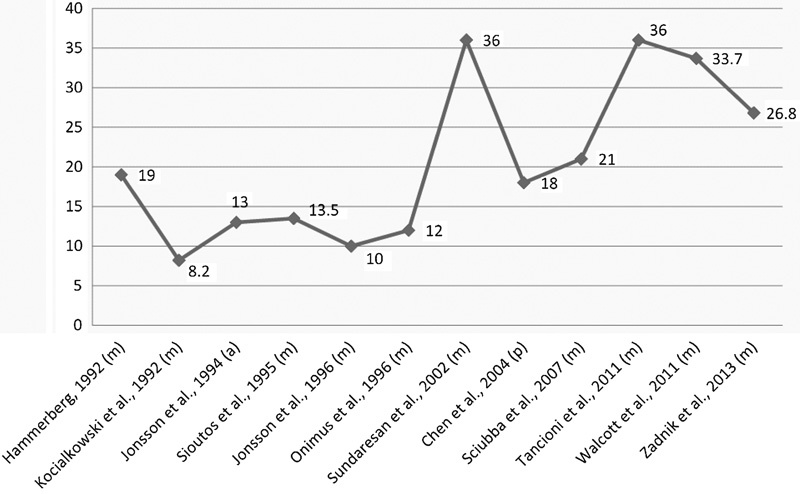
Results: The median postoperative survival for metastatic breast cancer was 21.7 months (8.2 to 36 months), the mean rate of any pain improvement was 92.9% (76 to 100%), the mean rate of neurologic improvement was 63.8% (53 to 100%), the mean rate of neurologic decline was 4.1% (0 to 8%), and the local tumor control rate was 92.6% (89 to 100%). Kyphoplasty studies reported a high rate of pain control in selected patients. Negative prognostic variables included hormonal (estrogen and progesterone) and human epidermal growth factor receptor 2 (HER2) receptor refractory tumor status, high degree of axillary lymph node involvement, and short disease-free interval (DFI). All other clinical or prognostic parameters were of low or insufficient strength.
Conclusion: With respect to clinical outcomes, surgery consistently yielded neurologic improvements in patients presenting with a deficit with a minimal risk of worsening; however, negative prognostic factors associated with shorter survival following surgery include estrogen receptor/progesterone receptor negativity, HER2 negativity, and a short DFI.
Keywords: breast cancer; kyphoplasty; metastasis; spine; surgery; survival; tumor; vertebroplasty.
Conflict of interest statement
Figures
References
-
- Esteva F J, Valero V, Pusztai L, Boehnke-Michaud L, Buzdar A U, Hortobagyi G N. Chemotherapy of metastatic breast cancer: what to expect in 2001 and beyond. Oncologist. 2001;6(2):133–146. - PubMed
-
- American Cancer Society . Atlanta, GA: American Cancer Society; 2014. Cancer Facts & Figures 2014.
-
- Zadnik P L, Hwang L, Ju D G. et al.Prolonged survival following aggressive treatment for metastatic breast cancer in the spine. Clin Exp Metastasis. 2014;31(1):47–55. - PubMed
-
- Eleraky M, Papanastassiou I, Vrionis F D. Management of metastatic spine disease. Curr Opin Support Palliat Care. 2010;4(3):182–188. - PubMed
Publication types
Grants and funding
LinkOut - more resources
Full Text Sources
Other Literature Sources
Research Materials
Miscellaneous
