


The Strategy to Survive Primary Malaria Infection: An Experimental Study on Behavioural Changes in Parasitized Birds
- PMID: 27434058
- PMCID: PMC4951008
- DOI: 10.1371/journal.pone.0159216
The Strategy to Survive Primary Malaria Infection: An Experimental Study on Behavioural Changes in Parasitized Birds
Abstract
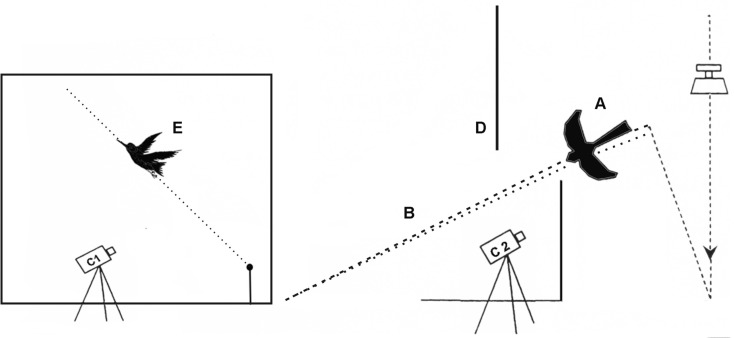
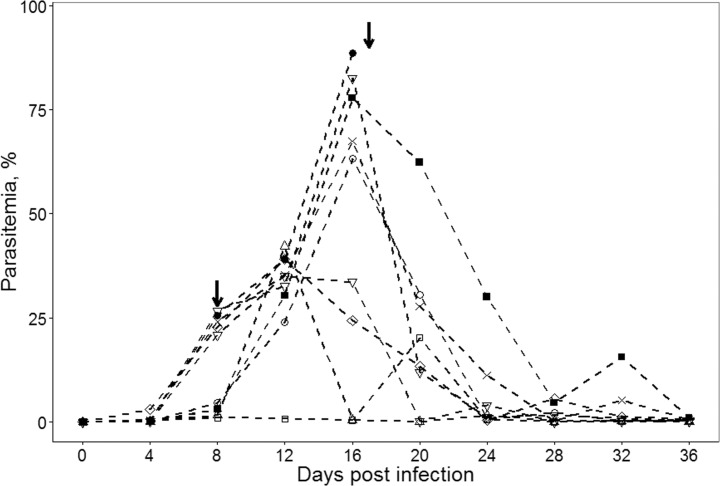
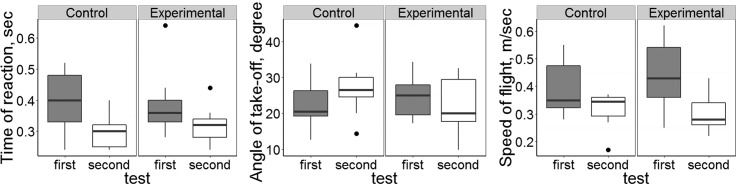
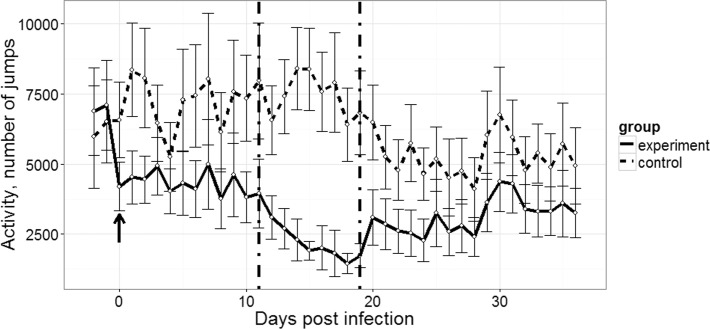
Avian malaria parasites (Haemosporida, Plasmodium) are of cosmopolitan distribution, and they have a significant impact on vertebrate host fitness. Experimental studies show that high parasitemia often develops during primary malaria infections. However, field studies only occasionally reveal high parasitemia in free-living birds sampled using the traditional methods of mist-netting or trapping, and light chronic infections predominate. The reason for this discrepancy between field observation and experimental data remains insufficiently understood. Since mist-netting is a passive capture method, two main parameters determine its success in sampling infected birds in wildlife, i. e. the presence of parasitized birds at a study site and their mobility. In other words, the trapping probability depends on the survival rate of birds and their locomotor activity during infection. Here we test (1) the mortality rate of wild birds infected with Plasmodium relictum (the lineage pSGS1), (2) the changes in their behaviour during presence of an aerial predator, and (3) the changes in their locomotor activity at the stage of high primary parasitemia.We show that some behavioural features which might affect a bird's survival during a predator attack (time of reaction, speed of flush flight and take off angle) did not change significantly during primary infection. However, the locomotor activity of infected birds was almost halved compared to control (non-infected) birds during the peak of parasitemia. We report (1) the markedly reduced mobility and (2) the 20% mortality rate caused by P. relictum and conclude that these factors are responsible for the underrepresentation of birds in mist nets and traps during the stage of high primary parasitemia in wildlife. This study indicates that the widespread parasite, P. relictum (pSGS1) influences the behaviour of birds during primary parasitemia. Experimental studies combined with field observations are needed to better understand the mechanisms of pathogenicity of avian malaria parasites and their influence on bird populations.
Conflict of interest statement
Figures
References
-
- Moore J. Parasites and the Behavior of Animals. Oxford University Press; Oxford; 2002. Available: http://www.jstor.org/stable/3285495?origin=crossref.
-
- Mouritsen KN, Poulin R. Parasites boosts biodiversity and changes animal community structure by trait-mediated indirect effects. Oikos. 2005;108: 344–350. 10.1111/j.0030-1299.2005.13507.x - DOI
-
- Thompson JN. Symbiont-induced speciation. Biol J Linn Soc. 1987;32: 385–393.
MeSH terms
Substances
LinkOut - more resources
Full Text Sources
Other Literature Sources
