


Annual variation in daily light exposure and circadian change of melatonin and cortisol concentrations at a northern latitude with large seasonal differences in photoperiod length
- PMID: 27435153
- PMCID: PMC4952149
- DOI: 10.1186/s40101-016-0103-9
Annual variation in daily light exposure and circadian change of melatonin and cortisol concentrations at a northern latitude with large seasonal differences in photoperiod length
Abstract
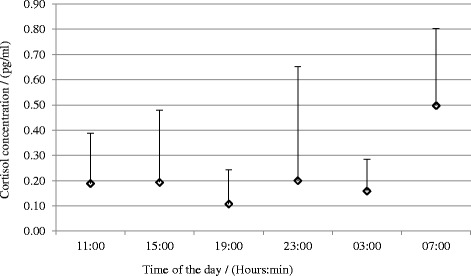
Background: Seasonal variations in physiology and behavior have frequently been reported. Light is the major zeitgeber for synchronizing internal circadian rhythms with the external solar day. Non-image forming effects of light radiation, for example, phase resetting of the circadian rhythms, melatonin suppression, and acute alerting effects, depend on several characteristics of the light exposure including intensity, timing and duration, spectral composition and previous light exposure, or light history. The aim of the present study was to report on the natural pattern of diurnal and seasonal light exposure and to examine seasonal variations in the circadian change of melatonin and cortisol concentrations for a group of Swedish office workers.
Methods: Fifteen subjects participated in a field study that was carried out in the south of Sweden. Ambulatory equipment was used for monthly measurements of the daily exposure to light radiation across the year. The measurements included illuminance and irradiance. The subjects collected saliva samples every 4 h during 1 day of the monthly measuring period.
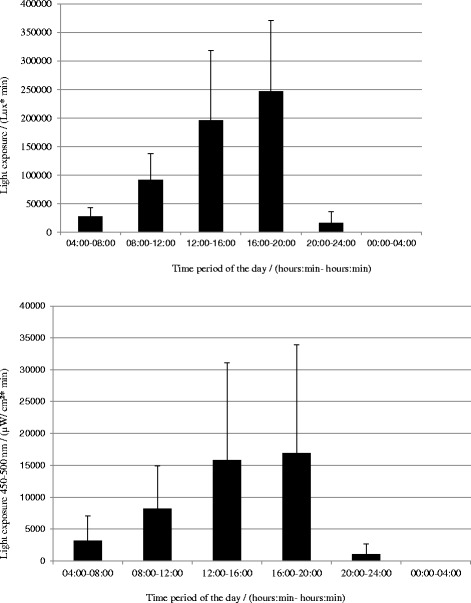
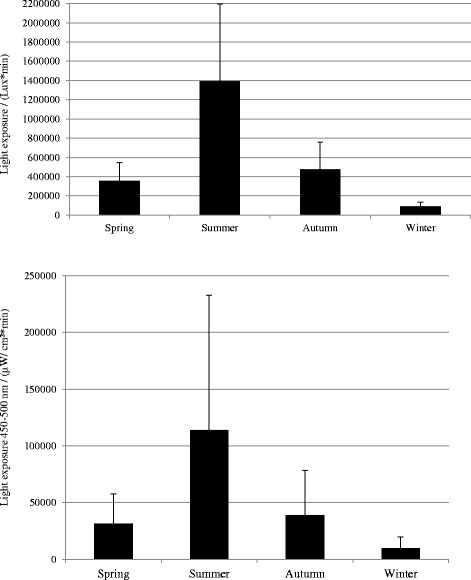
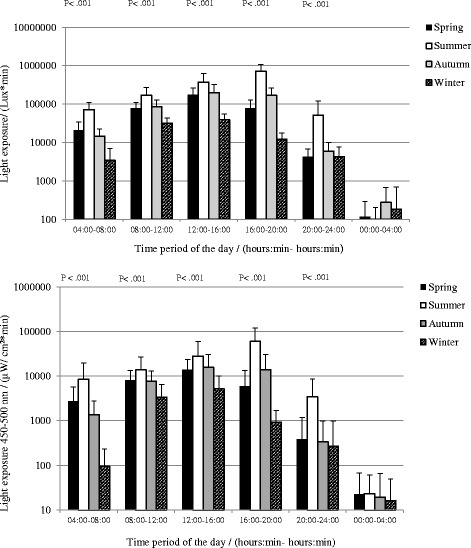
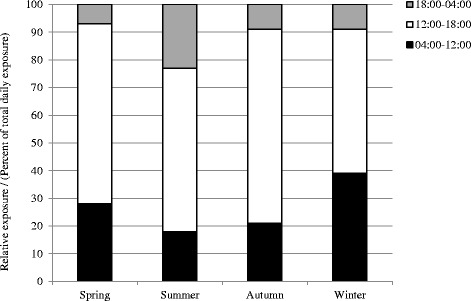
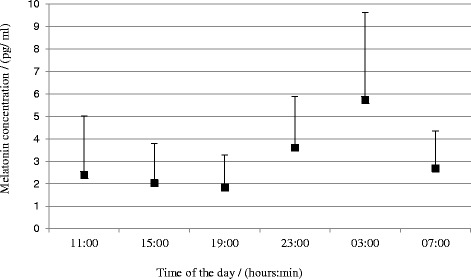
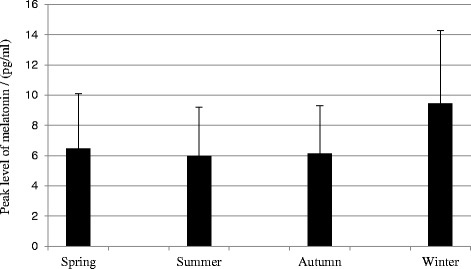
Results: The results showed that there were large seasonal differences in daily amount of light exposure across the year. Seasonal differences were observed during the time periods 04:00-08:00, 08:00-12:00, 12:00-16:00, 16:00-20:00, and 20:00-24:00. Moreover, there were seasonal differences regarding the exposure pattern. The subjects were to a larger extent exposed to light in the afternoon/evening in the summer. During the winter, spring, and autumn, the subjects received much of the daily light exposure in the morning and early afternoon. Regarding melatonin, a seasonal variation was observed with a larger peak level during the winter and higher levels in the morning at 07:00.
Conclusions: This study adds to the results from other naturalistic studies by reporting on the diurnal and seasonal light exposure patterns for a group living at a northern latitude of 56° N, with large annual variations in photoperiod length. It seems to be seasonal variation in the lighting conditions, both concerning intensities as well as regarding the pattern of the light exposure to which people living at high latitudes are exposed which may result in seasonal variation in the circadian profile of melatonin.
Keywords: Circannual; Cortisol; Light exposure; Melatonin; Northern latitude; Spectral composition.
Figures
References
-
- Honma K, Honma S, Kohsaka M, Fukuda N. Seasonal variation in the human circadian rhythm: dissociation between sleep and temperature rhythm. Am J Physiol. 1992;262:885–91. - PubMed
-
- Danilenko KV, Putilov AA. Diurnal and seasonal variation in cortisol, prolactin, TSH and thyroid hormones in women with and without seasonal affective disorder. J. Interdisciplinary Cycle Res. 1993;24:185–96. doi: 10.1080/09291019309360211. - DOI
MeSH terms
Substances
LinkOut - more resources
Full Text Sources
Other Literature Sources
