


Proteomics analysis of human tears from aqueous-deficient and evaporative dry eye patients
- PMID: 27436115
- PMCID: PMC4951640
- DOI: 10.1038/srep29629
Proteomics analysis of human tears from aqueous-deficient and evaporative dry eye patients
Abstract
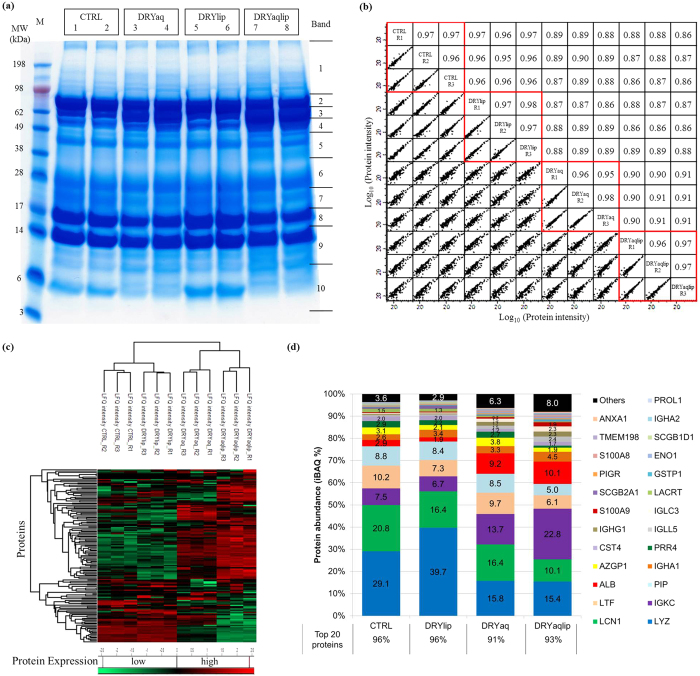
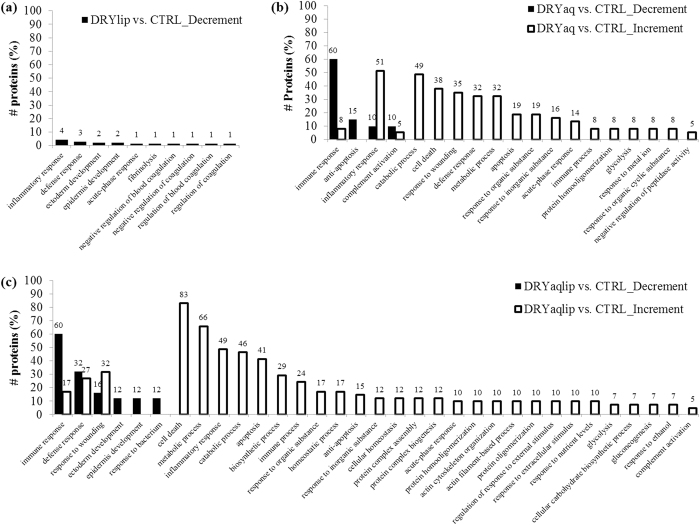
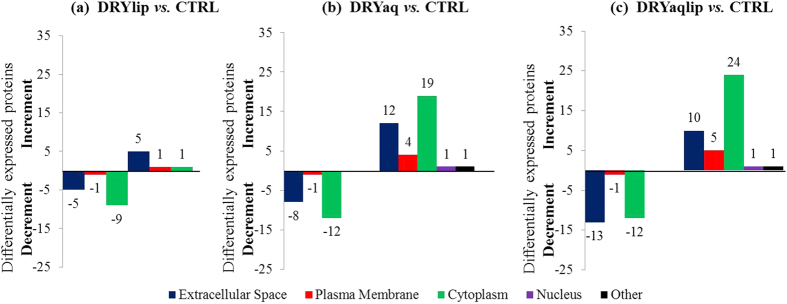
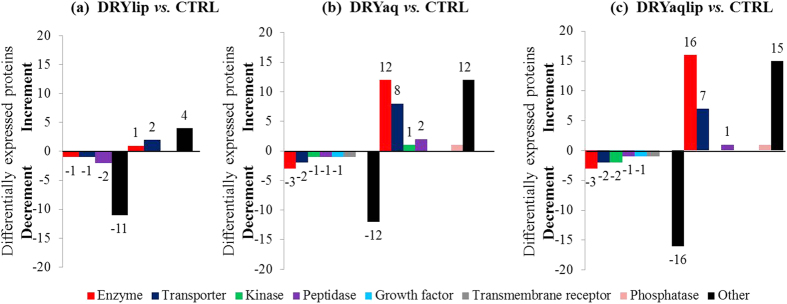
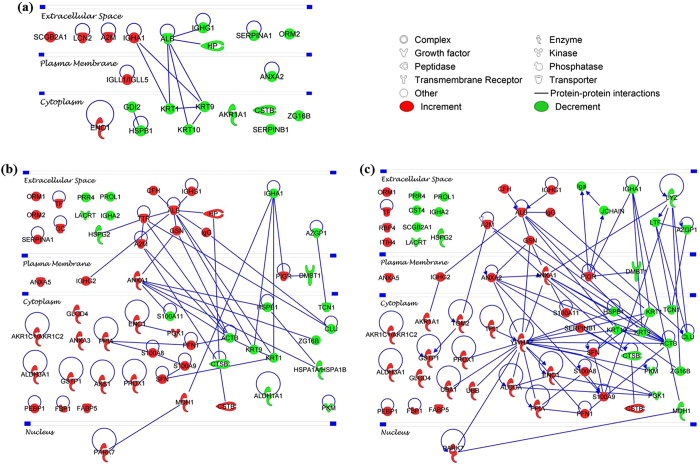
Despite the high global prevalence of dry eye syndrome (DES), the fundamental processes underlying this pathology remain largely unexplored. Therefore, this study endeavoured to investigate in-depth the tear proteome of DES patients employing the mass spectrometry (MS)-based proteomic strategies. Eighty patients were recruited and subdivided into three major DES subgroups, which are the aqueous-deficient (DRYaq), evaporative (DRYlip) and a combination of the two (DRYaqlip), as well as healthy subjects (CTRL). Discovery proteomics strategy was employed to identify large number of significantly differentially expressed tear proteins in DRYlip vs. CTRL, DRYaq vs. CTRL and DRYaqlip vs. CTRL with 22, 58 and 67 proteins, respectively. Biological functional analysis demonstrated for the first time that various metabolic processes were highly expressed in DRYaq and DRYaqlip, which might modulate various other known processes, especially the inflammatory and immune processes. Targeted proteomics strategy verified that 13 major proteins were differentially expressed in specific DES subgroups, comprising of PRR4, ZG16B, SCGB2A1, DMBT1, PROL1, LACRT, ALDH3A1, ENO1, TF, S100A8, S100A9, PEBP1 and ORM1. In conclusion, this study had explored in-depth the pathology of DES by unravelling various new fundamental processes and the major proteins responsible for the maintenance of tear film stability.
Figures
References
-
- DEWS. The definition and classification of dry eye disease: report of the Definition and Classification Subcommittee of the International Dry Eye WorkShop Ocul Surf 5, 75–92 (2007). - PubMed
-
- Tomosugi N., Kitagawa K., Takahashi N., Sugai S. & Ishikawa I. Diagnostic potential of tear proteomic patterns in Sjögren’s syndrome. Journal of proteome research 4, 820–825 (2005). - PubMed
MeSH terms
LinkOut - more resources
Full Text Sources
Other Literature Sources
Medical
Research Materials
Miscellaneous
