


Synchronized cycles of bacterial lysis for in vivo delivery
- PMID: 27437587
- PMCID: PMC5048415
- DOI: 10.1038/nature18930
Synchronized cycles of bacterial lysis for in vivo delivery
Abstract
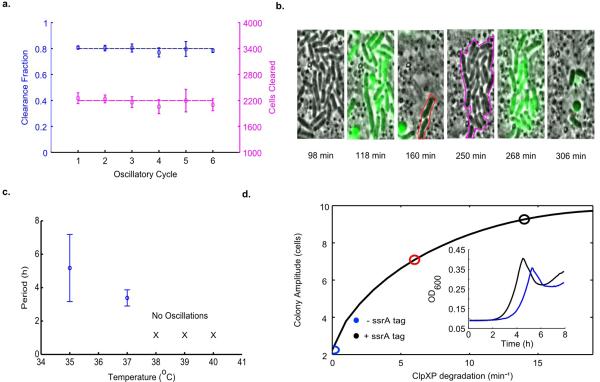
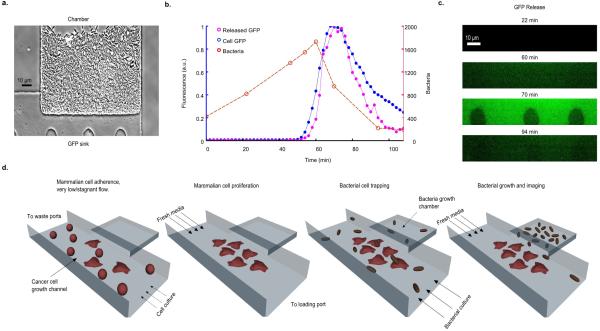
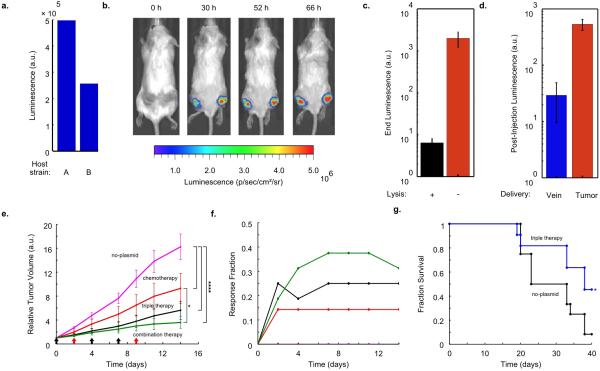
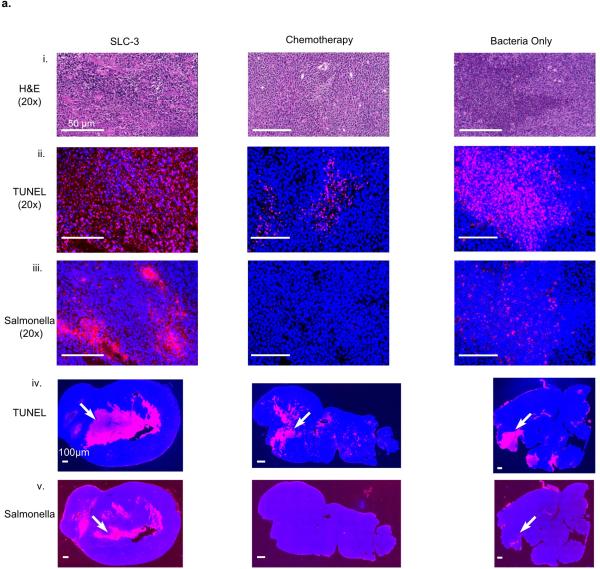
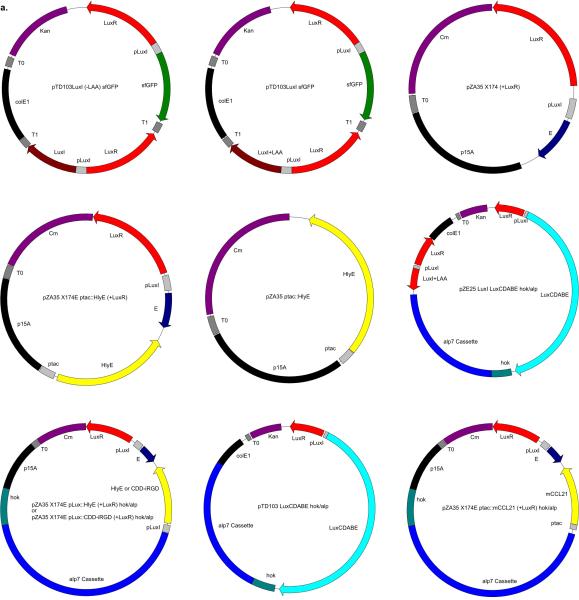
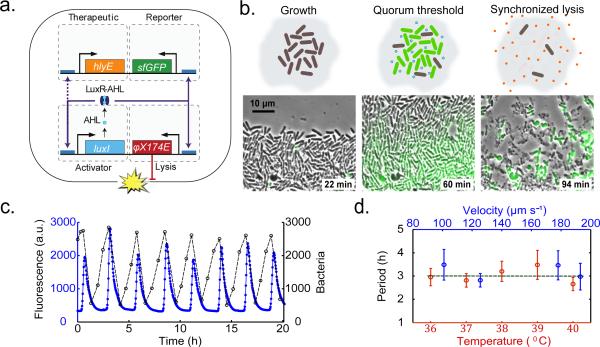
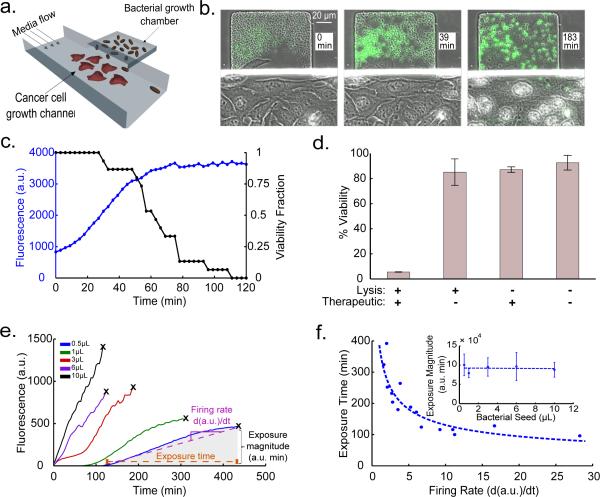
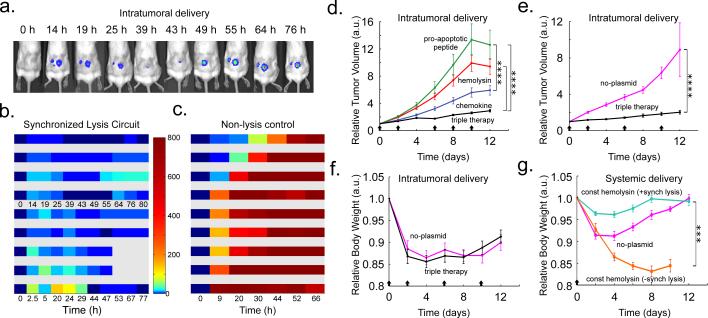
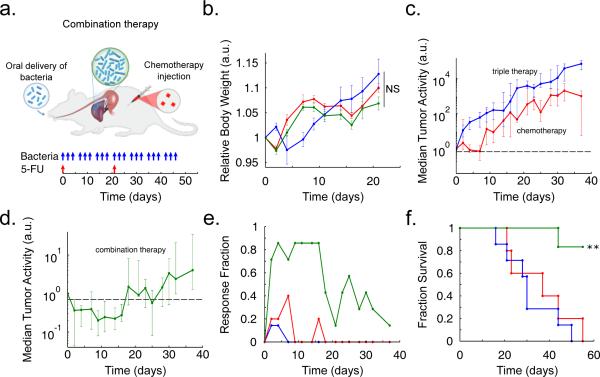
The widespread view of bacteria as strictly pathogenic has given way to an appreciation of the prevalence of some beneficial microbes within the human body. It is perhaps inevitable that some bacteria would evolve to preferentially grow in environments that harbor disease and thus provide a natural platform for the development of engineered therapies. Such therapies could benefit from bacteria that are programmed to limit bacterial growth while continually producing and releasing cytotoxic agents in situ. Here we engineer a clinically relevant bacterium to lyse synchronously ata threshold population density and to release genetically encoded cargo. Following quorum lysis, a small number of surviving bacteria reseed the growing population, thus leading to pulsatile delivery cycles. We used microfluidic devices to characterize the engineered lysis strain and we demonstrate its potential as a drug delivery platform via co-culture with human cancer cells in vitro. Asa proof of principle, we tracked the bacterial population dynamics in ectopic syngeneic colorectal tumours in mice via a luminescent reporter. The lysis strain exhibits pulsatile population dynamics in vivo, with mean bacterial luminescence that remained two orders of magnitude lower than an unmodified strain. Finally, guided by previous findings that certain bacteria can enhance the efficacy of standard therapies, we orally administered the lysis strain alone or in combination with a clinical chemotherapeutic to a syngeneic mouse transplantation model of hepatic colorectal metastases. We found that the combination of both circuit-engineered bacteria and chemotherapy leads to a notable reduction of tumour activity along with a marked survival benefit over either therapy alone.Our approach establishes a methodology for leveraging the tools of synthetic biology to exploit the natural propensity for certain bacteria to colonize disease sites.
Figures

Comment in
-
Synthetic biology: Bacteria synchronized for drug delivery.Nature. 2016 Aug 4;536(7614):33-4. doi: 10.1038/nature18915. Epub 2016 Jul 20. Nature. 2016. PMID: 27437575 No abstract available.
References
Publication types
MeSH terms
Grants and funding
- DP1 CA174420/CA/NCI NIH HHS/United States
- R01 GM069811/GM/NIGMS NIH HHS/United States
- R00 CA197649/CA/NCI NIH HHS/United States
- P30 CA014051/CA/NCI NIH HHS/United States
- P30-CA14051/CA/NCI NIH HHS/United States
- P30 ES002109/ES/NIEHS NIH HHS/United States
- HHMI/Howard Hughes Medical Institute/United States
- K99 CA197649-01/CA/NCI NIH HHS/United States
- P50 GM085764/GM/NIGMS NIH HHS/United States
- K99 CA197649/CA/NCI NIH HHS/United States
- R01GM069811/GM/NIGMS NIH HHS/United States
- P30-ES002109/ES/NIEHS NIH HHS/United States
LinkOut - more resources
Full Text Sources
Other Literature Sources
Medical
Research Materials
