


Global burden of maternal and congenital syphilis in 2008 and 2012: a health systems modelling study
- PMID: 27443780
- PMCID: PMC6759483
- DOI: 10.1016/S2214-109X(16)30135-8
Global burden of maternal and congenital syphilis in 2008 and 2012: a health systems modelling study
Abstract
Background: In 2007, WHO launched a global initiative for the elimination of mother-to-child transmission of syphilis (congenital syphilis). An important aspect of the initiative is strengthening surveillance to monitor progress towards elimination. In 2008, using a health systems model with country data inputs, WHO estimated that 1·4 million maternal syphilis infections caused 520 000 adverse pregnancy outcomes. To assess progress, we updated the 2008 estimates and estimated the 2012 global prevalence and cases of maternal and congenital syphilis.
Methods: We used a health systems model approved by the Child Health Epidemiology Reference Group. WHO and UN databases provided inputs on livebirths, antenatal care coverage, and syphilis testing, seropositivity, and treatment in antenatal care. For 2012 estimates, we used data collected between 2009 and 2012. We updated the 2008 estimates using data collected between 2000 and 2008, compared these with 2012 estimates using data collected between 2009 and 2012, and performed subanalyses to validate results.
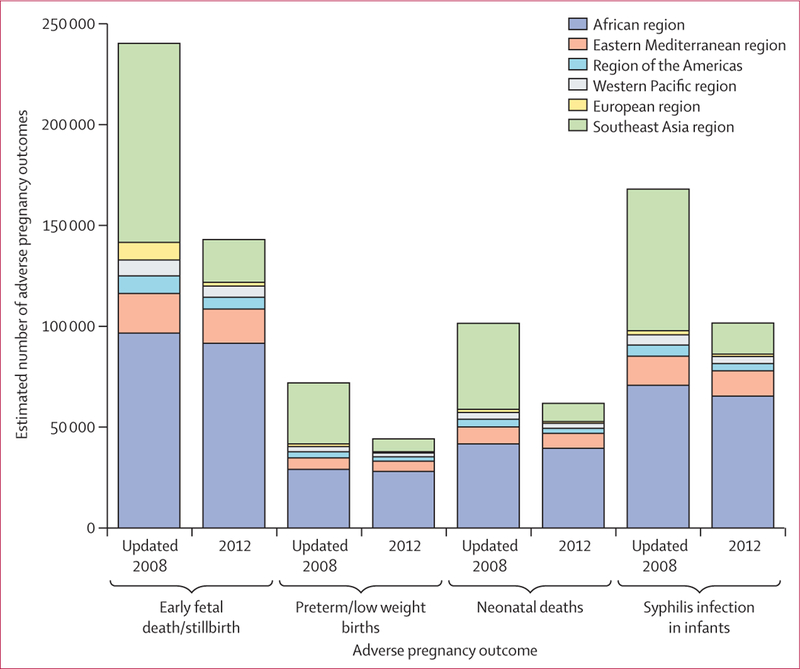
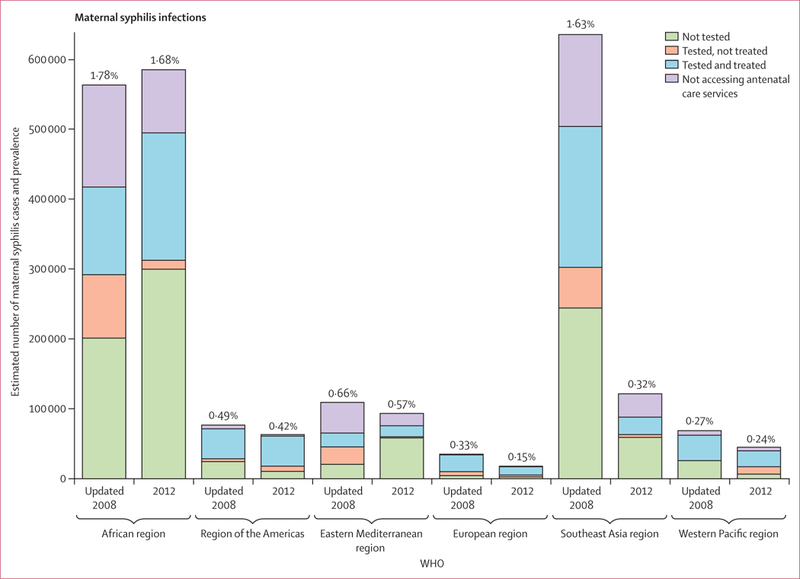
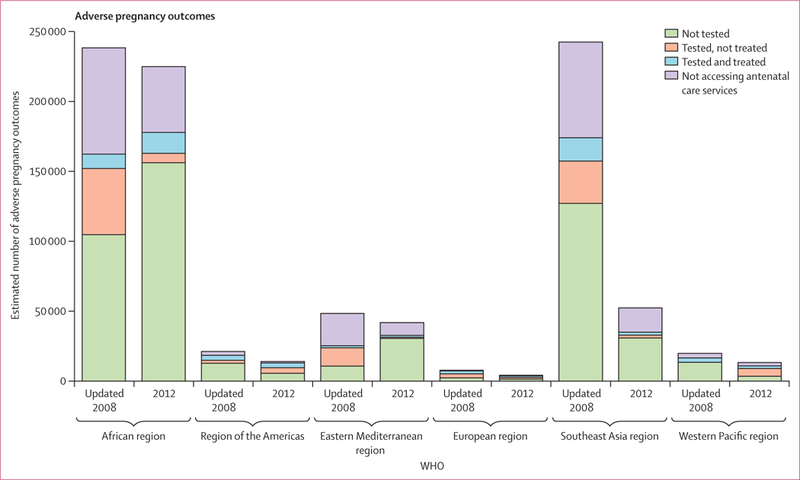
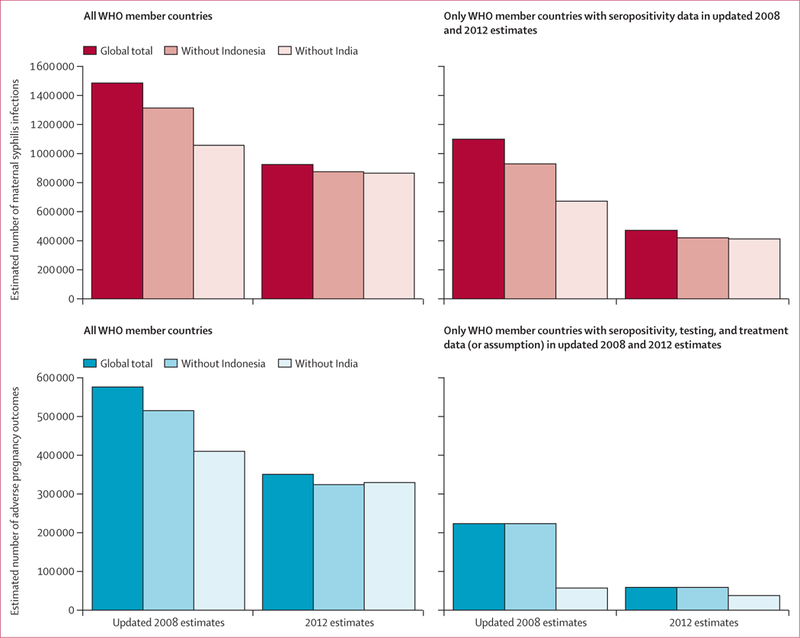
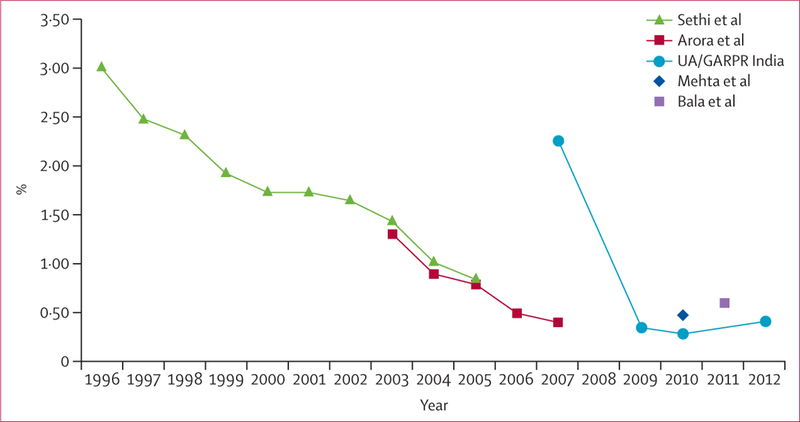
Findings: In 2012, an estimated 930 000 maternal syphilis infections caused 350 000 adverse pregnancy outcomes including 143 000 early fetal deaths and stillbirths, 62 000 neonatal deaths, 44 000 preterm or low weight births, and 102 000 infected infants worldwide. Nearly 80% of adverse outcomes (274 000) occurred in women who received antenatal care at least once. Comparing the updated 2008 estimates with the 2012 estimates, maternal syphilis decreased by 38% (from 1 488 394 cases in 2008 to 927 936 cases in 2012) and congenital syphilis decreased by 39% (from 576 784 to 350 915). India represented 65% of the decrease. Analysis excluding India still showed an 18% decrease in maternal and congenital cases of syphilis worldwide.
Interpretation: Maternal and congenital syphilis decreased worldwide from 2008 to 2012, which suggests progress towards the elimination of mother-to-child transmission of syphilis. Nonetheless, maternal syphilis caused substantial adverse pregnancy outcomes, even in women receiving antenatal care. Improved access to quality antenatal care, including syphilis testing and treatment, and robust data are all important for achieving the elimination of mother-to-child transmission of syphilis.
Funding: The UNDP-UNFPA-UNICEF-WHO-World Bank Special Programme of Research, Development and Research Training in Human Reproduction in WHO, and the US Centers for Disease Control and Prevention.
Copyright © 2016 The Author(s). Published by Elsevier Ltd. This is an Open Access article under the CC BY-NC-ND license. Published by Elsevier Ltd.. All rights reserved.
Figures
Comment in
-
Celebrating the decline in syphilis in pregnancy: a sobering reminder of what's left to do.Lancet Glob Health. 2016 Aug;4(8):e503-4. doi: 10.1016/S2214-109X(16)30154-1. Lancet Glob Health. 2016. PMID: 27443768 No abstract available.
References
-
- Fiumara NJ. Syphilis among mothers and children. Ann N Y Acad Sci 1988; 549: 187–92. - PubMed
-
- Chakraborty R, Luck S. Syphilis is on the increase: the implications for child health. Arch Dis Child 2008; 93: 105–09. - PubMed
-
- Woods CR. Congenital syphilis-persisting pestilence. Pediatr Infect Dis J 2009; 28: 536–37 - PubMed
-
- Zenker PN, Rolfs RT. Treatment of syphilis, 1989. Rev Infect Dis 1990; 12 (suppl 6): S590–609. - PubMed
Publication types
MeSH terms
Grants and funding
LinkOut - more resources
Full Text Sources
Other Literature Sources
Medical
