. 2016 Jun 30:10:331.
doi: 10.3389/fnhum.2016.00331. eCollection 2016.

Extreme Environment Effects on Cognitive Functions: A Longitudinal Study in High Altitude in Antarctica

Affiliations

Extreme Environment Effects on Cognitive Functions: A Longitudinal Study in High Altitude in Antarctica

Irén Barkaszi et al. Front Hum Neurosci. .

Abstract

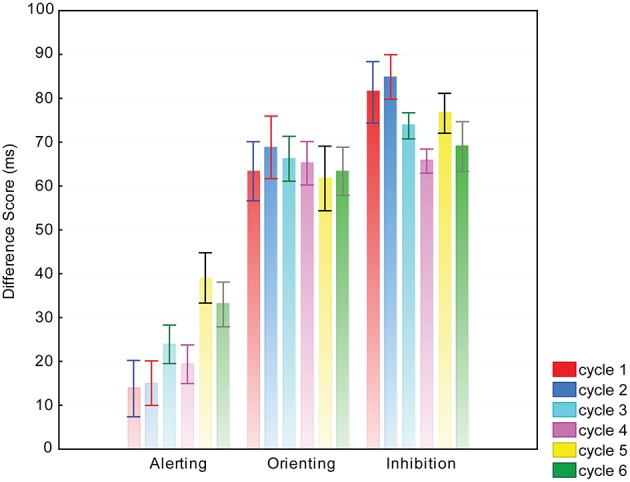
This paper focuses on the impact of long-term Antarctic conditions on cognitive processes. Behavioral responses and event-related potentials were recorded during an auditory distraction task and an attention network paradigm. Participants were members of the over-wintering crew at Concordia Antarctic Research Station. Due to the reduced partial pressure of oxygen this environment caused moderate hypoxia. Beyond the hypoxia, the fluctuation of sunshine duration, isolation and confinement were the main stress factors of this environment. We compared 6 measurement periods completed during the campaign. Behavioral responses and N1/MMN (mismatch negativity), N1, N2, P3, RON (reorientation negativity) event-related potential components have been analyzed. Reaction time decreased in both tasks in response to repeated testing during the course of mission. The alerting effect increased, the inhibition effect decreased and the orienting effect did not change in the ANT task. Contrary to our expectations the N2, P3, RON components related to the attentional functions did not show any significant changes. Changes attributable to early stages of information processing were observed in the ANT task (N1 component) but not in the distraction task (N1/MMN). The reaction time decrements and the N1 amplitude reduction in ANT task could be attributed to sustained effect of practice. We conclude that the Antarctic conditions had no negative impacts on cognitive activity despite the presence of numerous stressors.

Keywords: Antarctica; cognitive functions; event-related potentials (ERP); extreme environment; hypoxia; long-term isolation; successful adaptation; sunshine duration.


Figures

Figure 1
Figure 1
Task design of Attention Network Test. Each trial begins with a central fixation cross (+) followed by one of three cue types: No Cue, Center, or Spatial Cue. After the cue (*) five arrows appeared. The subjects had to press buttons according to the direction of the central arrow. The other four arrows (flankers) could point to the same (congruent condition) or to the opposite direction (incongruent condition). The arrows could arrive above or below the fixation cross. Timing information of the events is in the left side of the figure.
Figure 2
Figure 2
Grand-mean difference waves (deviant ERPs–standard ERPs) for the six cycles depicted at electrode positions Fz, Cz, and Pz (filtered with a 10-Hz low-pass) in the distraction task. In all cycles deviant stimuli elicited MMN, P3a and RON components.
Figure 3
Figure 3
Topographic distributions of the overall mean N1/MMN, P3a, and RON components (in μV) averaged across subjects and cycles presenting in 40 ms time window for MMN and in 70 ms time window for P3a and RON centered at peak latency. Dots indicate electrode positions on the scalp.
Figure 4
Figure 4
Mean difference scores and standard errors for each of the three attention networks and six cycles. Attention network effects were calculated as reaction time differences of the following conditions: alerting = RTnocue − RTcentercue; orienting = RTcentercue − RTspatialcue, inhibition = RTincongruent − RTcongruent.
Figure 5
Figure 5
Grand-mean event-related potential plots stratified by cue condition (No Cue, Center Cue and Spatial Cue) for Oz electrode site in the ANT task. Arrows indicate the peaks of the N1 waveforms.
Figure 6
Figure 6
Topographic distributions of the overall mean N1, N2, no-go P3, and P3b components (in μV) averaged across subjects and cycles presenting in 40 ms time window for N1, in 80 ms time window for N2 and 100 ms time window for no-go P3 and P3b centered at peak latency. Dots indicate electrode positions on the scalp.
Figure 7
Figure 7
Grand-mean event-related potential plots stratified by target condition (Congruent and Incongruent) for Fz, Cz, and Pz electrode sites in the ANT task. Arrows indicate the peaks of the ERP waveforms.

References

    1. Abeln V., MacDonald-Nethercott E., Piacentini M. F., Meeusen R., Kleinert J., Strueder H. K., et al. (2015). Exercise in isolation- A countermeasure for electrocortical, mental and cognitive impairments. PLoS ONE 10:e0126356. 10.1371/journal.pone.0126356 - DOI - PMC - PubMed
    1. Adam G. E., Fulco C. S., Muza S. R. (2008). Multi-Task Performance at Sea-Level and High Altitude. Natick, MA: Army Research Institute of Environmental Medicine.
    1. Antonovsky A. (1987). Unraveling the Mystery of Health: How People Manage Stress and Stay Well. San Francisco, CA: Jossey-Bass Publishers.
    1. Arendt J. (2005). Melatonin: characteristics, concerns, and prospects. J. Biol. Rhythms 20, 291–303. 10.1177/0748730405277492 - DOI - PubMed
    1. Atlis M. M., Leon G. R., Sandal G. M., Infante M. G. (2004). Decision processes and interactions during a two-women traverse of Antarctica. Environ. Behav. 36, 402–423. 10.1177/0013916503262217 - DOI

LinkOut - more resources