


Anti-tumor effect of Radix Paeoniae Rubra extract on mice bladder tumors using intravesical therapy
- PMID: 27446367
- PMCID: PMC4950246
- DOI: 10.3892/ol.2016.4698
Anti-tumor effect of Radix Paeoniae Rubra extract on mice bladder tumors using intravesical therapy
Abstract
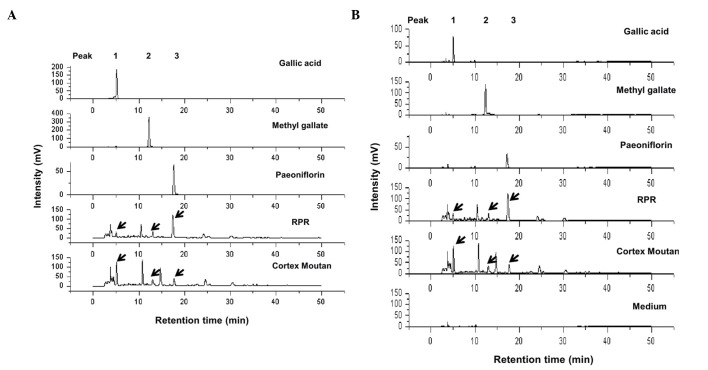
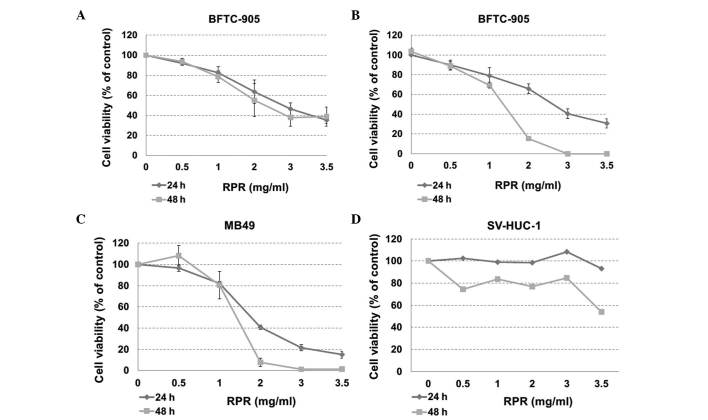
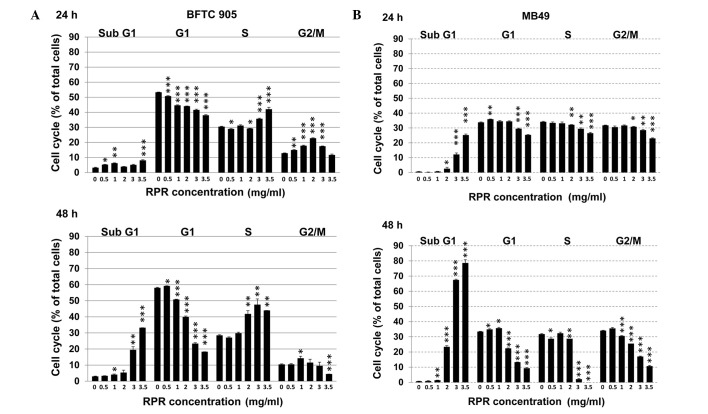
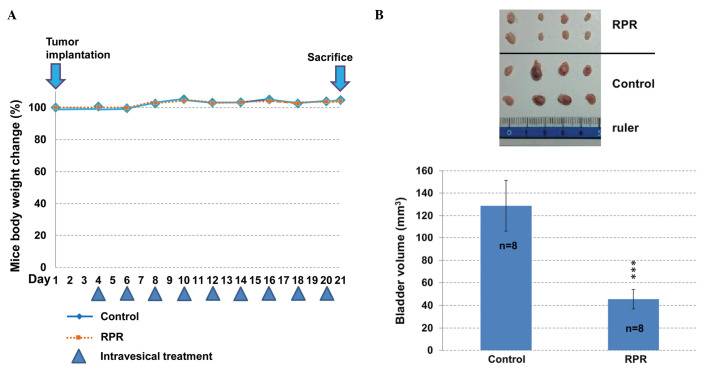
Radix Paeoniae Rubra (RPR) is the dried root of Paeonia lactiflora Pallas and Paeonia veitchii Lynch, and is a herbal medicine that is widely used in traditional Chinese medicine for the treatment of blood-heat and blood-stasis syndrome, similarly to Cortex Moutan. The present study identified the same three components in RPR and Cortex Moutan extracts. In addition, it has been reported that RPR has an anti-cancer effect. Bladder cancer is the seventh most common type of cancer worldwide. Due to the high recurrence rate, identifying novel drugs for bladder cancer therapy is essential. In the present study, RPR extract was evaluated as a bladder cancer therapy in vitro and in vivo. The present results revealed that RPR extract reduced the cell viability of bladder cancer cells with a half maximal inhibitory concentration of 1-3 mg/ml, and had an extremely low cytotoxic effect on normal urothelial cells. Additionally, RPR decreased certain cell cycle populations, predominantly cells in the G1 phase, and caused a clear sub-G increase. In a mouse orthotopic bladder tumor model, intravesical application of RPR extract decreased the bladder tumor size without altering the blood biochemical parameters of the mice. In summary, the present results demonstrate the anti-proliferative properties of RPR extract on bladder cancer cells, and its anti-bladder tumor effect in vivo. Compared to Cortex Moutan extract, RPR extract may provide a more effective alternative therapeutic strategy for the intravesical therapy of superficial bladder cancer.
Keywords: Radix Paeoniae Rubra; bladder cancer; gallic acid; intravesical therapy; methyl gallate; mouse orthotopic bladder tumor model; paeoniflorin.
Figures
References
-
- Wang R, Xiong AZ, Teng ZQ, Yang QW, Shi YH, Yang L. Radix Paeoniae Rubra and Radix Paeoniae Alba attenuate CCl4-induced acute liver injury: An ultra-performance liquid chromatography-mass spectrometry (UPLC-MS) based metabolomic approach for the pharmacodynamic study of Traditional Chinese Medicines (TCMs) Int J Mol Sci. 2012;13:14634–14647. doi: 10.3390/ijms131114634. - DOI - PMC - PubMed
LinkOut - more resources
Full Text Sources
Other Literature Sources