


The impact of maternal neglect on genetic hyperactivity
- PMID: 27449202
- PMCID: PMC4990781
- DOI: 10.1016/j.bbr.2016.07.033
The impact of maternal neglect on genetic hyperactivity
Abstract
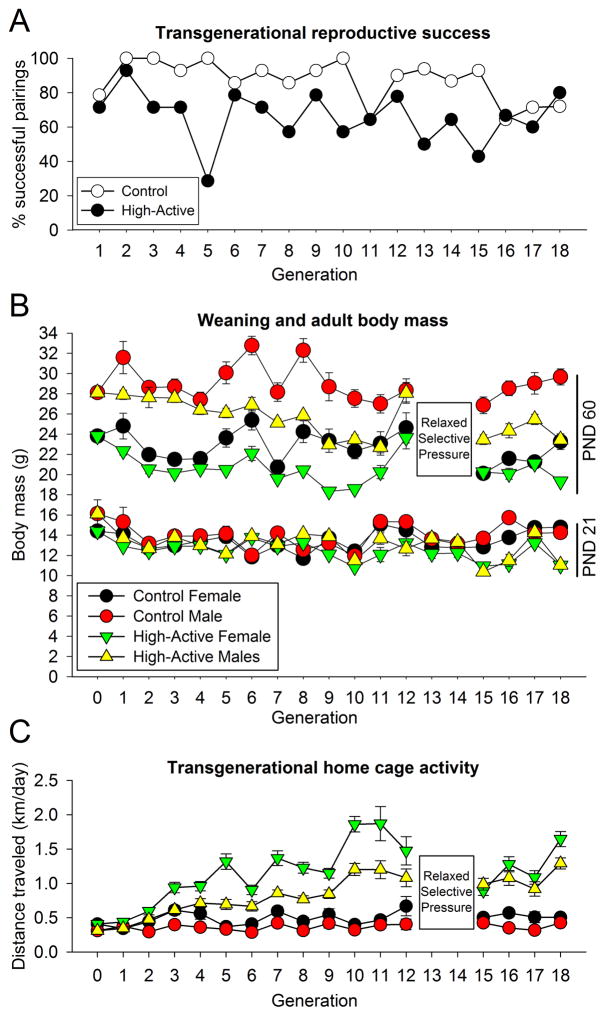
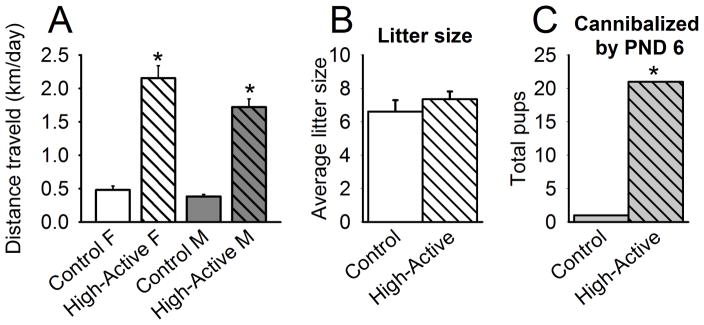
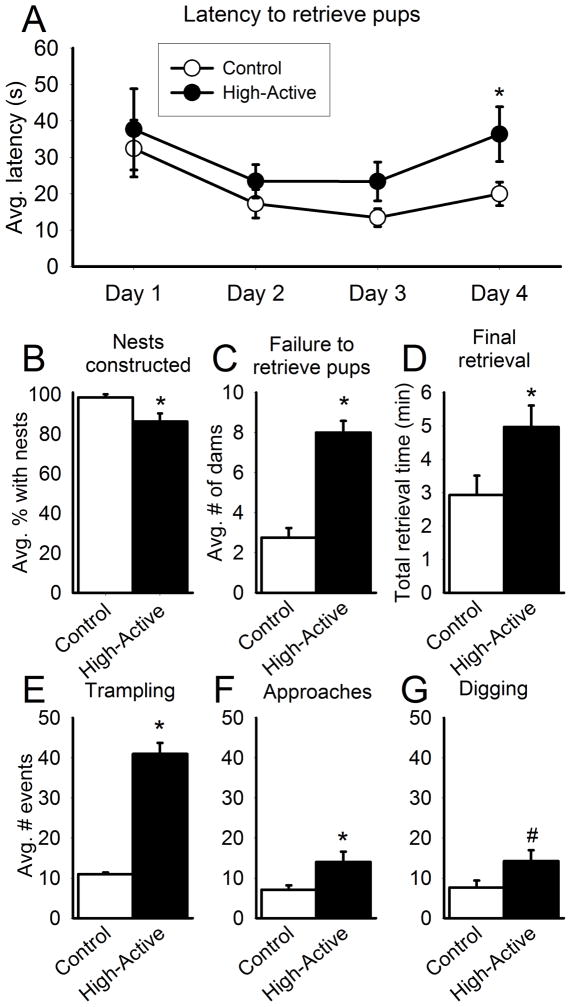
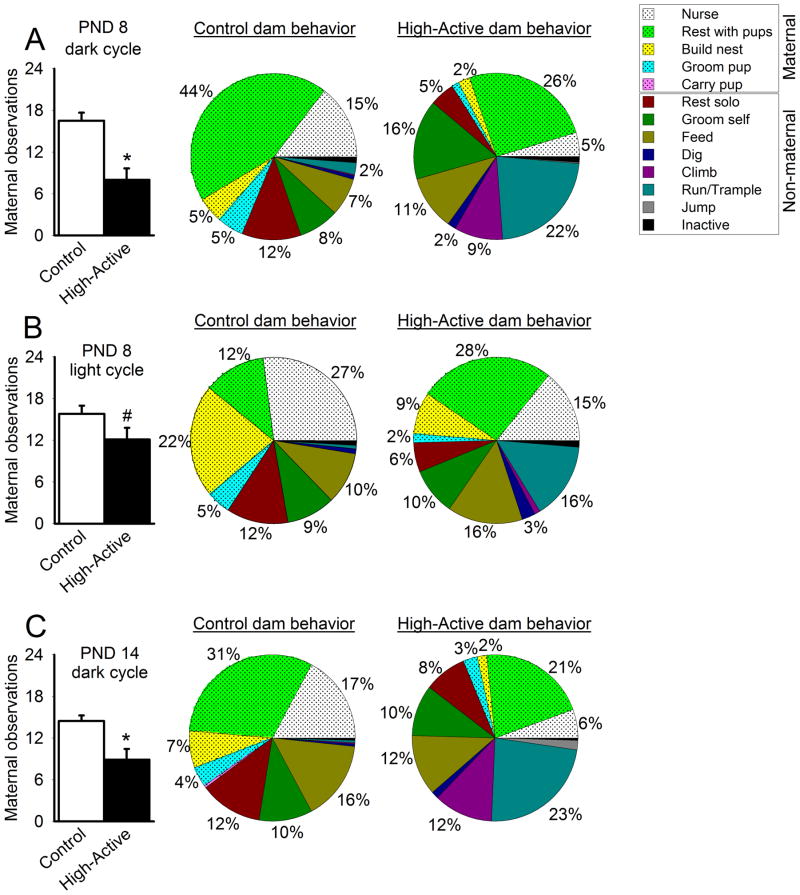
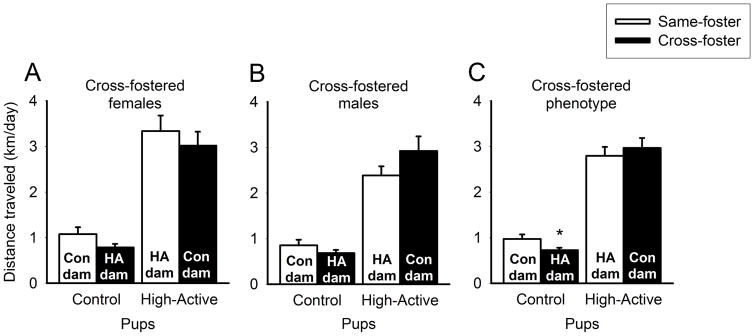
Early environmental conditions are increasingly appreciated as critical in shaping behavior and cognition. Evidence suggests that stressful rearing environments can have an enduring impact on behaviors in adulthood, but few studies have explored the possibility that rearing environment could exacerbate genetic hyperactivity disorders. Uncovering a strong environmental influence on the transmission of hyperactivity could provide novel avenues for translational research. Recently we developed a selectively bred High-Active line of mice to model ADHD, providing a unique resource to address the question of environmental transmission. The High-Active line demonstrates transgenerational hyperactivity, but the influence of the postnatal environment (i.e. maternal care provided by dams) on hyperactivity had not been systemically quantified. This study employed a cross-fostering method to simultaneously address 1) whether High-Active and Control pups are provided with similar levels of care in the early environment, and 2) whether any differences in rearing environment influence hyperactive behavior. High-Active dams demonstrated impairment in all measures of maternal competence relative to Controls, which reduced survival rates and significantly reduced the body mass of offspring in early life and at weaning. While the deteriorated postnatal environment provided by High-Active dams was ultimately sufficient to depress Control activity, the hyperactivity of High-Active offspring remained unaffected by fostering condition. These data not only confirm the power of genetics to influence hyperactivity across generations, but also provide evidence that early rearing environments may not have a significant impact on the extreme end of hyperactive phenotypes.
Keywords: Genetic hyperactivity; Maternal care; Postnatal stress; Pup retrieval; Selective breeding.
Copyright © 2016 Elsevier B.V. All rights reserved.
Figures
References
-
- Heim C, Binder EB. Current research trends in early life stress and depression: review of human studies on sensitive periods, gene-environment interactions, and epigenetics. Experimental neurology. 2012;233(1):102–11. - PubMed
-
- Dudley KJ, Li X, Kobor MS, Kippin TE, Bredy TW. Epigenetic mechanisms mediating vulnerability and resilience to psychiatric disorders. Neuroscience and biobehavioral reviews. 2011;35(7):1544–51. - PubMed
-
- Levine S. Developmental determinants of sensitivity and resistance to stress. Psychoneuroendocrinology. 2005;30(10):939–46. - PubMed
-
- Maguire SA, Williams B, Naughton AM, Cowley LE, Tempest V, Mann MK, Teague M, Kemp AM. A systematic review of the emotional, behavioural and cognitive features exhibited by school-aged children experiencing neglect or emotional abuse. Child: care, health and development. 2015;41(5):641–53. - PubMed
Publication types
MeSH terms
Grants and funding
LinkOut - more resources
Full Text Sources
Other Literature Sources
