


Radical scavenging and gastroprotective activity of methanolic extract of Gmelina arborea stem bark
- PMID: 27449207
- PMCID: PMC4969311
- DOI: 10.1016/j.jaim.2016.06.003
Radical scavenging and gastroprotective activity of methanolic extract of Gmelina arborea stem bark
Abstract
Background: Gmelina arborea (GA) is widely used in traditional medicine for treating a number of ailments including gastrointestinal tract disorders.
Objective: To evaluate the gastroprotective effect of GA stem bark against ethanol-induced gastric ulcer in Wistar rats.
Materials and methods: All animals were fasted for 36 h and received GA extract 250 and 500 mg/kg body weight (bw), 1 h before the administration of ethanol. The animals received ranitidine 50 mg/kg bw which served as the standard. The rats were sacrificed after 4 h. Then, the injuries to the gastric mucosa were estimated through gross evaluation of ulcer lesions and histology. The antioxidant parameters such as level of lipid peroxidation, superoxide dismutase (SOD), reduced glutathione (GSH), and glutathione peroxidase (GPx) in gastric tissue were also determined.
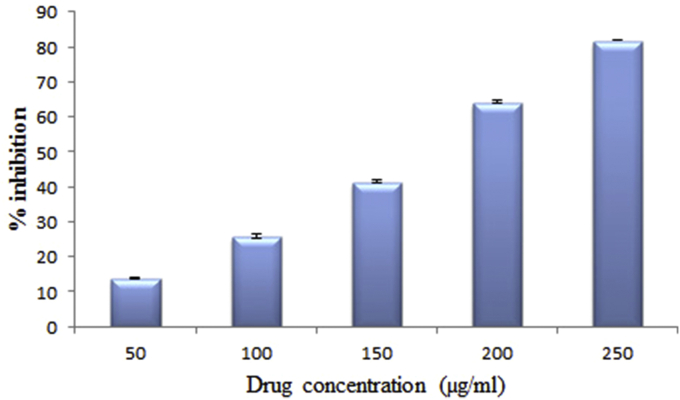
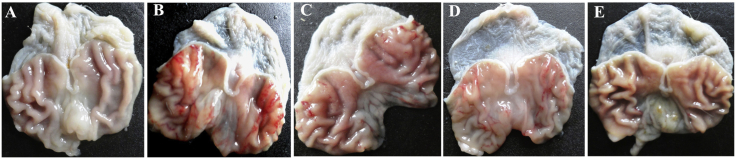
Results: GA treatment at a dose of 500 mg/kg bw offered 91.98% inhibition of ulcer formation, which is higher than that of ranitidine. The ethanol treatment extensively increased lipid peroxidation and it was significantly (P < 0.01) reduced in GA-treated group that eventually helped to prevent free radical accumulation. The GA enhanced the gastric mucosal antioxidant system, as indicated by a dose-dependent increase in the level/activities of GSH, GPx, and SOD. GA also attenuated the severity of histological signs of cell damage. Further, GA extract showed in-vitro 2,2-diphenyl-1-picrylhydrazyl radical scavenging activity with IC50 value of 124.39 μg/ml.
Conclusion: The results indicate that the gastroprotective effect of GA is probably related to its antioxidant activities that protect gastric mucosa against oxidative damage and antilipid peroxidative activity that maintain membrane integrity.
Keywords: Antioxidant system; Ethanol; Gastric ulcer; Gmelina arborea; Lipid peroxidation.
Copyright © 2016 Transdisciplinary University, Bangalore and World Ayurveda Foundation. Published by Elsevier B.V. All rights reserved.
Figures

References
-
- Ogawa K., Oyagi A., Tanaka J., Kobayashi S., Hara H. The protective effect and action mechanism of Vaccinium myrtillus L. on gastric ulcer in mice. Phytother Res. 2011;25:1160–1165. - PubMed
-
- Lima Z.P., Severi J.A., Pellizzon C.H., Brito A.R., Solis P.N., Cáceres A. Can the aqueous decoction of mango flowers be used as an antiulcer agent? J Ethnopharmacol. 2006;106:29–37. - PubMed
-
- Wolfe M.M., Sachs G. Acid suppression: optimizing therapy for gastroduodenal ulcer healing, gastroesophageal reflux disease, and stress-related erosive syndrome. Gastroenterology. 2000;118(2 Suppl. 1):S9–S31. - PubMed
-
- Sánchez-Mendoza M.E., Reyes-Ramírez A., Cruz Antonio L., Martínez Jiménez L., Rodríguez-Silverio J., Arrieta J. Bioassay-guided isolation of an anti-ulcer compound, tagitinin C, from Tithonia diversifolia: role of nitric oxide, prostaglandins and sulfhydryls. Molecules. 2011;16:665–674. - PMC - PubMed
-
- Hiruma-Lima C.A., Gracioso J.S., Toma W., Almeida A.B., Paula A.C., Brasil D.S. Gastroprotective effect of aparisthman, a diterpene isolated from Aparisthmium cordatum, on experimental gastric ulcer models in rats and mice. Phytomedicine. 2001;8:94–100. - PubMed
LinkOut - more resources
Full Text Sources
Other Literature Sources
