


Surface delivery of tunable doses of BMP-2 from an adaptable polymeric scaffold induces volumetric bone regeneration
- PMID: 27454063
- PMCID: PMC5937675
- DOI: 10.1016/j.biomaterials.2016.06.001
Surface delivery of tunable doses of BMP-2 from an adaptable polymeric scaffold induces volumetric bone regeneration
Abstract
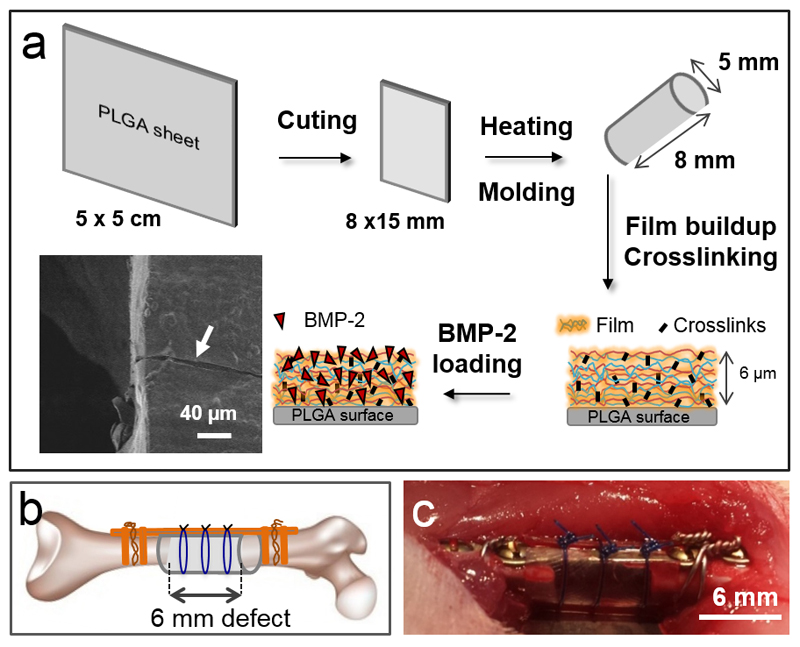
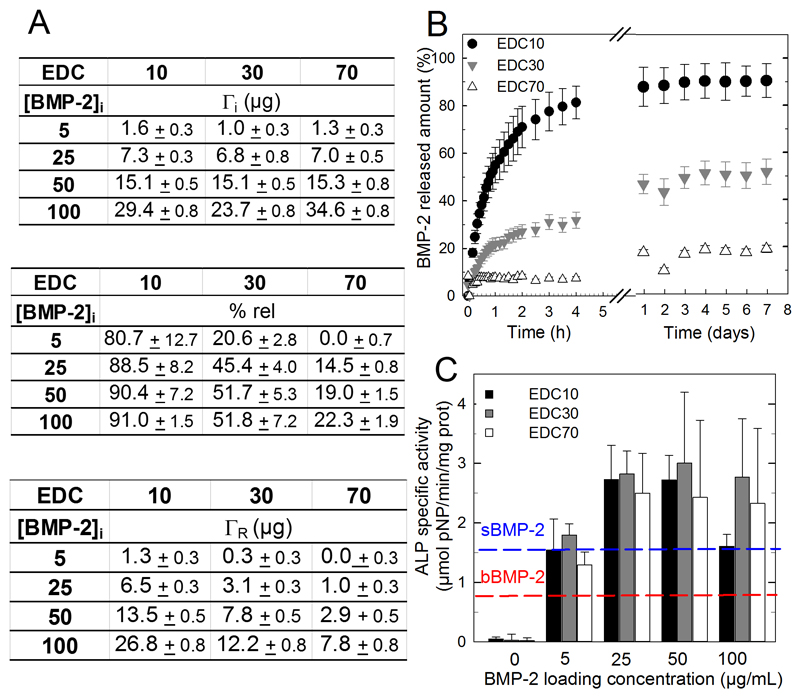
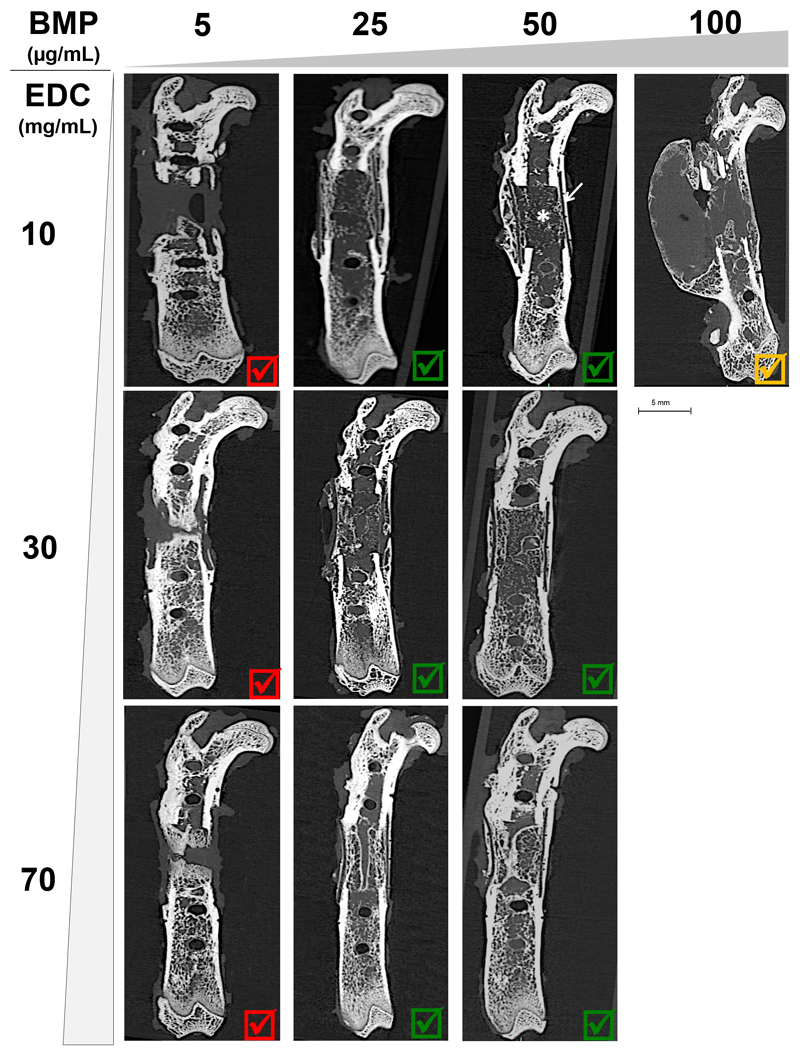
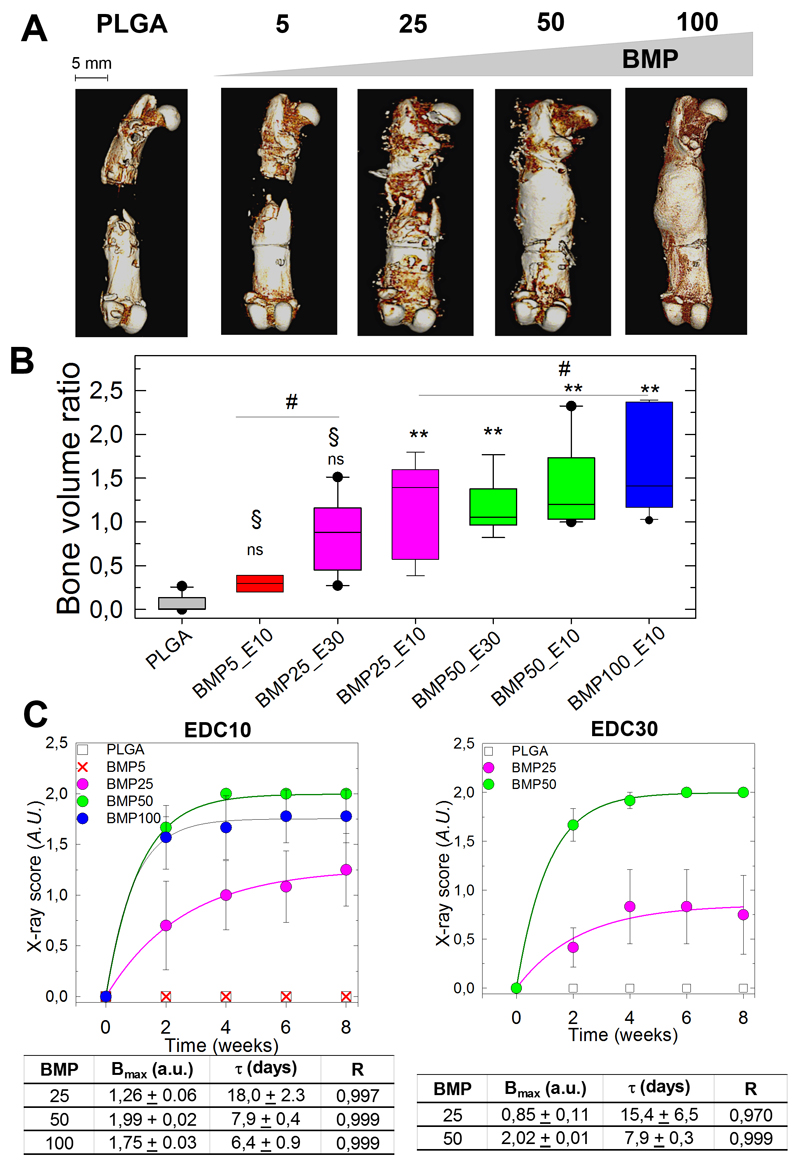
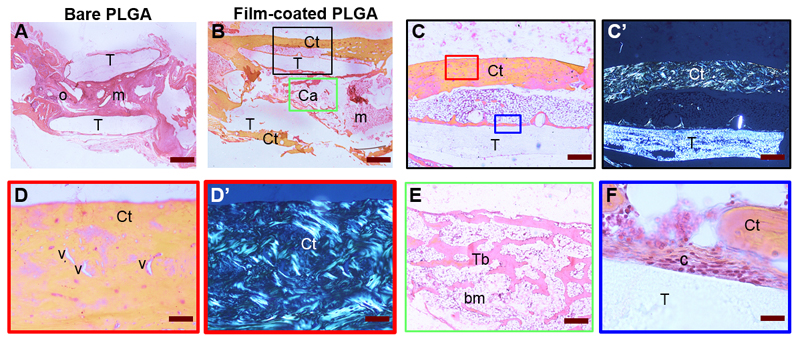
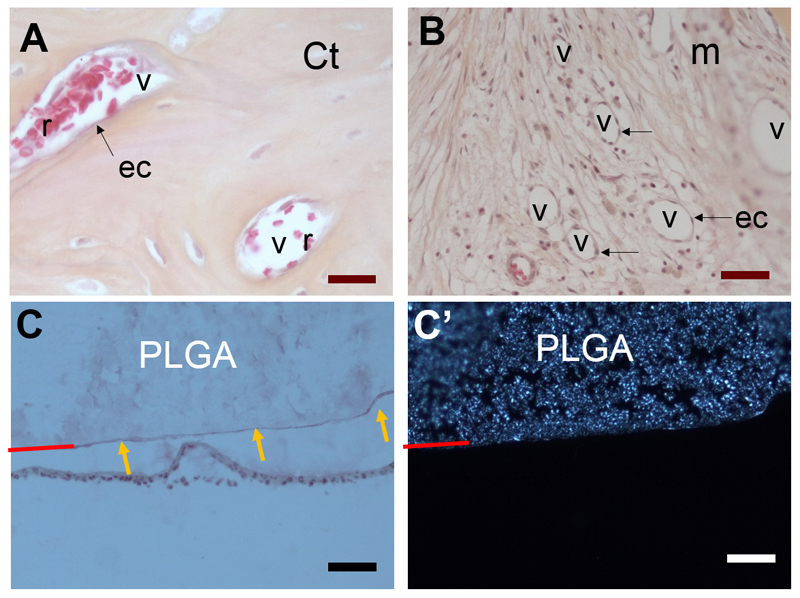
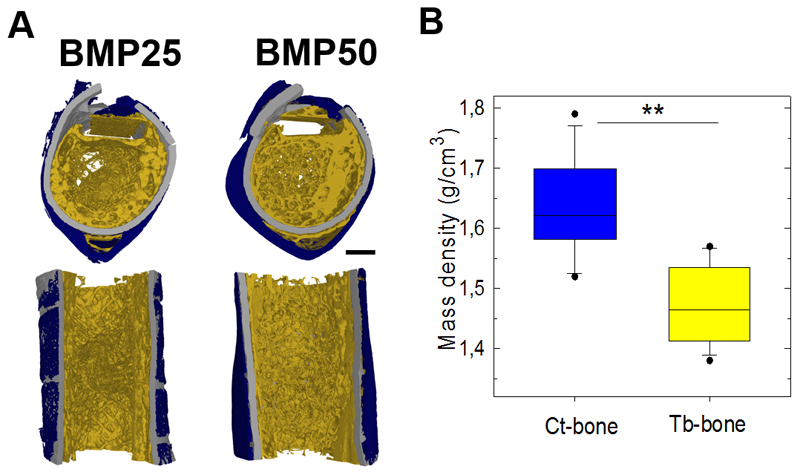
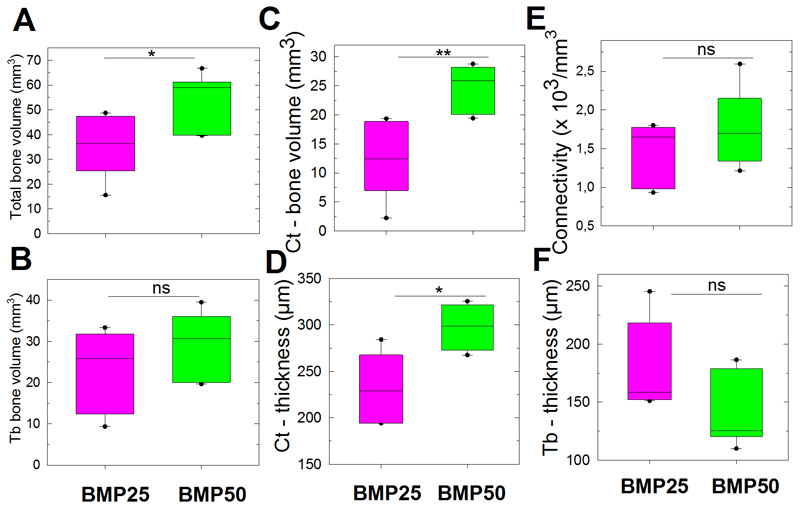
The rapid and effective bone regeneration of large non-healing defects remains challenging. Bioactive proteins, such as bone morphogenetic protein (BMP)-2, are proved their osteoinductivity, but their clinical use is currently limited to collagen as biomaterial. Being able to deliver BMP-2 from any other biomaterial would broaden its clinical use. This work presents a novel means for repairing a critical size volumetric bone femoral defect in the rat by combining a osteoinductive surface coating (2D) to a polymeric scaffold (3D hollow tube) made of commercially-available PLGA. Using a polyelectrolyte film as BMP-2 carrier, we tune the amount of BMP-2 loaded in and released from the polyelectrolyte film coating over a large extent by controlling the film crosslinking level and initial concentration of BMP-2 in solution. Using microcomputed tomography and quantitative analysis of the regenerated bone growth kinetics, we show that the amount of newly formed bone and kinetics can be modulated: an effective and fast repair was obtained in 1-2 weeks in the best conditions, including complete defect bridging, formation of vascularized and mineralized bone tissue. Histological staining and high-resolution computed tomography revealed the presence of bone regeneration inside and around the tube with spatially distinct organization for trabecular-like and cortical bones. The amount of cortical bone and its thickness increased with the BMP-2 dose. In view of the recent developments in additive manufacturing techniques, this surface-coating technology may be applied in combination with various types of polymeric or metallic scaffolds to offer new perspectives of bone regeneration in personalized medicine.
Keywords: Biomedical engineering; Bone morphogenetic proteins; Functional coatings; Orthopedic materials; Tissue engineering.
Copyright © 2016 The Author(s). Published by Elsevier Ltd.. All rights reserved.
Figures
References
-
- Laurencin C, Khan Y, El-Amin SF. Bone graft substitutes. Expert review of medical devices. 2006;3:49–57. - PubMed
-
- Giannoudis PV, Dinopoulos H, Tsiridis E. Bone substitutes: an update. Injury. 2005;36(Suppl 3):S20–7. - PubMed
-
- Janicki P, Schmidmaier G. What should be the characteristics of the ideal bone graft substitute? Combining scaffolds with growth factors and/or stem cells. Injury. 2011;42(Suppl 2):S77–81. - PubMed
-
- Puppi D, Chiellini F, Piras AM, Chiellini E. Polymeric materials for bone and cartilage repair. Prog Polym Sci. 2010;35:403–440.
Publication types
MeSH terms
Substances
Grants and funding
LinkOut - more resources
Full Text Sources
Other Literature Sources
Medical
