


Influence of the hole geometry on the flow distribution in ventricular catheters for hydrocephalus
- PMID: 27455059
- PMCID: PMC4959378
- DOI: 10.1186/s12938-016-0182-1
Influence of the hole geometry on the flow distribution in ventricular catheters for hydrocephalus
Abstract
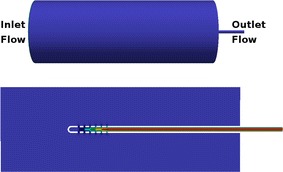
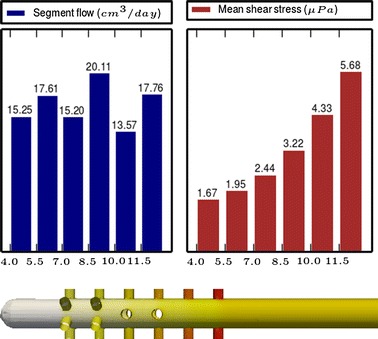
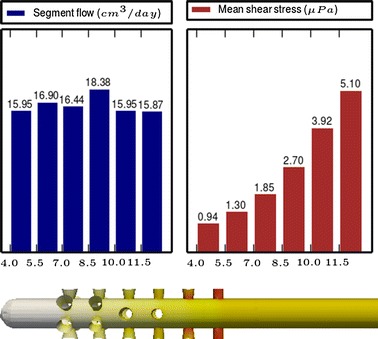
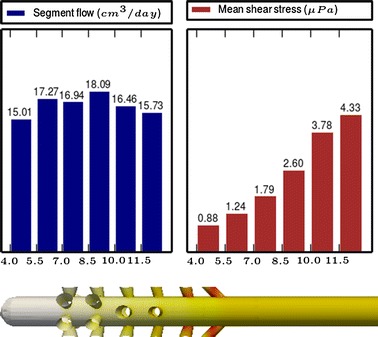
Background: Hydrocephalus is a medical condition consisting of an abnormal accumulation of cerebrospinal fluid within the brain. A catheter is inserted in one of the brain ventricles and then connected to an external valve to drain the excess of cerebrospinal fluid. The main drawback of this technique is that, over time, the ventricular catheter ends up getting blocked by the cells and macromolecules present in the cerebrospinal fluid. A crucial factor influencing this obstruction is a non-uniform flow pattern through the catheter, since it facilitates adhesion of suspended particles to the walls. In this paper we focus on the effects that tilted holes as well as conical holes have on the flow distribution and shear stress.
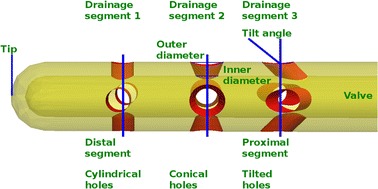
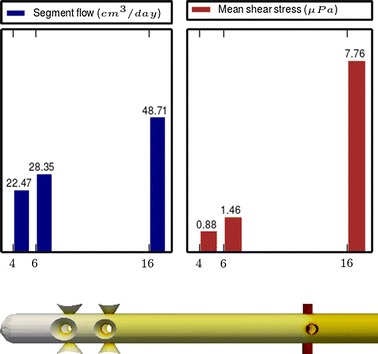
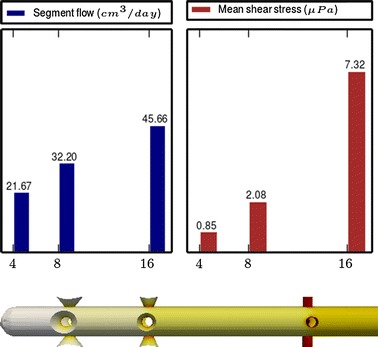
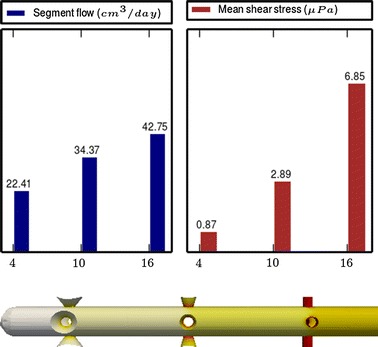
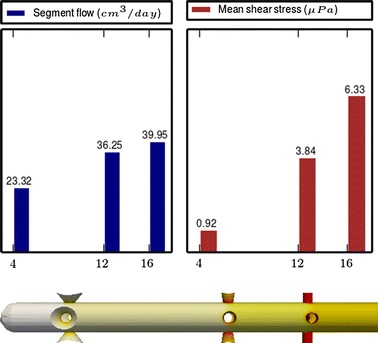
Methods: We have carried out 3D computational simulations to study the effect of the hole geometry on the cerebrospinal fluid flow through ventricular catheters. All the simulations were done with the OpenFOAM® toolbox. In particular, three different groups of models were investigated by varying (i) the tilt angles of the holes, (ii) the inner and outer diameters of the holes, and (iii) the distances between the so-called hole segments.
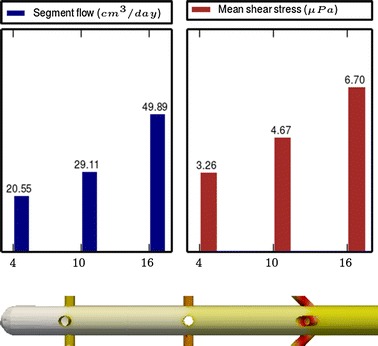
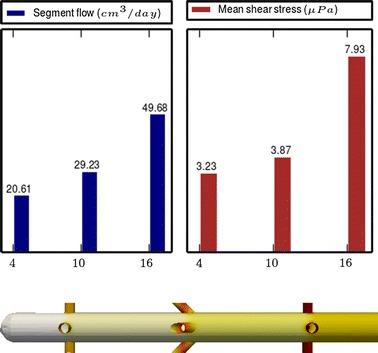
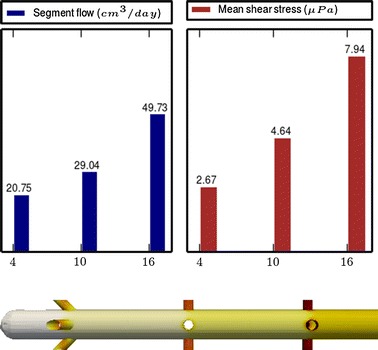
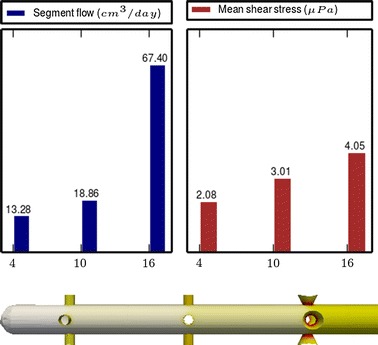
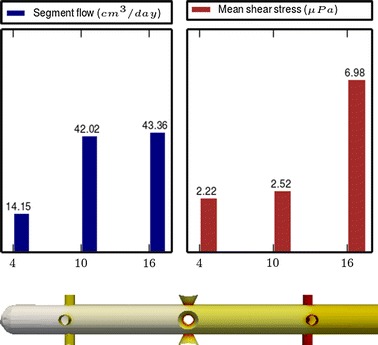
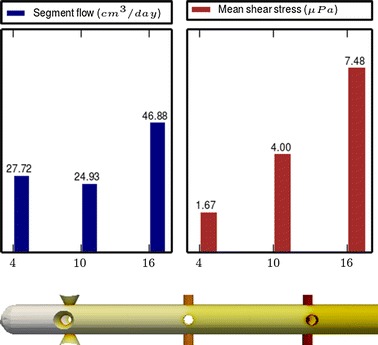
Results: The replacement of cylindrical holes by conical holes was found to have a strong influence on the flow distribution and to lower slightly the shear stress. Tilted holes did not involve flow distribution changes when the hole segments are sufficiently separated, but the mean shear stress was certainly reduced.
Conclusions: The authors present new results about the behavior of the fluid flow through ventricular catheters. These results complete earlier work on this topic by adding the influence of the hole geometry. The overall objective pursued by this research is to provide guidelines to improve existing commercially available ventricular catheters.
Keywords: Computational fluid dynamics; Flow rate; Hole geometry; Hydrocephalus; Shear stress; Ventricular catheter.
Figures
References
-
- Drake JM, Rose CS. Shunt Book, 1. 1. Cambridge: Wiley; 1995.
-
- Bergsneider M, Egnor MR, Johnston M, Kranz D, Madsen JR, McAllister JP, II, Stewart C, Walker ML, Williams MA. What we don’t (but should) know about hydrocephalus. J Neurosurgery. 2006;104(Suppl. 3):157–159. - PubMed
MeSH terms
LinkOut - more resources
Full Text Sources
Other Literature Sources
Medical
