


Effects of Physical Exercise Combined with Nutritional Supplements on Aging Brain Related Structures and Functions: A Systematic Review
- PMID: 27458371
- PMCID: PMC4933713
- DOI: 10.3389/fnagi.2016.00161
Effects of Physical Exercise Combined with Nutritional Supplements on Aging Brain Related Structures and Functions: A Systematic Review
Abstract
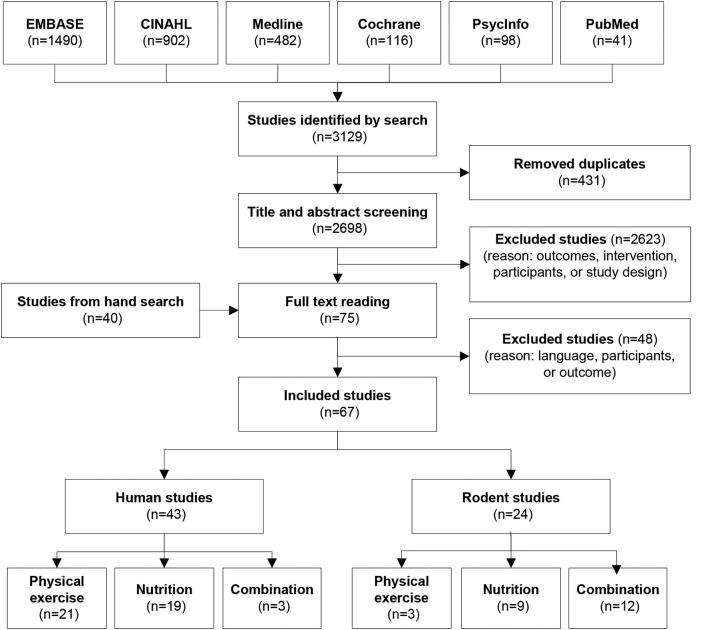
Age-related decline in gray and white brain matter goes together with cognitive depletion. To influence cognitive functioning in elderly, several types of physical exercise and nutritional intervention have been performed. This paper systematically reviews the potential additive and complementary effects of nutrition/nutritional supplements and physical exercise on cognition. The search strategy was developed for EMBASE, Medline, PubMed, Cochrane, CINAHL, and PsycInfo databases and focused on the research question: "Is the combination of physical exercise with nutrition/nutritional supplementation more effective than nutrition/nutritional supplementation or physical exercise alone in effecting on brain structure, metabolism, and/or function?" Both mammalian and human studies were included. In humans, randomized controlled trials that evaluated the effects of nutrition/nutritional supplements and physical exercise on cognitive functioning and associated parameters in healthy elderly (>65 years) were included. The systematic search included English and German language literature without any limitation of publication date. The search strategy yielded a total of 3129 references of which 67 studies met the inclusion criteria; 43 human and 24 mammalian, mainly rodent, studies. Three out of 43 human studies investigated a nutrition/physical exercise combination and reported no additive effects. In rodent studies, additive effects were found for docosahexaenoic acid supplementation when combined with physical exercise. Although feasible combinations of physical exercise/nutritional supplements are available for influencing the brain, only a few studies evaluated which possible combinations of nutrition/nutritional supplementation and physical exercise might have an effect on brain structure, metabolism and/or function. The reason for no clear effects of combinatory approaches in humans might be explained by the misfit between the combinations of nutritional methods with the physical interventions in the sense that they were not selected on sharing of similar neuronal mechanisms. Based on the results from this systematic review, future human studies should focus on the combined effect of docosahexaenoic acid supplementation and physical exercise that contains elements of (motor) learning.
Keywords: aging; brain function; brain metabolism; nutrition; nutritional supplementation; physical exercise.
Figures
References
-
- Alves C. R. R., Merege Filho C. A. A., Benatti F. B., Brucki S., Pereira R. M. R., de Sá Pinto A. L., et al. . (2013). Creatine supplementation associated or not with strength training upon emotional and cognitive measures in older women: a randomized double-blind study. PLoS ONE 8:e76301. 10.1371/journal.pone.0076301 - DOI - PMC - PubMed
Publication types
LinkOut - more resources
Full Text Sources
Other Literature Sources
Miscellaneous
