Metformin Increases Cortisol Regeneration by 11βHSD1 in Obese Men With and Without Type 2 Diabetes Mellitus
- PMID: 27459533
- PMCID: PMC5052341
- DOI: 10.1210/jc.2016-2069
Metformin Increases Cortisol Regeneration by 11βHSD1 in Obese Men With and Without Type 2 Diabetes Mellitus
Abstract
Context: The mechanism of action of metformin remains unclear. Given the regulation of the cortisol-regenerating enzyme 11βhydroxysteroid dehydrogenase 1 (11βHSD1) by insulin and the limited efficacy of selective 11βHSD1 inhibitors to lower blood glucose when co-prescribed with metformin, we hypothesized that metformin reduces 11βHSD1 activity.
Objective: To determine whether metformin regulates 11βHSD1 activity in vivo in obese men with and without type 2 diabetes mellitus.
Design: Double-blind, randomized, placebo-controlled, crossover study.
Setting: A hospital clinical research facility.
Participants: Eight obese nondiabetic (OND) men and eight obese men with type 2 diabetes (ODM).
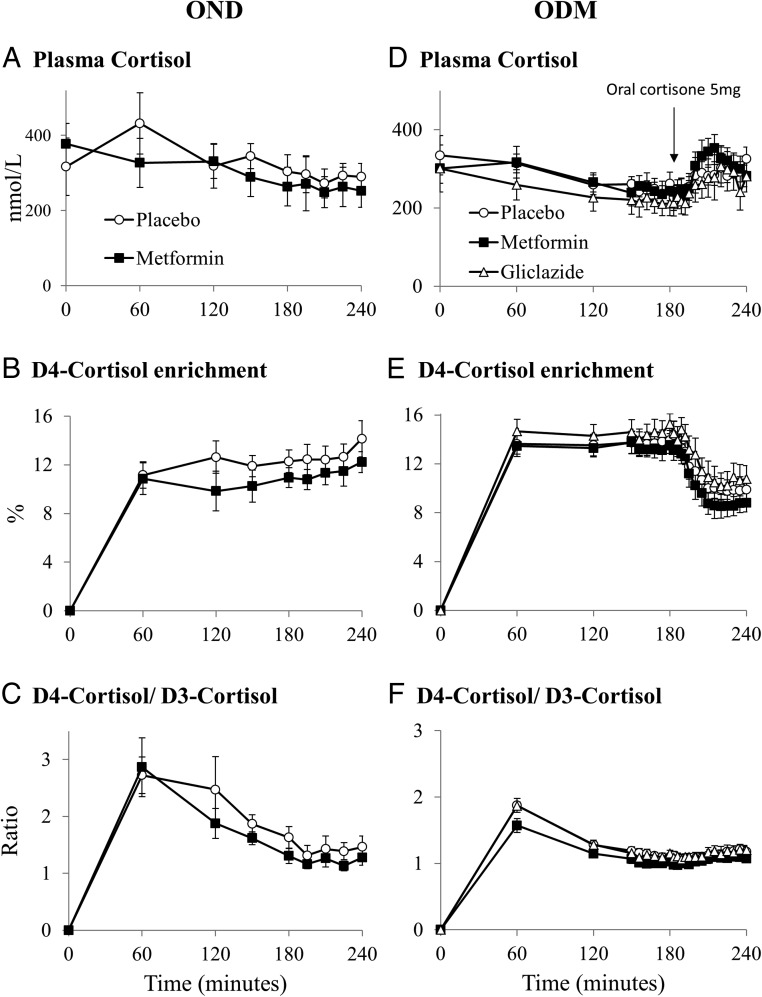
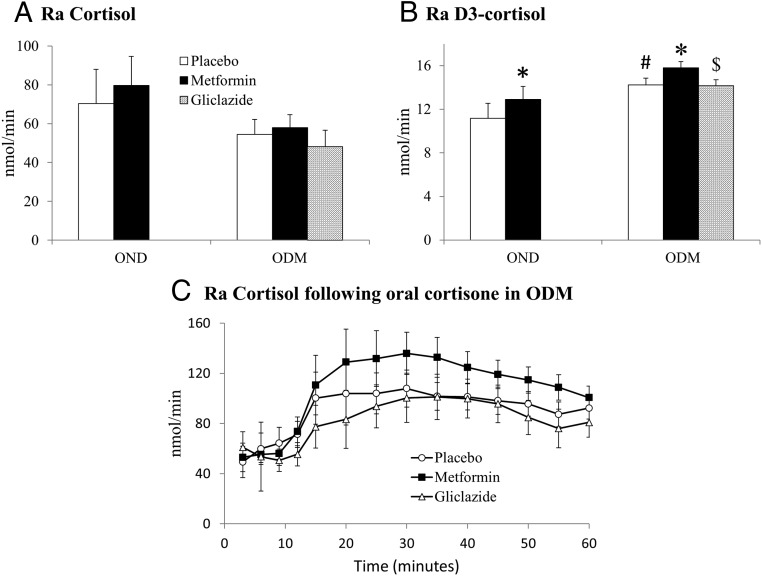
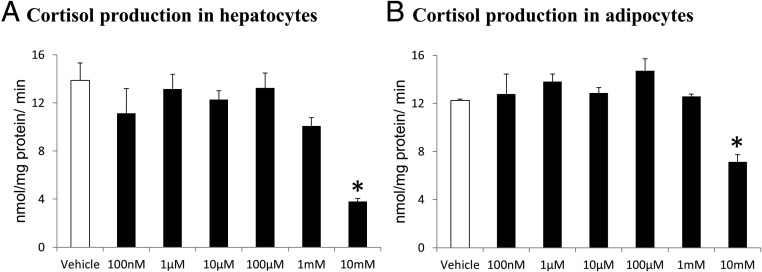
Intervention: Participants received 28 days of metformin (1 g twice daily), placebo, or (in the ODM group) gliclazide (80 mg twice daily) in random order. A deuterated cortisol infusion at the end of each phase measured cortisol regeneration by 11βHSD1. Oral cortisone was given to measure hepatic 11βHSD1 activity in the ODM group. The effect of metformin on 11βHSD1 was also assessed in human hepatocytes and Simpson-Golabi-Behmel syndrome adipocytes.
Main outcome measures: The effect of metformin on whole-body and hepatic 11βHSD1 activity.
Results: Whole-body 11βHSD1 activity was approximately 25% higher in the ODM group than the OND group. Metformin increased whole-body cortisol regeneration by 11βHSD1 in both groups compared with placebo and gliclazide and tended to increase hepatic 11βHSD1 activity. In vitro, metformin did not increase 11βHSD1 activity in hepatocytes or adipocytes.
Conclusions: Metformin increases whole-body cortisol generation by 11βHSD1 probably through an indirect mechanism, potentially offsetting other metabolic benefits of metformin. Co-prescription with metformin should provide a greater target for selective 11βHSD1 inhibitors.
Figures
References
-
- Pernicova I, Korbonits M. Metformin–mode of action and clinical implications for diabetes and cancer. Nat Rev Endocrinol. 2014;10:143–156. - PubMed
-
- Rask E, Olsson T, Söderberg S, et al. Tissue-specific dysregulation of cortisol metabolism in human obesity. J Clin Endocrinol Metab. 2001;86:1418–1421. - PubMed
-
- Rask E, Walker BR, Söderberg S, et al. Tissue-specific changes in peripheral cortisol metabolism in obese women: increased adipose 11β-hydroxysteroid dehydrogenase type 1 activity. J Clin Endocrinol Metab. 2002;87:3330–3336. - PubMed
Publication types
MeSH terms
Substances
Grants and funding
LinkOut - more resources
Full Text Sources
Other Literature Sources
Medical