


A prospective study of dietary patterns and cancer mortality among Blacks and Whites in the REGARDS cohort
- PMID: 27459634
- PMCID: PMC5041524
- DOI: 10.1002/ijc.30287
A prospective study of dietary patterns and cancer mortality among Blacks and Whites in the REGARDS cohort
Abstract
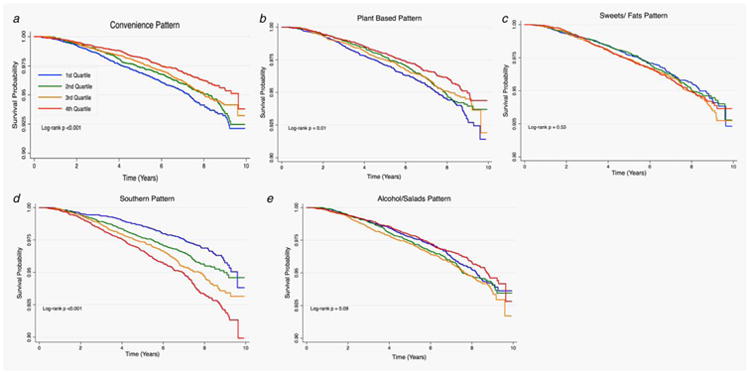
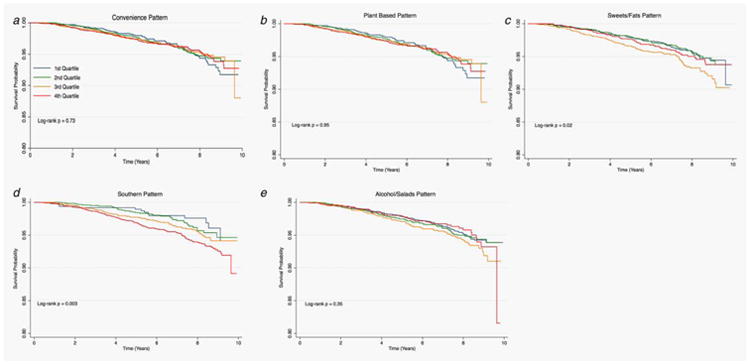
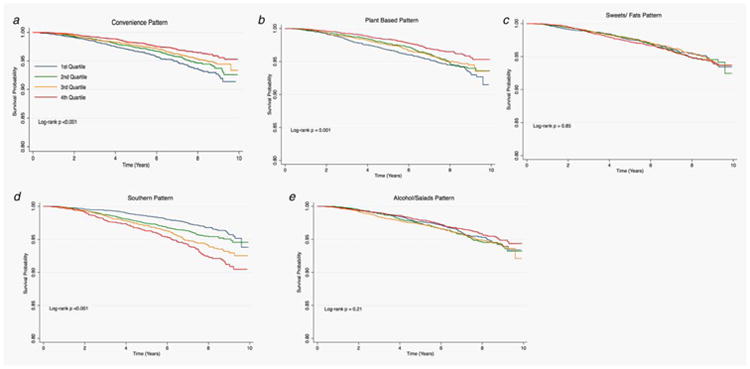
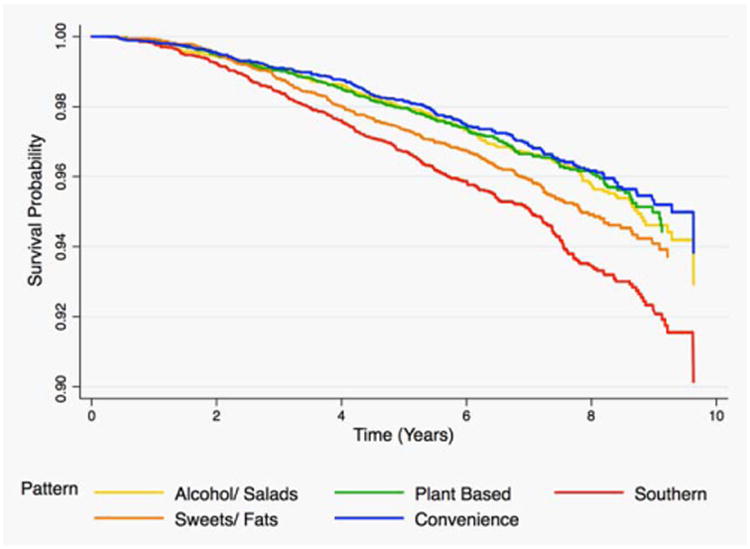
Marked racial differences exist in dietary patterns and obesity, as well as cancer mortality. This study aims to assess whether dietary patterns are associated with cancer mortality overall and by race. We identified 22,041 participants from the REasons for Geographic and Racial Differences in Stroke (REGARDS) cohort. Dietary patterns were categorized into: Convenience (Chinese and Mexican foods, pasta, pizza), Plant-based (fruits, vegetables), Southern (added fats, fried foods, sugar-sweetened beverages), Sweets/Fats (sugary foods) and Alcohol/Salads (alcohol, green-leafy vegetables, salad dressing). Using Cox regression, we examined the association between quartiles of dietary patterns and cancer mortality, adjusted for potential confounders, overall among all participants and stratified by race. A total of 873 cancer deaths were observed over the 10-year observation period: 582 (66.7%) in Whites and 291 (33.3%) in Blacks. Greater adherence to the Southern dietary pattern was associated with an increased risk of cancer mortality (4th vs. 1st quartile HR: 1.67; 95% CI: 1.32-2.10) overall, especially among Whites (4th vs. 1st quartile HR: 1.59; 95% CI: 1.22-2.08). The convenience (HR: 0.73; 95% CI: 0.56-0.94) and Plant-based (HR: 0.72; 95% CI: 0.55-0.93) dietary patterns were associated with up to a 28% reduced risk of cancer mortality, but only among Whites. Greater adherence to the Southern dietary pattern increased the risk of cancer mortality, while greater adherence to the convenience and Plant-based diets reduced the risk of cancer mortality among Whites. Racial differences were observed in the association between dietary patterns and cancer mortality, but warrant further study.
Keywords: cancer; diet; mortality; prospective cohort; racial disparities.
© 2016 UICC.
Figures
References
-
- Yang B, Jacobs EJ, Gapstur SM, et al. Active smoking and mortality among colorectal cancer survivors: the Cancer Prevention Study II nutrition cohort. J Clin Oncol. 2015;33:885–93. - PubMed
MeSH terms
Grants and funding
LinkOut - more resources
Full Text Sources
Other Literature Sources
