. 2016 Jul 27:6:29646.
doi: 10.1038/srep29646.

A Zinc Morpholine Complex Prevents HCl/Ethanol-Induced Gastric Ulcers in a Rat Model

Affiliations

A Zinc Morpholine Complex Prevents HCl/Ethanol-Induced Gastric Ulcers in a Rat Model

Suzy M Salama et al. Sci Rep. .

Retraction in

Abstract

Zinc is a naturally occurring element with roles in wound healing and rescuing tissue integrity, particularly in the gastrointestinal system, where it can be detected in the mucosal and submucosal layers. Zinc chelates are known to have beneficial effects on the gastrointestinal mucosa and in cases of gastric ulcer. We synthesized complexes of zinc featuring a heterocyclic amine binding amino acids then investigated their ability to enhance the gastric self-repair. Zinc-morpholine complex, Zn(L)SCN, namely showed strong free-radical scavenging, promotion of the DNA and RNA polymerases reconstruction and suppression of cell damage. The complex's mode of action is proposed to involve hydrogen bond formation via its bis(thiocyanato-k)zinc moiety. Zn(L)SCN complex had potent effects on gastric enzymatic activity both in vitro and in vivo. The complex disrupted the ulcerative process as demonstrated by changes in the intermediate metabolites of the oxidative pathway - specifically, reduction in the MDA levels and elevation of reduced glutathione together with an attenuation of oxidative DNA damage. Additionally, Zn(L)SCN restored the gastric mucosa, inhibited the production of pro-inflammatory cytokines (IL-6, TNF and the caspases), and preserved the gastric mucous balance. Zn(L)SCN thus exhibited anti-oxidative, anti-inflammatory and anti-apoptotic activities, all of which have cytoprotective effects on the gastric lining.


Figures
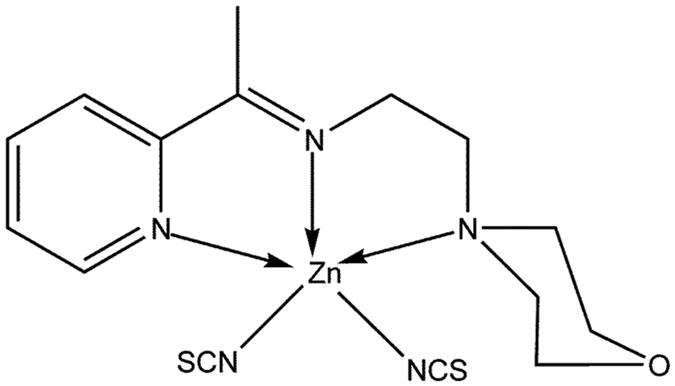
Figure 1
Figure 1. Structure of the Zn(L)SCN complex.
Figure 2
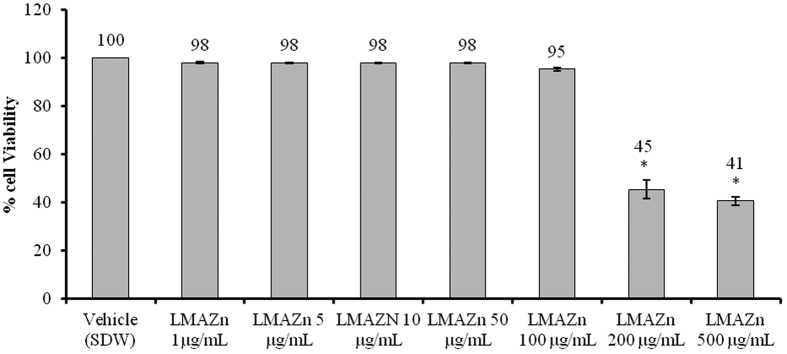
Figure 2. Cytotoxicity data for Zn(L)SCN in the normal human gastric cell line GES-1.
Data are reported as Mean ± SEM (n = 3). Asterisks (*) indicate significant (P < 0.05) differences relative to the vehicle (RPMI-1640). SDW denotes sterile distilled water and Zn(L)SCN denotes 2-morpholino-N-[1-(2-pyridyl)-ethylidene] ethanamine-k3N,N′,N″ bis (thiocyanato-kN) zin(II).
Figure 3
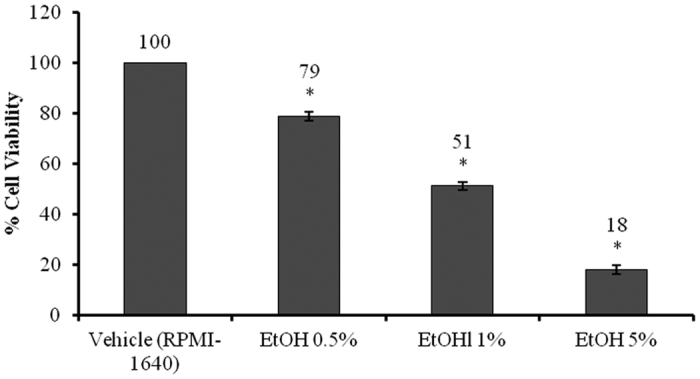
Figure 3. IC50 of ethanol (EtOH).
Data are reported as Mean ± SEM (n = 3). Asterisks (*) indicate significant (P < 0.05) differences relative to the vehicle (RPMI-1640).
Figure 4
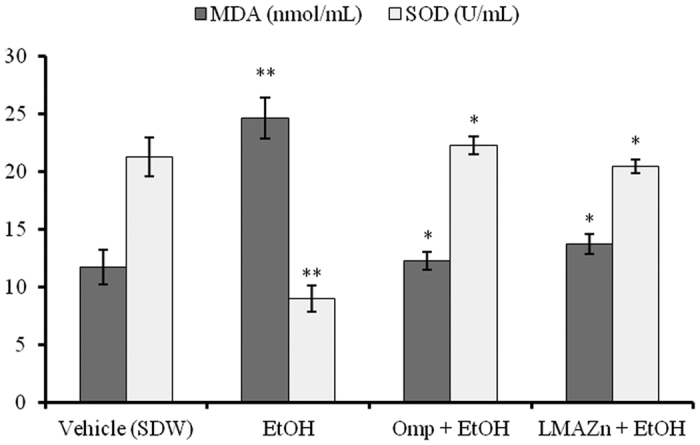
Figure 4. Effect of Zn(L)SCN on malondialdehyde (MDA) levels and the activity of superoxide dismutase (SOD) in the human gastric cell line GES-1 under ethanol-induced oxidative stress.
Data are reported as Mean ± SEM (n =3), *P < 0.05 vs EtOH and **P < 0.05 vs vehicle. (SDW) Sterile distilled water; (EtOH) ethanol; (OMP) omeprazole and (Zn(L)SCN) 2-morpholino-N-[1-(2-pyridyl)-ethylidene] ethanamine-k3N,N′,N″ bis (thiocyanato-kN) zin(II) [Zn(L)SCN].
Figure 5
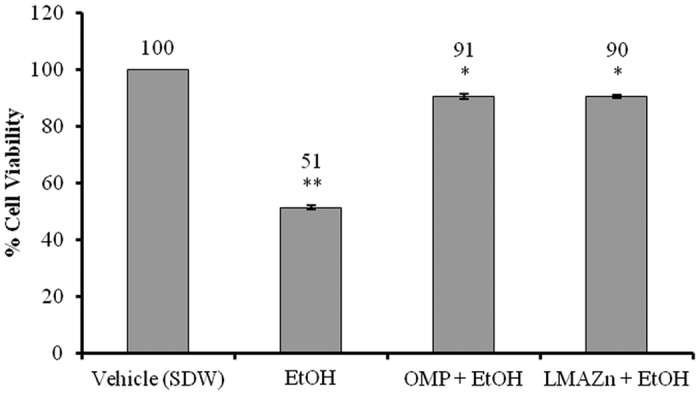
Figure 5. Effect of Zn(L)SCN on % cell viability in the human gastric cell line GES-1 under ethanol-induced oxidative stress.
Data are reported as Mean ± SEM (n = 3), *P < 0.05 vs EtOH and **P < 0.05 vs vehicle. (SDW) Sterile distilled water; (EtOH) Ethanol; (OMP) omeprazole and (Zn(L)SCN) 2-morpholino-N-[1-(2-pyridyl)-ethylidene] ethanamine-k3N,N′,N″ bis (thiocyanato-kN) zin(II) [Zn(L)SCN].
Figure 6
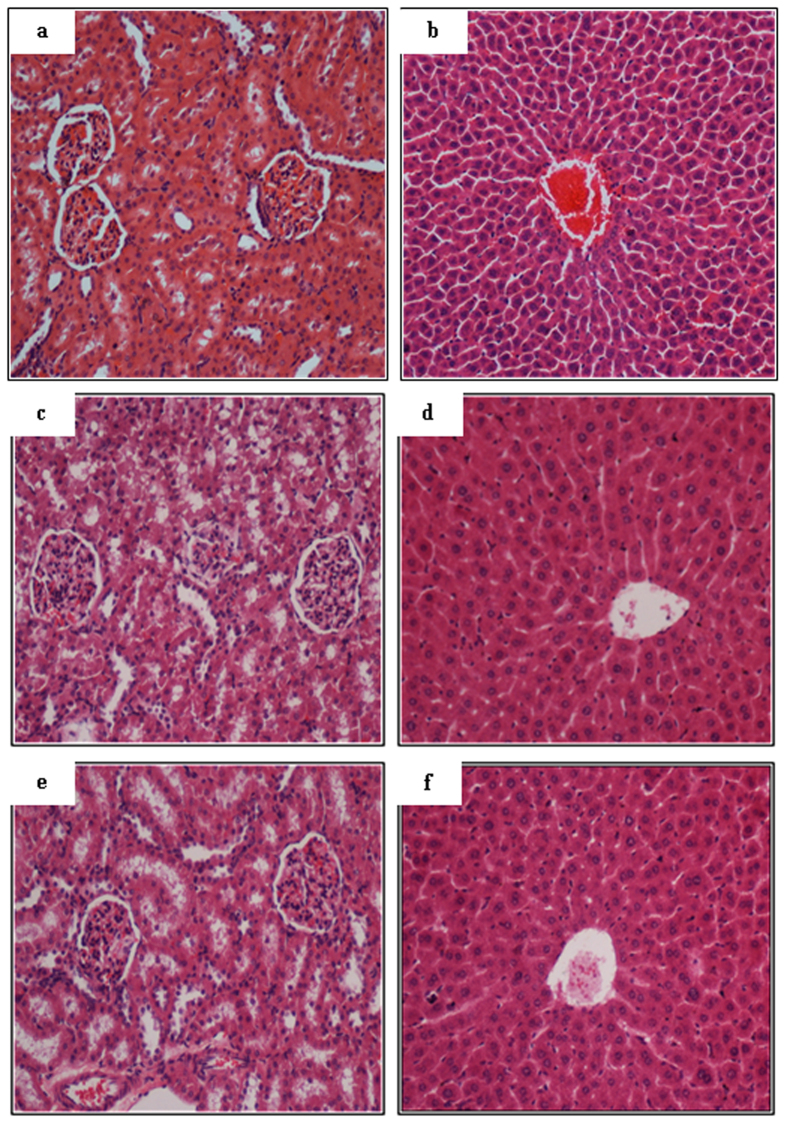
Figure 6
Acute toxicity data for Zn(L)SCN based on histological studies on kidney and liver sections of a vehicle rat treated with a 0.5% w/v solution of CMC (images (a,b), respectively), a rat treated with Zn(L)SCN at 50 mg/kg ((c,d), respectively), and a rat treated with Zn(L)SCN at 500 mg/kg ((e,f), respectively). The architecture of the kidney and liver tissue is normal in all cases. (Magnification = 20x).
Figure 7
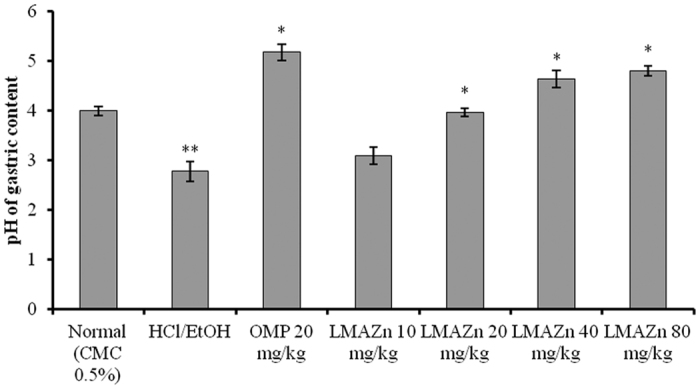
Figure 7. Effect of Zn(L)SCN on the gastric pH for the rats from all of the experimental groups.
Data are presented in the form of Mean (n = 6) ± SEM. *P < 0.001 vs ulcer control HCl/EtOH. **P < 0.001 vs normal. (CMC) Carboxymethyl cellulose; (HCl/EtOH) acidified ethanol; (OMP) omeprazole and (Zn(L)SCN) 2-morpholino-N-[1-(2-pyridyl)-ethylidene] ethanamine-k3N,N′,N″ bis (thiocyanato-kN) zin(II) [Zn(L)SCN].
Figure 8
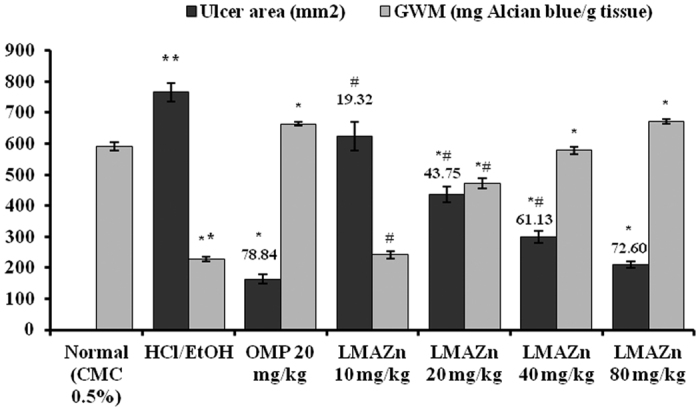
Figure 8. Effect of Zn(L)SCN on the gastric wall mucus (GWM), gastric ulcer area and inhibition area % for rats from all the experimental groups.
All values are displayed as Mean (n = 6) ± SEM. *P < 0.05 vs ulcer control HCl/EtOH. **P < 0.05 vs normal. #P < 0.05 vs OMP-treated group. Gastric lesions’ inhibition % is recorded above the bars. (CMC) Carboxymethyl cellulose; (HCl/EtOH) acidified ethanol; (OMP) omeprazole and (Zn(L)SCN) 2-morpholino-N-[1-(2-pyridyl)-ethylidene] ethanamine-k3N,N′,N″ bis (thiocyanato-kN) zin(II) [Zn(L)SCN].
Figure 9
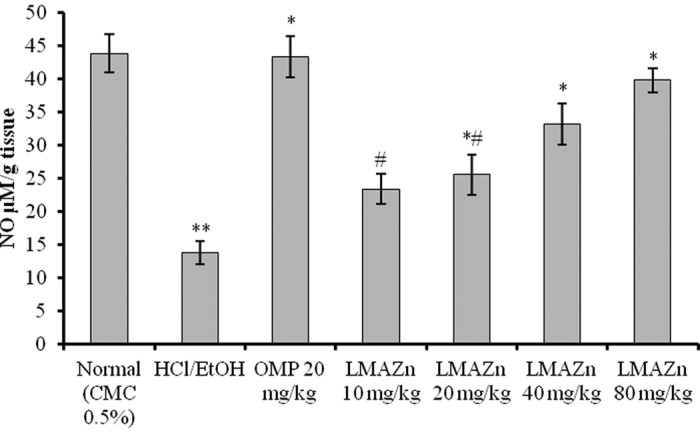
Figure 9. Effect of Zn(L)SCN on the gastric level of Nitric oxide (NO) for all treatment groups.
Values are displayed as Mean (n = 6) ± SEM. *P < 0.05 vs ulcer control HCl/EtOH. **P < 0.05 vs normal control. #P < 0.05 vs OMP-treated group. (CMC) Carboxymethyl cellulose; (HCl/EtOH) acidified ethanol; (OMP) omeprazole and (Zn(L)SCN) 2-morpholino-N-[1-(2-pyridyl)-ethylidene] ethanamine-k3N,N′,N″ bis (thiocyanato-kN) zin(II) [Zn(L)SCN].
Figure 10
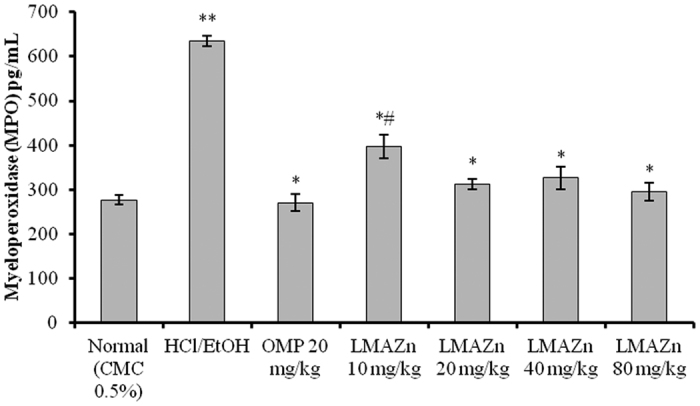
Figure 10. Effect of Zn(L)SCN on the serum level of Myeloperoxidase (MPO) for all experimental animals.
Values are displayed as Mean (n=6) ± SEM. *P < 0.05 vs ulcer control HCl/EtOH. **P < 0.05 vs normal control. #P < 0.05 vs OMP-treated group. (CMC) Carboxymethyl cellulose; (HCl/EtOH) acidified ethanol; (OMP) omeprazole and (Zn(L)SCN) 2-morpholino-N-[1-(2-pyridyl)-ethylidene] ethanamine-k3N,N′,N″ bis (thiocyanato-kN) zin(II) [Zn(L)SCN].
Figure 11
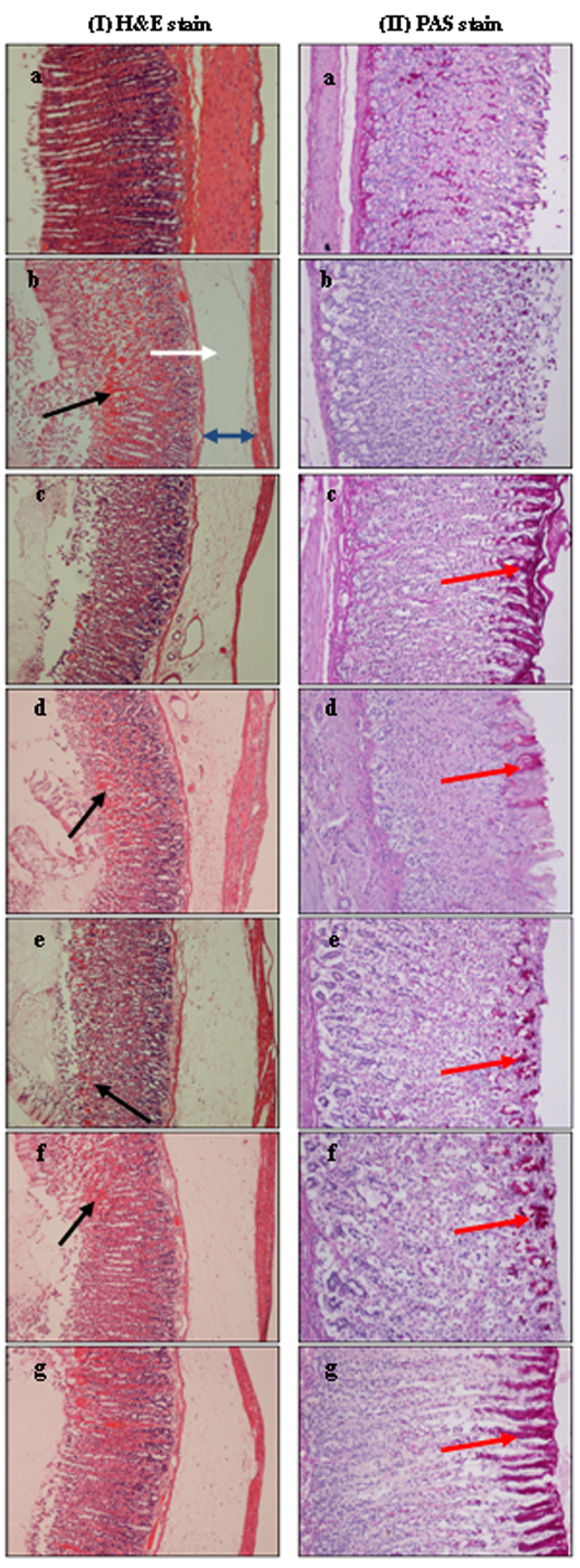
Figure 11. Histological observations of HCl/EtOH-induced gastric mucosal damage in rats (I) H&E staining. (II) PAS staining of the mucus layer.
(a) Normal control rats showing normal gastric mucosa. (b) Ulcer control rats showing severe damage of the surface epithelium (black arrow), submucosal edema (blue arrow) and neutrophil infiltration (white arrow). (c) OMP-treated rats (20 mg/kg) showing mild gastric damage and intense mucus secretion. (dg) Experimental rats pre-treated with Zn(L)SCN (10, 20, 40 and 80 mg/kg respectively) showing protection of the surface epithelium indicated by the decrease in mucosal damage and neutrophil infiltration, and increase in the mucus layer. (H & E stain 10x and PAS stain 20x).
Figure 12
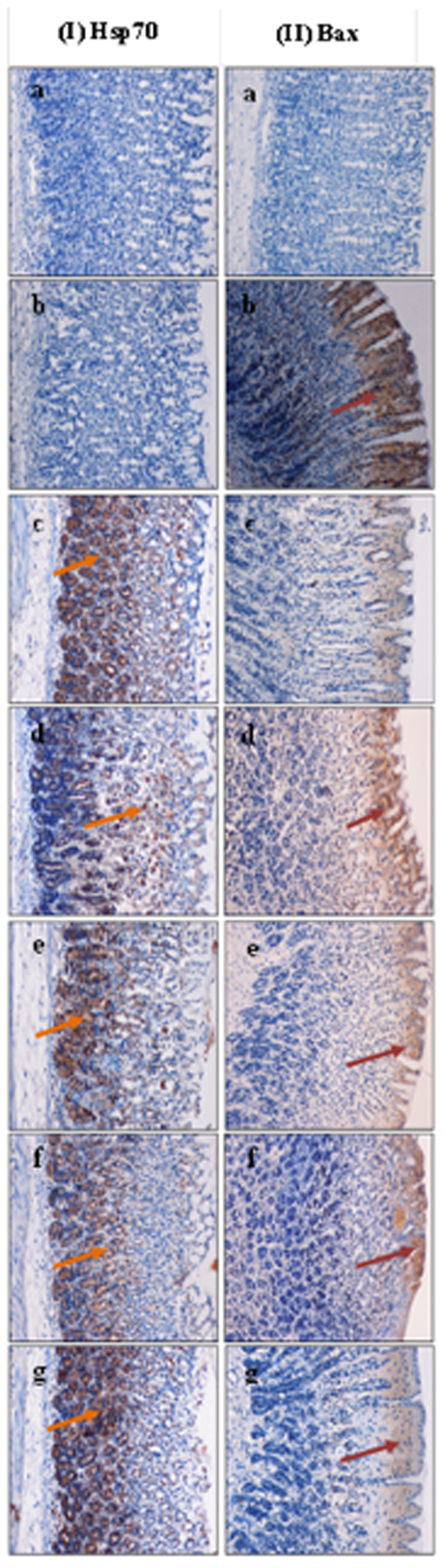
Figure 12. Effect of Zn(L)SCN on the immunohistochemical staining of Hsp70 (I) and Bax (II).
(a) Normal stomach. (b) Ulcer control group animals (HCl/EtOH) showing no Hsp70 expression and over-expression of Bax (dark red arrow). (c) OMP-treated animals (omeprazole, 20 mg/kg) showing over-expression of Hsp70 (orange arrow) and down expression of Bax. (dg) Rats received 10, 20, 40 and 80 mg/kg of Zn(L)SCN, respectively showing significant over-expression of Hsp70 and reduced expression of Bax protein. (Magnification = 20x).

References

    1. Fass R. Symptom assessment tools for gastroesophageal reflux disease (GERD) treatment. J Clin Gastroenterol 41, 437–444 (2007). - PubMed
    1. Thapa K., Ghatane S. & Rimal S. Health problems among the street children of Dharan municipality. Kathmandu Univ Med J. 7, 272–279 (2009). - PubMed
    1. Kong F. & Singh R. P. Modes of disintegration of solid foods in simulated gastric environment. Food Biophys 4, 180–190 (2009). - PMC - PubMed
    1. Schubert M. L. & Peura D. A. Control of gastric acid secretion in health and disease. Gastroenterology 134, 1842–1860 (2008). - PubMed
    1. Milunovich M. Natural Remedies for Common Digestive Problems. (Milunka Spasov, 2014).

Publication types

MeSH terms

LinkOut - more resources