


Differentiation of distinct long-lived memory CD4 T cells in intestinal tissues after oral Listeria monocytogenes infection
- PMID: 27461178
- PMCID: PMC5272904
- DOI: 10.1038/mi.2016.66
Differentiation of distinct long-lived memory CD4 T cells in intestinal tissues after oral Listeria monocytogenes infection
Abstract
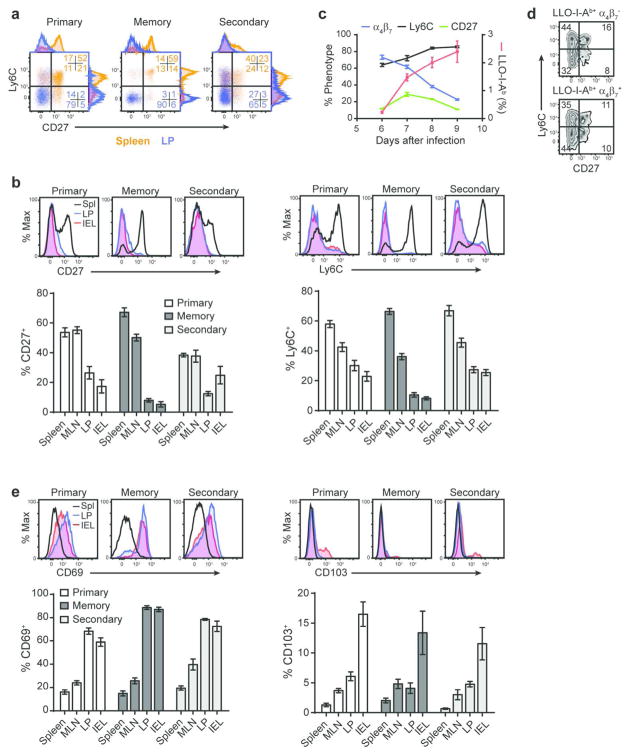
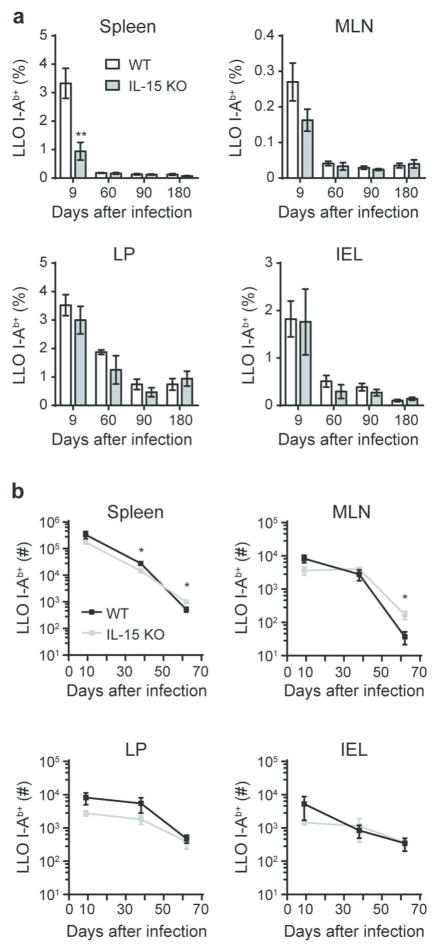
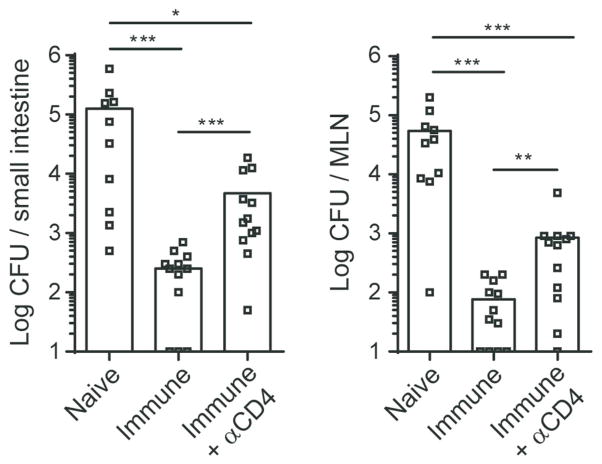
Mucosal antigen-specific CD4 T-cell responses to intestinal pathogens remain incompletely understood. Here we examined the CD4 T-cell response after oral infection with an internalin A 'murinized' Listeria monocytogenes (Lm). Oral Lm infection induced a robust endogenous listeriolysin O (LLO)-specific CD4 T-cell response with distinct phenotypic and functional characteristics in the intestine. Circulating LLO-specific CD4 T cells transiently expressed the 'gut-homing' integrin α4β7 and accumulated in the intestinal lamina propria and epithelium where they were maintained independent of interleukin (IL)-15. The majority of intestinal LLO-specific CD4 T cells were CD27- Ly6C- and CD69+ CD103- while the lymphoid LLO-specific CD4 T cells were heterogeneous based on CD27 and Ly6C expression and predominately CD69-. LLO-specific effector CD4 T cells transitioned into a long-lived memory population that phenotypically resembled their parent effectors and displayed hallmarks of residency. In addition, intestinal effector and memory CD4 T cells showed a predominant polyfunctional Th1 profile producing IFNγ, TNFα, and IL-2 at high levels with minimal but detectable levels of IL-17A. Depletion of CD4 T cells in immunized mice led to elevated bacterial burden after challenge infection highlighting a critical role for memory CD4 T cells in controlling intestinal intracellular pathogens.
Conflict of interest statement
Figures


References
-
- Harrington LE, et al. Interleukin 17-producing CD4+ effector T cells develop via a lineage distinct from the T helper type 1 and 2 lineages. Nat Immunol. 2005;6:1123–1132. - PubMed
-
- Becattini S, et al. T cell immunity. Functional heterogeneity of human memory CD4(+) T cell clones primed by pathogens or vaccines. Science. 2015;347:400–406. - PubMed
MeSH terms
Substances
Grants and funding
LinkOut - more resources
Full Text Sources
Other Literature Sources
Medical
Molecular Biology Databases
Research Materials
