


Syndrome of inappropriate secretion of antidiuretic hormone (SIADH) associated with lateral medullary syndrome: case report and literature review
- PMID: 27461339
- PMCID: PMC4962364
- DOI: 10.1186/s12883-016-0641-0
Syndrome of inappropriate secretion of antidiuretic hormone (SIADH) associated with lateral medullary syndrome: case report and literature review
Erratum in
-
Erratum to: Syndrome of inappropriate secretion of antidiuretic hormone (SIADH) associated with lateral medullary syndrome: case report and literature review.BMC Neurol. 2016 Oct 3;16(1):192. doi: 10.1186/s12883-016-0713-1. BMC Neurol. 2016. PMID: 27716174 Free PMC article. No abstract available.
Abstract
Background: Only one case of syndrome of inappropriate secretion of antidiuretic hormone with lateral medullary syndrome has been reported so far. We report a case of lateral medullary syndrome showing syndrome of inappropriate secretion of antidiuretic hormone and analyze the pathomechanism underlying its clinical features.
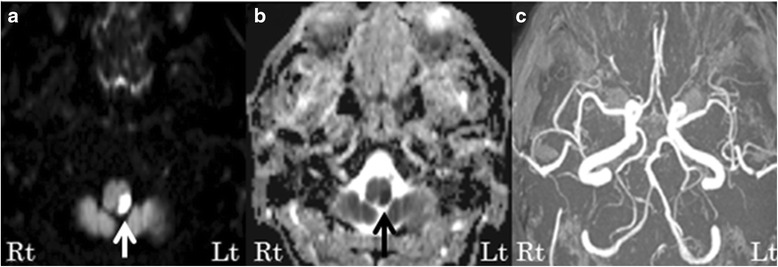
Case presentation: A 67-year-old man was admitted to our hospital for dizziness, dysarthria, and dysphagia. He was diagnosed with lateral medullary syndrome based on the neurological examination and brain magnetic resonance imaging. Horner syndrome was absent. Asymptomatic hyponatremia appeared 9 days after admission and the patient was diagnosed with syndrome of inappropriate secretion of antidiuretic hormone. Fluid restriction and intravenous furosemide injection improved the hyponatremia.
Conclusion: Lateral medullary syndrome could be associated with syndrome of inappropriate secretion of antidiuretic hormone.
Keywords: Antidiuretic hormone; Lateral medullary syndrome; Syndrome of inappropriate secretion of antidiuretic hormone; The nucleus of the solitary tract; The paraventricular nucleus in the hypothalamus.
Figures
References
Publication types
MeSH terms
Substances
LinkOut - more resources
Full Text Sources
Other Literature Sources
