


Plasma HIV-1 RNA viral load rebound among people who inject drugs receiving antiretroviral therapy (ART) in a Canadian setting: an ethno-epidemiological study
- PMID: 27462360
- PMCID: PMC4960678
- DOI: 10.1186/s12981-016-0108-9
Plasma HIV-1 RNA viral load rebound among people who inject drugs receiving antiretroviral therapy (ART) in a Canadian setting: an ethno-epidemiological study
Abstract
Background: People who inject drugs (PWID) living with HIV often experience sub-optimal antiretroviral therapy (ART) treatment outcomes, including HIV plasma viral load (PVL) rebound. While previous studies have identified risk factors for PVL rebound among PWID, no study has examined the perspectives of PWID who have experienced PVL rebound episodes. We conducted an ethno-epidemiological study to investigate the circumstances surrounding the emergence of rebound episodes among PWID in Vancouver, BC, Canada.
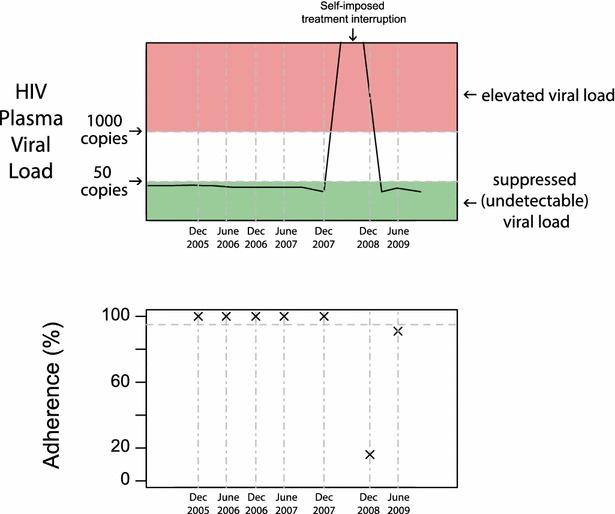
Methods: Comprehensive clinical records linked to a community-based prospective observational cohort of HIV-positive drug users were used to identify PWID who had recently experienced viral rebound. In-depth qualitative interviews with 16 male and 11 female participants explored participant perspectives regarding the emergence of viral rebound. A timeline depicting each participant's HIV viral load and adherence to ART was used to elicit discussion of circumstances surrounding viral rebound.
Findings: Viral rebound episodes were shaped by interplay between various individual, social, and environmental factors that disrupted routines facilitating adherence. Structural-environmental influences resulting in non-adherence included housing transitions, changes in drug use patterns and intense drug scene involvement, and inadequate care for co-morbid health conditions. Social-environmental influences on ART adherence included poor interactions between care providers and patients producing non-adherence, and understandings of HIV treatment that fostered intentional treatment discontinuation.
Conclusions: This study describes key pathways which led to rebound episodes among PWID receiving ART and illustrates how environmental forces may increase vulnerability for non-adherence leading to treatment failure. Our findings have potential to help inform interventions and supports that address social-structural forces that foster non-adherence among PWID.
Keywords: Antiretroviral treatment; Ethno-epidemiology; HIV; Injection drug use; Qualitative methods; Risk environment; Treatment as prevention.
Figures
References
-
- Montaner JS, Wood E, Kerr T, Lima V, Barrios R, Shannon K, et al. Expanded highly active antiretroviral therapy coverage among HIV-positive drug users to improve individual and public health outcomes. J Acquir Immune Defic Syndr. 2010;55(Suppl 1):S5–S9. doi: 10.1097/QAI.0b013e3181f9c1f0. - DOI - PubMed
-
- UNAIDS . An ambitious treatment target to help end the AIDS epidemic. Geneva: Joint United Nations Programme on HIV/AIDS (UNAIDS); 2014.
-
- Aceijas C, Oppenheimer E, Stimson GV, Ashcroft RE, Matic S, Hickman M. Antiretroviral treatment for injecting drug users in developing and transitional countries 1 year before the end of the “Treating 3 million by 2005. Making it happen. The WHO strategy” (“3 by 5”) Addiction. 2006;101(9):1246–1253. doi: 10.1111/j.1360-0443.2006.01509.x. - DOI - PubMed
Publication types
MeSH terms
Substances
Grants and funding
LinkOut - more resources
Full Text Sources
Other Literature Sources
Medical
