


Representing and querying disease networks using graph databases
- PMID: 27462371
- PMCID: PMC4960687
- DOI: 10.1186/s13040-016-0102-8
Representing and querying disease networks using graph databases
Abstract
Background: Systems biology experiments generate large volumes of data of multiple modalities and this information presents a challenge for integration due to a mix of complexity together with rich semantics. Here, we describe how graph databases provide a powerful framework for storage, querying and envisioning of biological data.
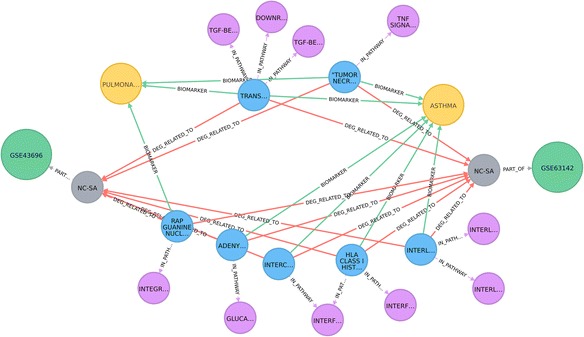
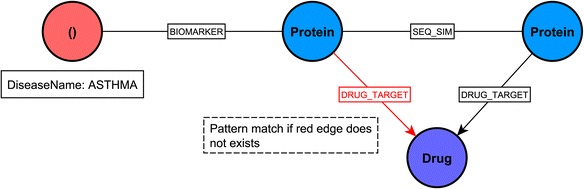
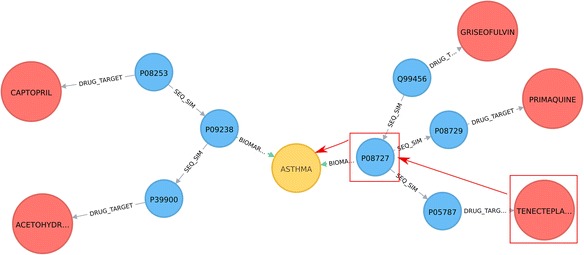
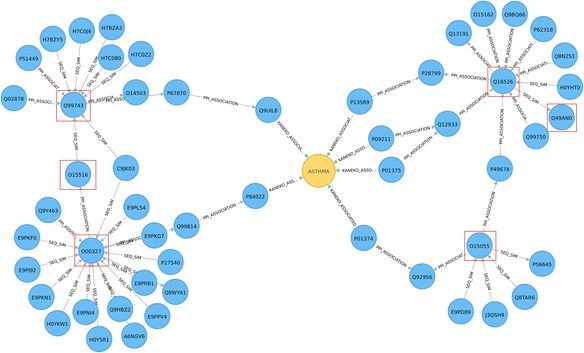
Results: We show how graph databases are well suited for the representation of biological information, which is typically highly connected, semi-structured and unpredictable. We outline an application case that uses the Neo4j graph database for building and querying a prototype network to provide biological context to asthma related genes.
Conclusions: Our study suggests that graph databases provide a flexible solution for the integration of multiple types of biological data and facilitate exploratory data mining to support hypothesis generation.
Keywords: Computational approach; Disease management platform; Graph database; Neo4j graph; Protein-centric framework; Systems medicine.
Figures
References
-
- Callahan A, Cruz-Toledo J, Ansell P, Dumontier M, et al. Bio2RDF release 2: improved coverage, interoperability and provenance of life science linked data. In: Cimiano P, Corcho O, Presutti V, et al., editors. Semantic Web Semant. Berlin Heidelberg: Big Data. Springer; 2013. pp. 200–212.
-
- Pareja-Tobes P, Tobes R, Manrique M, et al. Bio4j: a high-performance cloud-enabled graph-based data platform. bioRxiv 016758. 2015. doi: http://dx.doi.org/10.1101/016758. - DOI
Publication types
LinkOut - more resources
Full Text Sources
Other Literature Sources
