The changes of subtypes in pediatric diabetes and their clinical and laboratory characteristics over the last 20 years
- PMID: 27462584
- PMCID: PMC4960019
- DOI: 10.6065/apem.2016.21.2.81
The changes of subtypes in pediatric diabetes and their clinical and laboratory characteristics over the last 20 years
Abstract
Purpose: We studied the changes in subtypes of diabetes mellitus (DM) in children and evaluated the characteristics of each group over the past 20 years. In addition, we also examined the correlation between the glycated hemoglobin (HbA1c) values at the time of diagnosis and lipid profiles.
Methods: The patients were divided into 2 groups: there were a total of 190 patients under 20 years of age firstly diagnosed with DM in Ajou University Hospital. The patients in groups I and II were diagnosed from September 1995 to December 2004 and from January 2005 to April 2014, respectively.
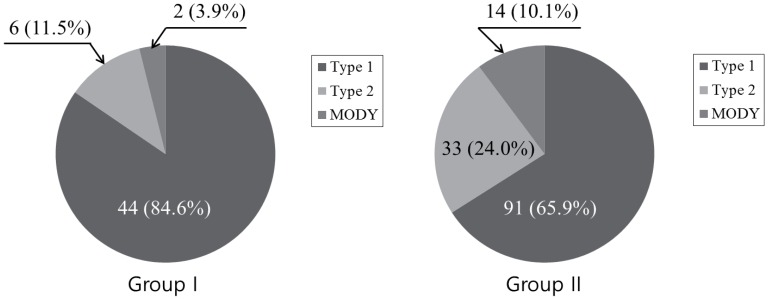
Results: The characteristics were compared between the 2 groups of patients. The result showed an increase in percentage of type 2 diabetes and maturity onset diabetes of the young (MODY) patients between the 2 groups. HbA1c and total cholesterol level had statistical significances to explain increasing the low-density lipoprotein cholesterol level among age, HbA1c, total cholesterol level, and z-scores of weight and body mass index (BMI) in type 2 diabetes. R-square was 0.074. However, z-score of BMI and total cholesterol level, not HbA1c, had statistical significances in type 1 diabetic patients. R-square was 0.323.
Conclusion: The increase in the proportions of both type 2 diabetes and MODY in the last 10 years needed to be reminded when diagnosing the subtypes of DM, and the dyslipidemia should be attended more as a common problem of pediatric diabetic patients.
Keywords: Adolescent; Child; Type 2 diabetes mellitus.
Conflict of interest statement
Figures
References
-
- Yoon KH, Lee JH, Kim JW, Cho JH, Choi YH, Ko SH, et al. Epidemic obesity and type 2 diabetes in Asia. Lancet. 2006;368:1681–1688. - PubMed
-
- Park J, Oh J, Yu J. Autoantibody positivity and clinical characteristics of diabetes mellitus in childhood. J Korean Soc Pediatr Endocrinol. 2011;16:119–127.
-
- Yang S, Hwang JS, Park HK, Lee HS, Kim HS, Kim EY, et al. Serum lipid concentrations, prevalence of dyslipidemia, and percentage eligible for pharmacological treatment of Korean children and adolescents; data from the Korea National Health and Nutrition Examination Survey IV (2007-2009) PLoS One. 2012;7:e49253. - PMC - PubMed
-
- Lim S, Jang HC, Park KS, Cho SI, Lee MG, Joung H, et al. Changes in metabolic syndrome in American and Korean youth, 1997-2008. Pediatrics. 2013;131:e214–e222. - PubMed
LinkOut - more resources
Full Text Sources
Other Literature Sources
Miscellaneous