


The Impacts of Oil Palm on Recent Deforestation and Biodiversity Loss
- PMID: 27462984
- PMCID: PMC4963098
- DOI: 10.1371/journal.pone.0159668
The Impacts of Oil Palm on Recent Deforestation and Biodiversity Loss
Abstract
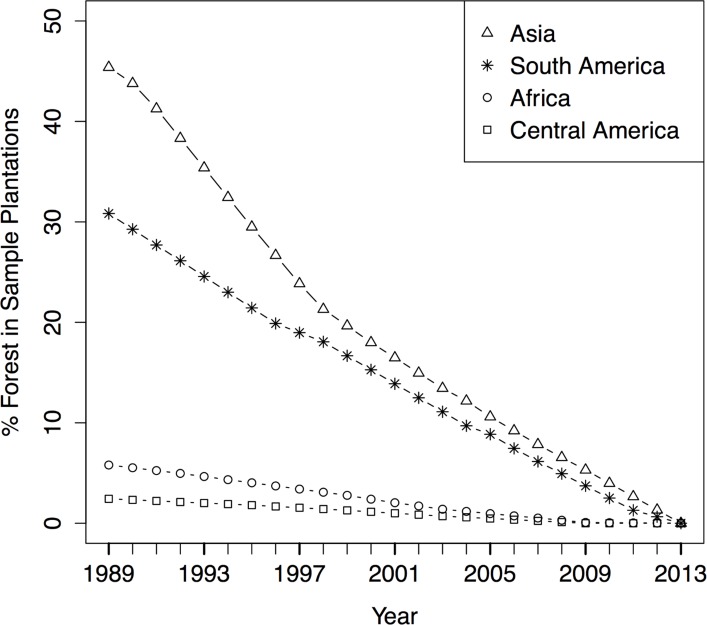
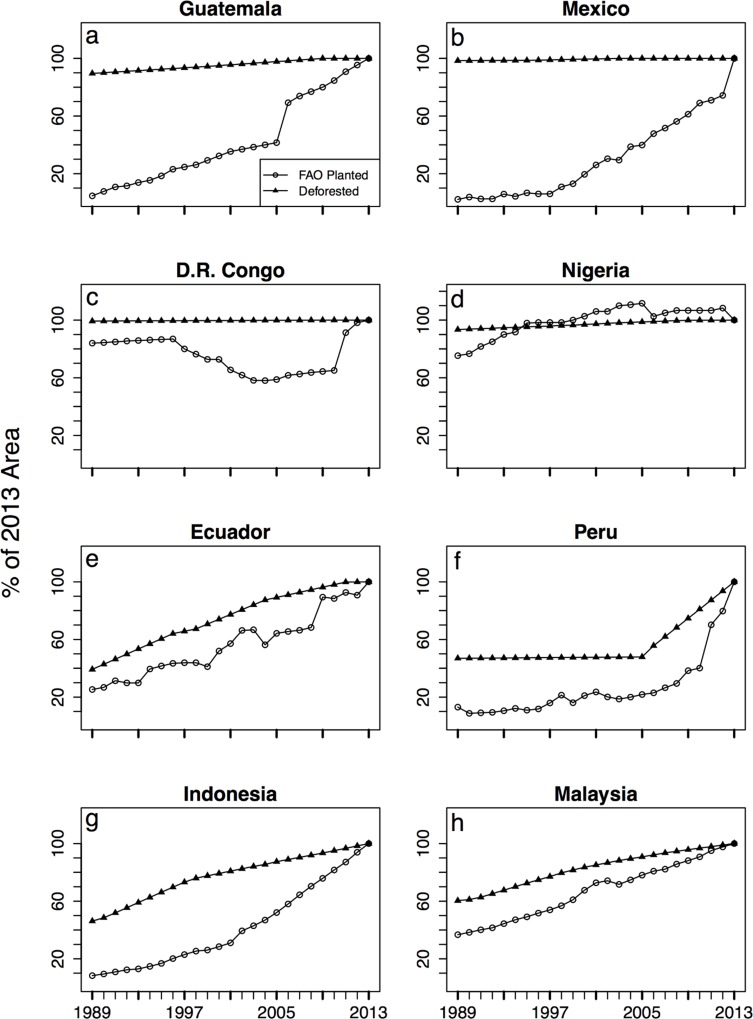
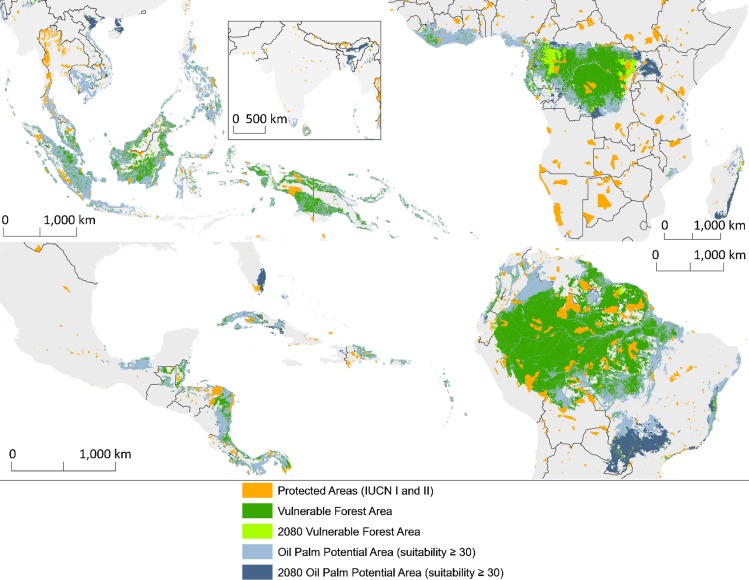
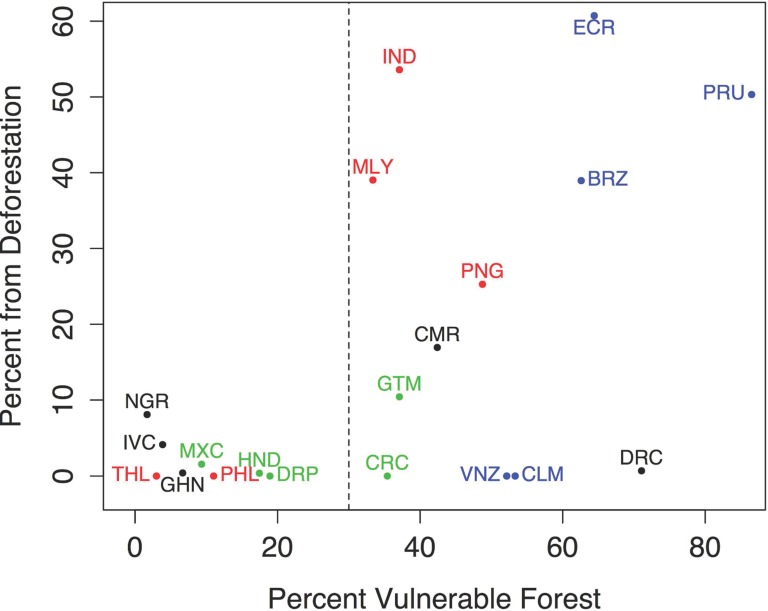
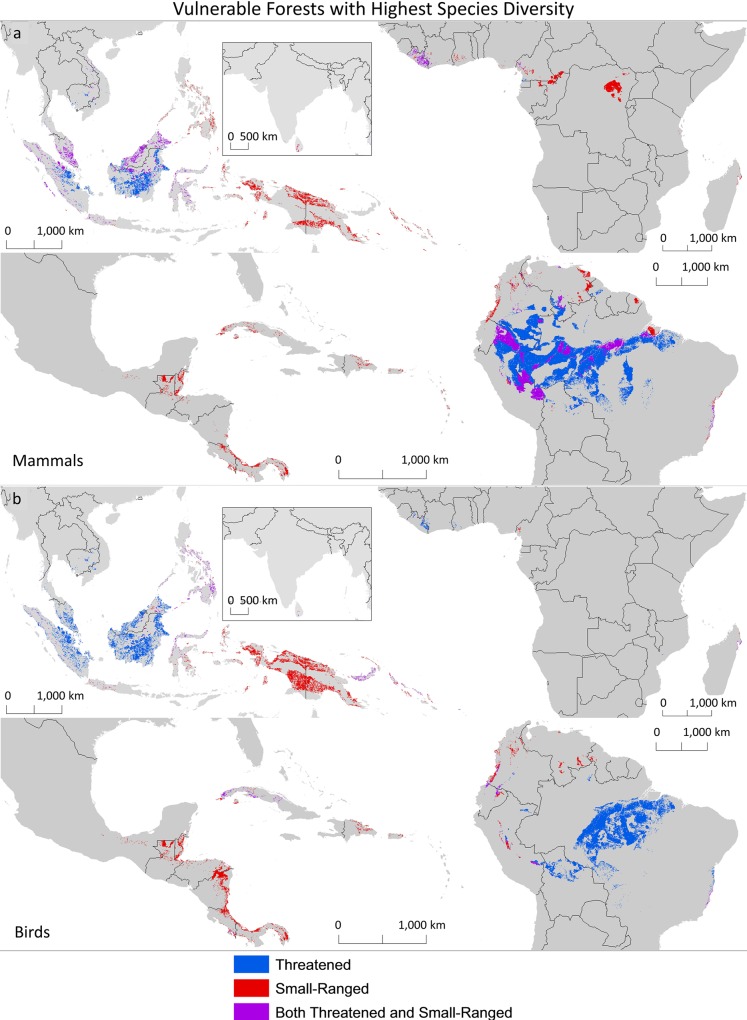
Palm oil is the most widely traded vegetable oil globally, with demand projected to increase substantially in the future. Almost all oil palm grows in areas that were once tropical moist forests, some of them quite recently. The conversion to date, and future expansion, threatens biodiversity and increases greenhouse gas emissions. Today, consumer pressure is pushing companies toward deforestation-free sources of palm oil. To guide interventions aimed at reducing tropical deforestation due to oil palm, we analysed recent expansions and modelled likely future ones. We assessed sample areas to find where oil palm plantations have recently replaced forests in 20 countries, using a combination of high-resolution imagery from Google Earth and Landsat. We then compared these trends to countrywide trends in FAO data for oil palm planted area. Finally, we assessed which forests have high agricultural suitability for future oil palm development, which we refer to as vulnerable forests, and identified critical areas for biodiversity that oil palm expansion threatens. Our analysis reveals regional trends in deforestation associated with oil palm agriculture. In Southeast Asia, 45% of sampled oil palm plantations came from areas that were forests in 1989. For South America, the percentage was 31%. By contrast, in Mesoamerica and Africa, we observed only 2% and 7% of oil palm plantations coming from areas that were forest in 1989. The largest areas of vulnerable forest are in Africa and South America. Vulnerable forests in all four regions of production contain globally high concentrations of mammal and bird species at risk of extinction. However, priority areas for biodiversity conservation differ based on taxa and criteria used. Government regulation and voluntary market interventions can help incentivize the expansion of oil palm plantations in ways that protect biodiversity-rich ecosystems.
Conflict of interest statement
Figures
References
-
- FAOSTAT database [Internet]. Rome (Italy). Food and Agriculture Organization of the United Nations. c2015. Available from:http://faostat3.fao.org/home/E.
-
- Corley RHV. How much palm oil do we need? Environmental Science & Policy. 2009;12(2):134–9.
-
- World Agricultural Outlook. [Internet]. Ames (IA). Food and Agricultural Policy Research Institute. c2012. Available from:http://www.fapri.iastate.edu/outlook/2012/.
-
- International Finance Corporation. The World Bank Group Framework and IFC Strategy for Engagement in the Palm Oil Sector Washington D.C. World Bank, 2011.
-
- Potts J, Lynch M, Wilkings A, Huppé G, Cunningham M, Voora V. The state of sustainability initiatives review 2014: Standards and the green economy International Institute for Sustainable Development (IISD) and the International Institute for Environment and Development (IIED) 2014. May 29;332
MeSH terms
Substances
LinkOut - more resources
Full Text Sources
Other Literature Sources
