


The secretome of MUSE cells contains factors that may play a role in regulation of stemness, apoptosis and immunomodulation
- PMID: 27463232
- PMCID: PMC5270533
- DOI: 10.1080/15384101.2016.1211215
The secretome of MUSE cells contains factors that may play a role in regulation of stemness, apoptosis and immunomodulation
Abstract
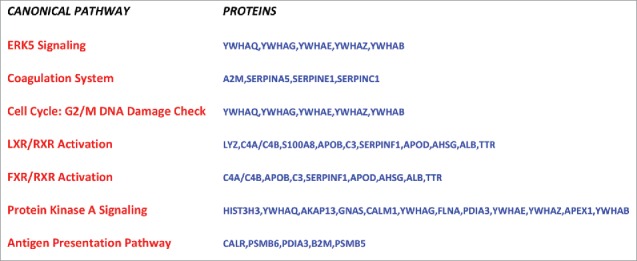
Mesenchymal stromal cells (MSCs) are a heterogeneous population, which contain several cell phenotypes: mesenchymal stem cells, progenitor cells, fibroblasts and other type of cells. Previously, we identified unique stem cells that we named multilineage-differentiating stress enduring (Muse) cells as one to several percent of MSCs of the bone marrow, adipose tissue and dermis. Among different cell populations in MSCs, Muse cells, positive for pluripotent surface marker SSEA-3, may represent cells responsible for pluripotent-like property of MSCs, since they express pluripotency genes, able to differentiated into triploblastic cells from a single cells and are self-renewable. MSCs release biologically active factors that have profound effects on local cellular dynamics. A thorough examination of MSC secretome seems essential for understanding the physiological functions exerted by these cells in our organism and also for rational cellular therapy design. In this setting, studies on secretome of Muse cells may shed light on pathways that are associated with their specific features. Our findings evidenced that secretomes of MSCs and Muse cells contain factors that regulate extracellular matrix remodeling, ox-redox activities and immune system. Muse cells appear to secrete factors that may preserve their stem cell features, allow survival under stress conditions and may contribute to their immunomodulation capacity. In detail, the proteins belonging to protein kinase A signaling, FXR/RXR activation and LXR/RXR activation pathways may play a role in regulation of Muse stem cell features. These last 2 pathways together with proteins associated with antigen presentation pathway and coagulation system may play a role in immunomodulation.
Keywords: Mesenchymal stem cells; apoptosis; cancer; secretome; senescence.
Figures



Comment in
-
Clinical development of MUSE cell treatment: The challenges.Cell Cycle. 2016 Dec;15(23):3165-3166. doi: 10.1080/15384101.2016.1229014. Epub 2016 Aug 30. Cell Cycle. 2016. PMID: 27575587 Free PMC article. No abstract available.
References
-
- Dezawa M, Kanno H, Hoshino M, Cho H, Matsumoto N, Itokazu Y, Tajima N, Yamada H, Sawada H, Ishikawa H, et al.. Specific induction of neuronal cells from bone marrow stromal cells and application for autologous transplantation. J Clin Invest 2004; 113:1701-10; PMID:15199405; http://dx.doi.org/ 10.1172/JCI200420935 - DOI - PMC - PubMed
-
- Oyagi S, Hirose M, Kojima M, Okuyama M, Kawase M, Nakamura T, Ohgushi H, Yagi K. Therapeutic effect of transplanting HGF-treated bone marrow mesenchymal cells into CCl4-injured rats. J Hepatol 2006; 44:742-8; PMID:16469408; http://dx.doi.org/ 10.1016/j.jhep.2005.10.026 - DOI - PubMed
-
- Pittenger MF, Mackay AM, Beck SC, Jaiswal RK, Douglas R, Mosca JD, Moorman MA, Simonetti DW, Craig S, Marshak DR. Multilineage potential of adult human mesenchymal stem cells. Science 1999; 284:143-7; PMID:10102814; http://dx.doi.org/ 10.1126/science.284.5411.143 - DOI - PubMed
-
- Shimizu S, Kitada M, Ishikawa H, Itokazu Y, Wakao S, Dezawa M. Peripheral nerve regeneration by the in vitro differentiated-human bone marrow stromal cells with Schwann cell property. Biochem Biophys Res Commun 2007; 359:915-20; PMID:17573041; http://dx.doi.org/ 10.1016/j.bbrc.2007.05.212 - DOI - PubMed
-
- Tamai K, Yamazaki T, Chino T, Ishii M, Otsuru S, Kikuchi Y, Iinuma S, Saga K, Nimura K, Shimbo T, et al.. PDGFRalpha-positive cells in bone marrow are mobilized by high mobility group box 1 (HMGB1) to regenerate injured epithelia. Proc Natl Acad Sci U S A 2011; 108:6609-14; PMID:21464317; http://dx.doi.org/ 10.1073/pnas.1016753108 - DOI - PMC - PubMed
MeSH terms
LinkOut - more resources
Full Text Sources
Other Literature Sources
