


Multimodal Imaging Reveals Improvement of Blood Supply to an Artificial Cell Transplant Site Induced by Bioluminescent Mesenchymal Stem Cells
- PMID: 27464498
- PMCID: PMC5209399
- DOI: 10.1007/s11307-016-0986-1
Multimodal Imaging Reveals Improvement of Blood Supply to an Artificial Cell Transplant Site Induced by Bioluminescent Mesenchymal Stem Cells
Abstract
Purpose: An artificial site for cell or pancreatic islet transplantation can be created using a polymeric scaffold, even though it suffers subcutaneously from improper vascularisation. A sufficient blood supply is crucial for graft survival and function and can be enhanced by transplantation of mesenchymal stem cells (MSCs). The purpose of this study was to assess the effect of syngeneic MSCs on neoangiogenesis and cell engraftment in an artificial site by multimodal imaging.
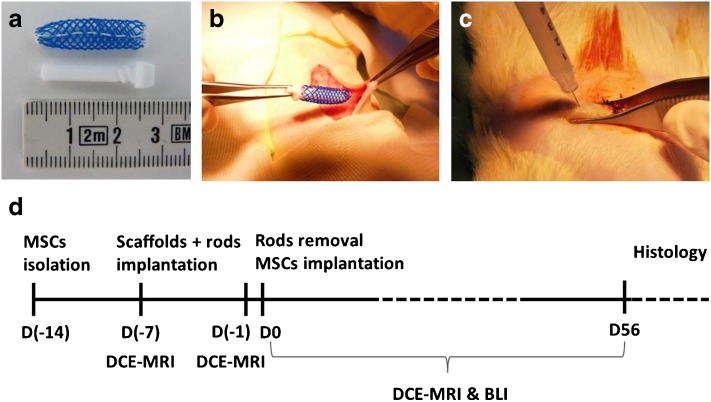
Procedures: MSCs expressing a gene for luciferase were injected into the artificial subcutaneous site 7 days after scaffold implantation. MRI experiments (anatomical and dynamic contrast-enhanced images) were performed on a 4.7-T scanner using gradient echo sequences. Bioluminescent images were acquired on an IVIS Lumina optical imager. Longitudinal examination was performed for 2 months, and one animal was monitored for 16 months.
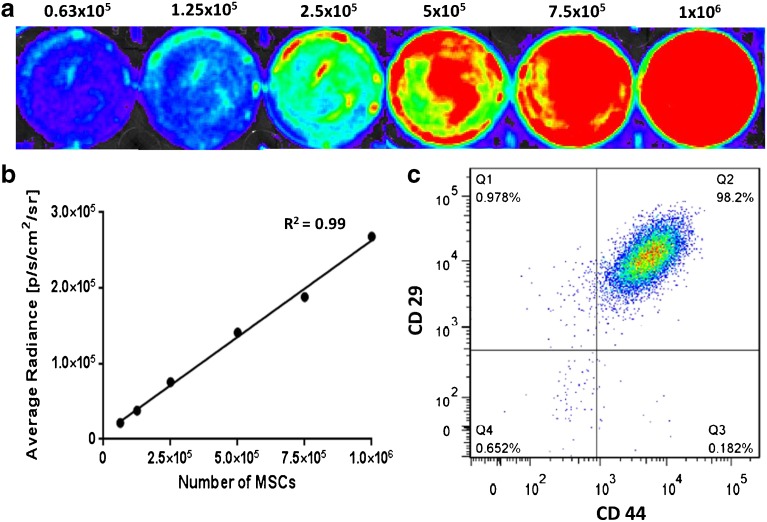
Results: We confirmed the long-term presence (lasting more than 16 months) of viable donor cells inside the scaffolds using bioluminescence imaging with an optical signal peak appearing on day 3 after MSC implantation. When compared to controls, the tissue perfusion and vessel permeability in the scaffolds were significantly improved at the site with MSCs with a maximal peak on day 9 after MSC transplantation.
Conclusions: Our data suggest that the maximal signal obtained by bioluminescence and magnetic resonance imaging from an artificially created site between 3 and 9 days after MSC transplantation can predict the optimal time range for subsequent cellular or tissue transplantation, including pancreatic islets.
Keywords: Bioluminescence; DCE; Dynamic contrast-enhanced MRI; Magnetic resonance imaging; Mesenchymal stem cells; Vascularisation.
Conflict of interest statement
Compliance with Ethical Standards The care of all animals was in accordance with the European Convention of Animal Care and the Animal Care Committee of the Institute for Clinical and Experimental Medicine. The Ministry of Health of the Czech Republic also approved the protocols related to this study. Conflict of Interest The authors declare that they have no conflict of interest.
Figures



References
-
- Shapiro JA, Auchincloss H, Lindblad R, et al. (2006) International Trial of the Edmonton Protocol for Islet Transplantation 355:1318–1330. - PubMed
MeSH terms
Substances
LinkOut - more resources
Full Text Sources
Other Literature Sources
Research Materials
