


Developing a mHealth intervention to promote uptake of HIV testing among African communities in the UK: a qualitative study
- PMID: 27465586
- PMCID: PMC4964066
- DOI: 10.1186/s12889-016-3278-4
Developing a mHealth intervention to promote uptake of HIV testing among African communities in the UK: a qualitative study
Erratum in
-
Erratum to: Developing a mHealth intervention to promote uptake of HIV testing among African communities in the UK: a qualitative study.BMC Public Health. 2016 Sep 8;16(1):948. doi: 10.1186/s12889-016-3580-1. BMC Public Health. 2016. PMID: 27608824 Free PMC article. No abstract available.
Abstract
Background: HIV-related mHealth interventions have demonstrable efficacy in supporting treatment adherence, although the evidence base for promoting HIV testing is inconclusive. Progress is constrained by a limited understanding of processes used to develop interventions and weak theoretical underpinnings. This paper describes a research project that informed the development of a theory-based mHealth intervention to promote HIV testing amongst city-dwelling African communities in the conditions.
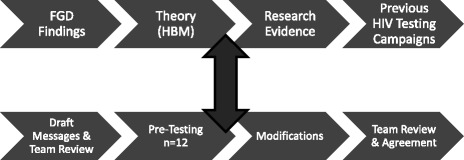
Methods: A community-based participatory social marketing design was adopted. Six focus groups (48 participants in total) were undertaken and analysed using a thematic framework approach, guided by constructs from the Health Belief Model. Key themes were incorporated into a set of text messages, which were pre-tested and refined.
Results: The focus groups identified a relatively low perception of HIV risk, especially amongst men, and a range of social and structural barriers to HIV testing. In terms of self-efficacy around HIV testing, respondents highlighted a need for communities and professionals to work together to build a context of trust through co-location in, and co-involvement of, local communities which would in turn enhance confidence in, and support for, HIV testing activities of health professionals. Findings suggested that messages should: avoid an exclusive focus on HIV, be tailored and personalised, come from a trusted source, allay fears and focus on support and health benefits.
Conclusions: HIV remains a stigmatized and de-prioritized issue within African migrant communities in the UK, posing barriers to HIV testing initiatives. A community-based participatory social marketing design can be successfully used to develop a culturally appropriate text messaging HIV intervention. Key challenges involved turning community research recommendations into brief text messages of only 160 characters. The intervention needs to be evaluated in a randomized control trial. Future research should explore the application of the processes and methodologies described in this paper within other communities.
Keywords: African; Community-based participatory research; HIV testing; Social marketing; Text messaging; mHealth.
References
-
- UNAIDS . Report on the Global HIV Epidemic. Geneva: UNAIDS; 2013.
-
- WHO . Consolidated Guidelines on HIV Testing Services, 5Cs: Consent, Confidentiality, Counselling, Correct Results and Connection. Geneva: World Health Organisation; 2015. - PubMed
-
- Blondell SJ, Kitter B, Griffin MP, Durham J. Barriers and Facilitators to HIV Testing in Migrants in High-Income Countries: A Systematic Review. AIDS Behav. 2015. - PubMed
-
- Public Health England . HIV in the United Kingdom: 2014 Report. London: Public Health England; 2014.
MeSH terms
LinkOut - more resources
Full Text Sources
Other Literature Sources
Medical
