


Not "Pulling up the Ladder": Women Who Organize Conference Symposia Provide Greater Opportunities for Women to Speak at Conservation Conferences
- PMID: 27467580
- PMCID: PMC4965090
- DOI: 10.1371/journal.pone.0160015
Not "Pulling up the Ladder": Women Who Organize Conference Symposia Provide Greater Opportunities for Women to Speak at Conservation Conferences
Abstract
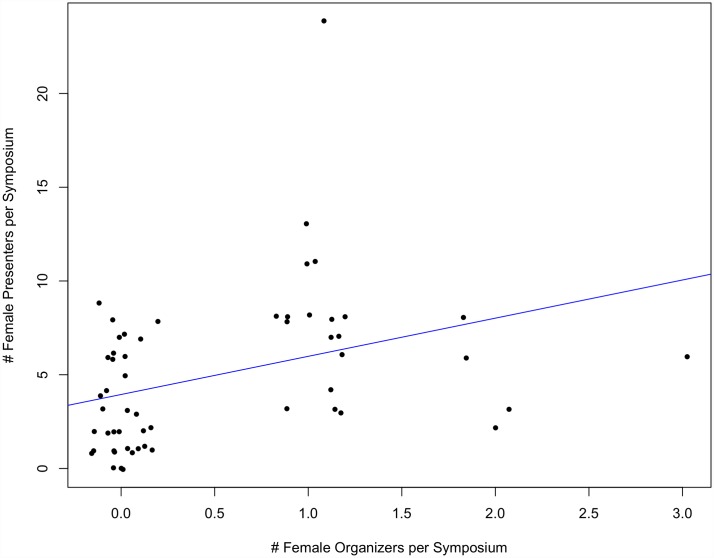
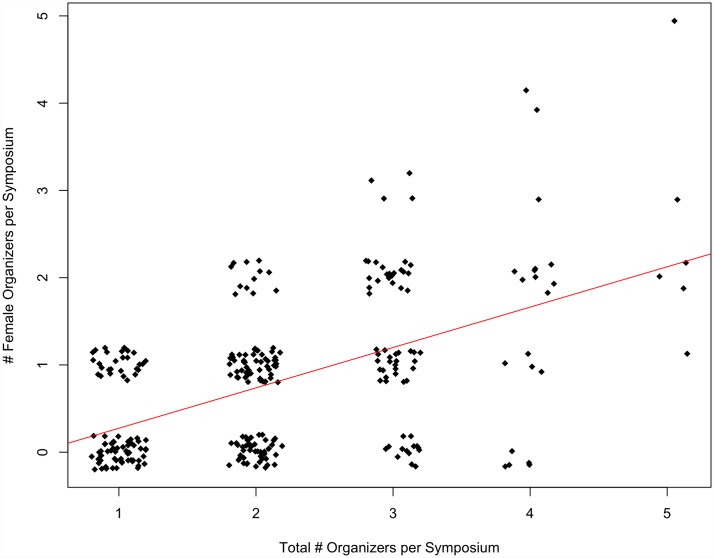
The scientific community faces numerous challenges in achieving gender equality among its participants. One method of highlighting the contributions made by female scientists is through their selection as featured speakers in symposia held at the conferences of professional societies. Because they are specially invited, symposia speakers obtain a prestigious platform from which to display their scientific research, which can elevate the recognition of female scientists. We investigated the number of female symposium speakers in two professional societies (the Society of Conservation Biology (SCB) from 1999 to 2015, and the American Society of Ichthyologists and Herpetologists (ASIH) from 2005 to 2015), in relation to the number of female symposium organizers. Overall, we found that 36.4% of symposia organizers and 31.7% of symposia speakers were women at the Society of Conservation Biology conferences, while 19.1% of organizers and 28% of speakers were women at the American Society of Ichthyologists and Herpetologists conferences. For each additional female organizer at the SCB and ASIH conferences, there was an average increase of 95% and 70% female speakers, respectively. As such, we found a significant positive relationship between the number of women organizing a symposium and the number of women speaking in that symposium. We did not, however, find a significant increase in the number of women speakers or organizers per symposium over time at either conference, suggesting a need for revitalized efforts to diversify our scientific societies. To further those ends, we suggest facilitating gender equality in professional societies by removing barriers to participation, including assisting with travel, making conferences child-friendly, and developing thorough, mandatory Codes of Conduct for all conferences.
Conflict of interest statement
Figures



References
-
- West MS, Curtis JW. AAUP faculty gender equity indicators 2006. Technical report, American Association of University Professors. 2006. Available: https://www.aaup.org/NR/rdonlyres/63396944-44BE-4ABA-9815-5792D93856F1/0....
-
- Redden E. Female faculty and the sciences. Inside Higher Ed. 2007. Available: http://www.insidehighered.com/news/2007/10/18/womensci.
-
- Ceci SJ, Ginther DK, Kahn S, Williams WM. Do women earn less than men in STEM fields? Scientific American. 2015. Available: http://www.scientificamerican.com/article/do-women-earn-less-than-men-in....
-
- Beede D, Julian T, Langdon D, McKittrick G, Khan B, Doms M. Women in STEM: a gender gap to innovation. U.S. Department of Commerce, Economics and Statistics Administration. 2011;Issue Brief #04–11. Available: http://www.esa.doc.gov/reports/women-stem-gender-gap-innovation
MeSH terms
LinkOut - more resources
Full Text Sources
Other Literature Sources
Research Materials
