


Assessment of acquired hemophilia patient demographics in the United States: the Hemostasis and Thrombosis Research Society Registry
- PMID: 27467981
- PMCID: PMC5054949
- DOI: 10.1097/MBC.0000000000000582
Assessment of acquired hemophilia patient demographics in the United States: the Hemostasis and Thrombosis Research Society Registry
Abstract
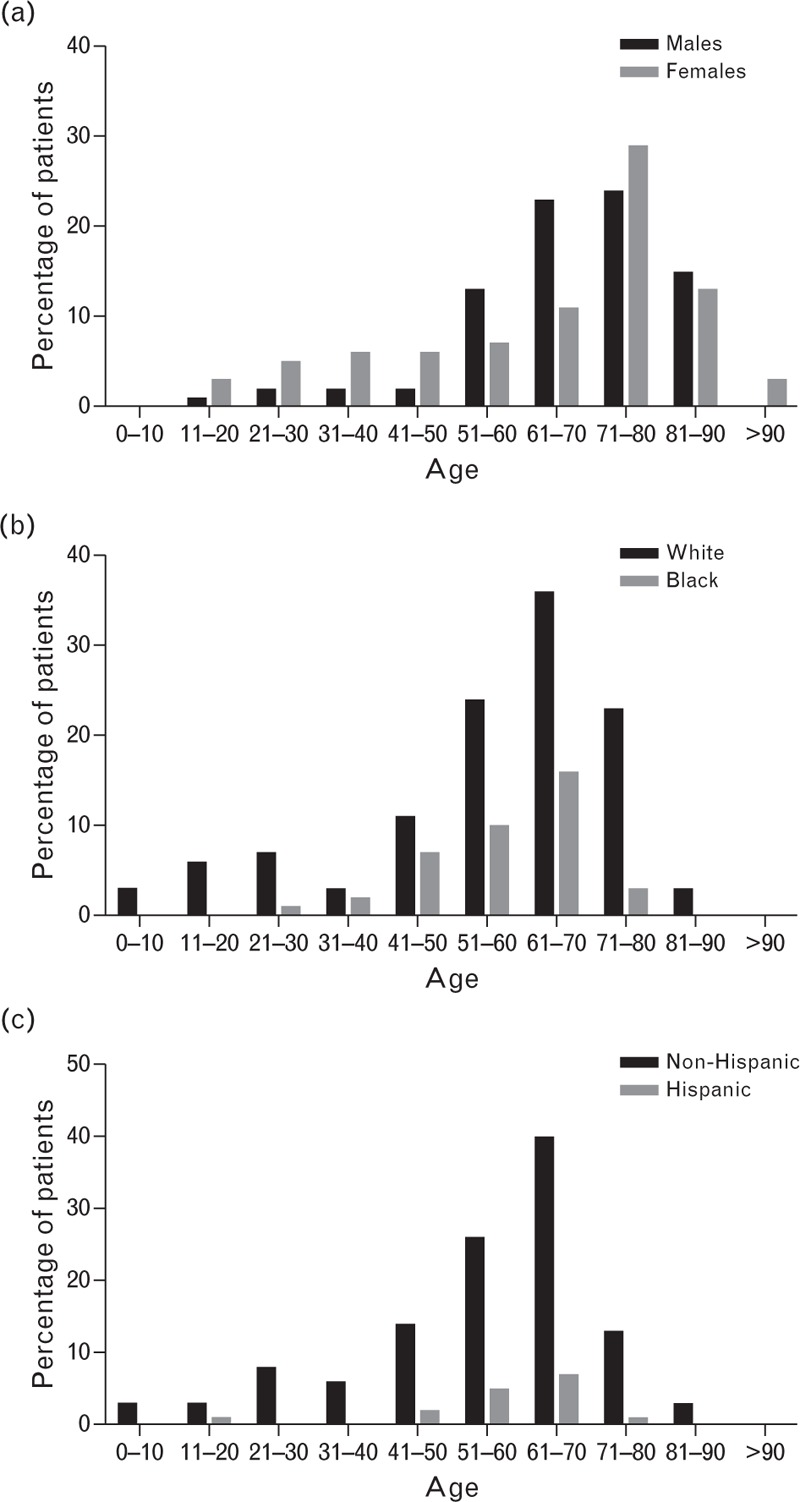
The Hemostasis and Thrombosis Research Society (HTRS) Registry was used to monitor the postapproval use of recombinant factor VIIa. The objective of this manuscript is to provide key insights on the demographics of patients with acquired hemophilia in the HTRS Registry. Acquired hemophilia patient registration in HTRS captured age; sex; comorbidities and predisposing conditions; first bleeding location; laboratory parameters; exposure to blood products, factor, and bypassing agents; and initiation of immune suppression/tolerance therapy. Overall, 166 patients with acquired hemophilia were registered in HTRS (83 women, 73 men, median age 70 years); the majority were non-Hispanic whites (61.4%). The most common comorbidities were autoimmune disease (28.4%) and malignancy (14.5%). The most common first site of bleeding was subcutaneous (27.1%); this was more common in whites (29.1%) than blacks (12.5%) and in non-Hispanics (26.4%) than Hispanics (11.8%). Blood product exposure was reported for 33.1% of patients; the most commonly reported product was packed red blood cells (28%). Of the 57 patients with outcome data available for immune tolerance therapy, 26 patients (46%) reported successful treatment, 13 reported unsuccessful treatment (23%), and 18 (32%) were receiving active treatment at the time of registration. The HTRS Registry final analysis provides the only current comprehensive look at acquired hemophilia in the US population, including details on underlying autoimmune diseases and malignancies. Pertinent to recognition and diagnosis of the disease, subcutaneous bleeding as a presenting bleeding symptom was more common in white and non-Hispanic individuals.
Figures
References
-
- Green D, Lechner K. A survey of 215 nonhemophilic patients with inhibitors to Factor VIII. Thromb Haemost 1981; 45:200–203. - PubMed
-
- Collins PW, Hirsch S, Baglin TP, Dolan G, Hanley J, Makris M, et al. Acquired hemophilia A in the United Kingdom: a 2-year national surveillance study by the United Kingdom Haemophilia Centre Doctors’ Organisation. Blood 2007; 109:1870–1877. - PubMed
-
- Collins P, Macartney N, Davies R, Lees S, Giddings J, Majer R. A population based, unselected, consecutive cohort of patients with acquired haemophilia A. Br J Haematol 2004; 124:86–90. - PubMed
-
- Collins P, Budde U, Rand JH, Federici AB, Kessler CM. Epidemiology and general guidelines of the management of acquired haemophilia and von Willebrand syndrome. Haemophilia 2008; 14 Suppl 3:49–55. - PubMed
-
- Knoebl P, Marco P, Baudo F, Collins P, Huth-Kuhne A, Nemes L, et al. Demographic and clinical data in acquired hemophilia A: results from the European Acquired Haemophilia Registry (EACH2). J Thromb Haemost 2012; 10:622–631. - PubMed
MeSH terms
LinkOut - more resources
Full Text Sources
Other Literature Sources
Medical
