


Evaluating the impact of chemotherapy-induced peripheral neuropathy symptoms (CIPN-sx) on perceived ability to work in breast cancer survivors during the first year post-treatment
- PMID: 27470258
- PMCID: PMC5031751
- DOI: 10.1007/s00520-016-3329-5
Evaluating the impact of chemotherapy-induced peripheral neuropathy symptoms (CIPN-sx) on perceived ability to work in breast cancer survivors during the first year post-treatment
Abstract
Purpose: To describe the impact of chemotherapy-induced peripheral neuropathy symptoms (CIPN-sx) on breast cancer survivors' (BCS) perceived ability to work post-treatment.
Methods: The sample included 22 chemotherapy-treated (Ctx+) and 22 chemotherapy-naïve (Ctx-) female BCS. Data was collected at the following three time points: baseline (post-surgery, pre-chemotherapy), 1 month (1 M) post-chemotherapy, and approximately 1 year (1 Y) later. The presence, frequency, number, and severity of CIPN-sx were self-reported using the Functional Assessment of Cancer Therapy/Gynecologic Oncology Group-Neurotoxicity questionnaire (FACT/GOG-Ntx) version 4, a validated 11-item CIPN measure. Perceived ability to work was measured using an item from the Functional Well-Being subscale of the FACT/GOG-Ntx.
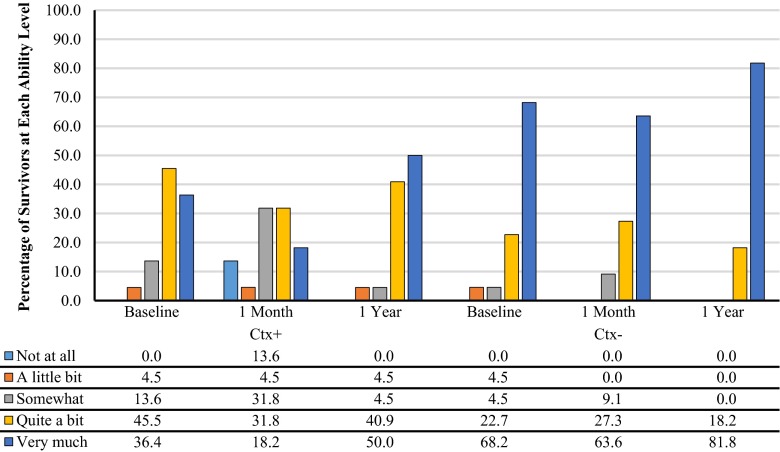
Results: At 1 Y, more than 50 % of Ctx+ reported discomfort, numbness, or tingling in their hands or feet; weakness; or difficulty feeling small objects. The presence, number, and severity of these symptoms were correlated with being less able to work for Ctx+ at 1 M but not 1 Y. Results of a regression analysis using CIPN-sx to predict work ability found that models combining (1) hand numbness and trouble feeling small objects, (2) trouble buttoning buttons and trouble feeling small objects, (3) foot numbness and foot pain, (4) foot numbness and trouble walking, and (5) trouble hearing and hand pain each predicted survivors who were "not at all" able to work at 1 M.
Conclusions: Unresolved CIPN-sx may play a role in challenges working for BCS post-treatment. These findings highlight the need for research to explore the impact that CIPN-sx have on BCS' ability to work, as well as the development of interventions to improve work function in BCS with CIPN-sx.
Keywords: Breast cancer; CIPN; Chemotherapy; Perceived occupational function; Peripheral neuropathy; Survivorship; Symptoms; Work.
Conflict of interest statement
The authors have no conflicts of interest to disclose. The authors verify that they have full control of all primary data and agree, if requested, to allow the journal to verify the data from which all analyses were derived.
Figures
References
MeSH terms
Grants and funding
LinkOut - more resources
Full Text Sources
Other Literature Sources
Medical
