


Heterogeneity in ADHD: Neurocognitive predictors of peer, family, and academic functioning
- PMID: 27472007
- PMCID: PMC6083022
- DOI: 10.1080/09297049.2016.1205010
Heterogeneity in ADHD: Neurocognitive predictors of peer, family, and academic functioning
Abstract
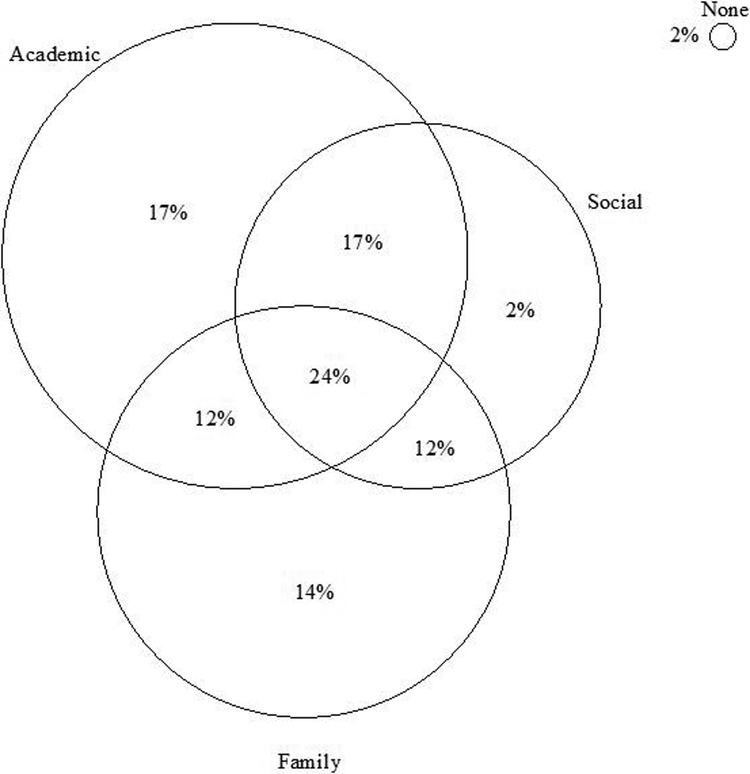
Childhood attention-deficit/hyperactivity disorder (ADHD) is associated with impairments in peer, family, and academic functioning. Although impairment is required for diagnosis, children with ADHD vary significantly in the areas in which they demonstrate clinically significant impairment. However, relatively little is known about the mechanisms and processes underlying these individual differences. The current study examined neurocognitive predictors of heterogeneity in peer, family, and academic functioning in a well-defined sample of 44 children with ADHD aged 8-13 years (M = 10.31, SD = 1.42; 31 boys, 13 girls; 81% Caucasian). Reliable change analysis indicated that 98% of the sample demonstrated objectively-defined impairment on at least one assessed outcome measure; 65% were impaired in two or all three areas of functioning. ADHD children with quantifiable deficits in academic success and family functioning performed worse on tests of working memory (d = 0.68 to 1.09), whereas children with impaired parent-reported social functioning demonstrated slower processing speed (d = 0.53). Dimensional analyses identified additional predictors of peer, family, and academic functioning. Working memory abilities were associated with individual differences in all three functional domains, processing speed predicted social functioning, and inhibitory control predicted family functioning. These results add to a growing literature implicating neurocognitive abilities not only in explaining behavioral differences between ADHD and non-ADHD groups, but also in the substantial heterogeneity in ecologically-valid functional outcomes associated with the disorder.
Keywords: ADHD; Academic; Family; Functioning; Heterogeneity; Social.
Conflict of interest statement
Conflict of Interest:
The authors have no conflicts of interest to report.
Figures
References
-
- Ackerman PL, Beier ME, & Boyle MO (2005). Working memory and intelligence: The same or different constructs? Psychological Bulletin, 131, 30–60. - PubMed
-
- Alderson RM, Rapport MD, Hudec KL, Sarver DE, & Kofler MJ (2010). Competing core processes in ADHD: Do working memory deficiencies underlie behavioral inhibition deficits?. Journal of Abnormal Child Psychology, 38, 497–507. - PubMed
-
- Alderson RM, Rapport MD, & Kofler MJ (2007). ADHD and behavioral inhibition: a meta-analytic review of the stop-signal paradigm. Journal of Abnormal Child Psychology, 35, 745–758. - PubMed
-
- Alderson RM, Rapport MD, Sarver DE, & Kofler MJ (2008). ADHD and behavioral inhibition: A re-examination of the stop-signal task. Journal of Abnormal Child Psychology, 36, 989–998. - PubMed
-
- Alloway TP, Gathercole SE, Adams AM, Willis C, Eaglen R, & Lamont E (2005). Working memory and phonological awareness as predictors of progress towards early learning goals at school entry. British Journal of Developmental Psychology, 23, 417–426.
MeSH terms
Grants and funding
LinkOut - more resources
Full Text Sources
Other Literature Sources
Medical
