


Integrative exploration of genomic profiles for triple negative breast cancer identifies potential drug targets
- PMID: 27472710
- PMCID: PMC5265847
- DOI: 10.1097/MD.0000000000004321
Integrative exploration of genomic profiles for triple negative breast cancer identifies potential drug targets
Erratum in
-
Erratum: Integrative exploration of genomic profiles for triple negative breast cancer identifies potential drug targets: Erratum.Medicine (Baltimore). 2016 Oct 7;95(40):e6564. doi: 10.1097/01.md.0000503499.57465.64. eCollection 2016 Oct. Medicine (Baltimore). 2016. PMID: 31265644 Free PMC article.
Abstract
Background: Triple negative breast cancer (TNBC) is high-risk due to its rapid drug resistance and recurrence, metastasis, and lack of targeted therapy. So far, no molecularly targeted therapeutic agents have been clinically approved for TNBC. It is imperative that we discover new targets for TNBC therapy.
Objectives: A large volume of cancer genomics data are emerging and advancing breast cancer research. We may integrate different types of TNBC genomic data to discover molecular targets for TNBC therapy.
Data sources: We used publicly available TNBC tumor tissue genomic data in the Cancer Genome Atlas database in this study.
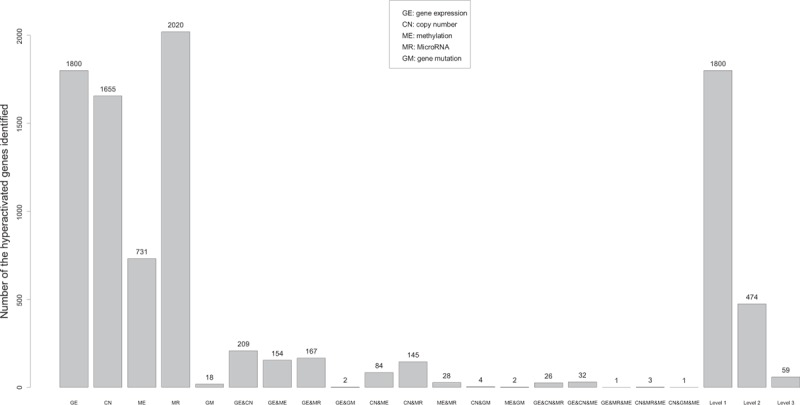
Methods: We integratively explored genomic profiles (gene expression, copy number, methylation, microRNA [miRNA], and gene mutation) in TNBC and identified hyperactivated genes that have higher expression, more copy numbers, lower methylation level, or are targets of miRNAs with lower expression in TNBC than in normal samples. We ranked the hyperactivated genes into different levels based on all the genomic evidence and performed functional analyses of the sets of genes identified. More importantly, we proposed potential molecular targets for TNBC therapy based on the hyperactivated genes.
Results: Some of the genes we identified such as FGFR2, MAPK13, TP53, SRC family, MUC family, and BCL2 family have been suggested to be potential targets for TNBC treatment. Others such as CSF1R, EPHB3, TRIB1, and LAD1 could be promising new targets for TNBC treatment. By utilizing this integrative analysis of genomic profiles for TNBC, we hypothesized that some of the targeted treatment strategies for TNBC currently in development are more likely to be promising, such as poly (ADP-ribose) polymerase inhibitors, while the others are more likely to be discouraging, such as angiogenesis inhibitors.
Limitations: The findings in this study need to be experimentally validated in the future.
Conclusion: This is a systematic study that combined 5 different types of genomic data to molecularly characterize TNBC and identify potential targets for TNBC therapy. The integrative analysis of genomic profiles for TNBC could assist in identifying potential new therapeutic targets and predicting the effectiveness of a targeted treatment strategy for TNBC therapy.
Conflict of interest statement
The authors have no conflicts of interest to disclose.
Figures


References
-
- Gluz O, Liedtke C, Gottschalk N, et al. Triple-negative breast cancer—current status and future directions. Ann Oncol 2009; 20:1913–1927. - PubMed
-
- Bayraktar S, Gluck S. Molecularly targeted therapies for metastatic triple-negative breast cancer. Breast Cancer Res Treat 2013; 138:21–35. - PubMed
-
- Rugo H, Olopade O, DeMichele A, et al. I-SPY 2 Site PI's. Veliparib/carboplatin plus standard neoadjuvant therapy for high-risk breast cancer: First efficacy results from the I-SPY 2 TRIAL. San Antonio: Breast Cancer Symposium; 2013.
MeSH terms
Substances
LinkOut - more resources
Full Text Sources
Other Literature Sources
Molecular Biology Databases
Research Materials
Miscellaneous
