


Cardiac dysfunction in Pkd1-deficient mice with phenotype rescue by galectin-3 knockout
- PMID: 27475230
- PMCID: PMC4983501
- DOI: 10.1016/j.kint.2016.04.028
Cardiac dysfunction in Pkd1-deficient mice with phenotype rescue by galectin-3 knockout
Erratum in
-
Corrigendum to Balbo BE, Amaral AG, Fonseca JM, et al. Cardiac dysfunction in Pkd1-deficient mice with phenotype rescue by galectin-3 knockout. Kidney Int. 2016;90:580-597.Kidney Int. 2022 Mar;101(3):652. doi: 10.1016/j.kint.2022.01.002. Kidney Int. 2022. PMID: 35190044 Free PMC article. No abstract available.
Abstract
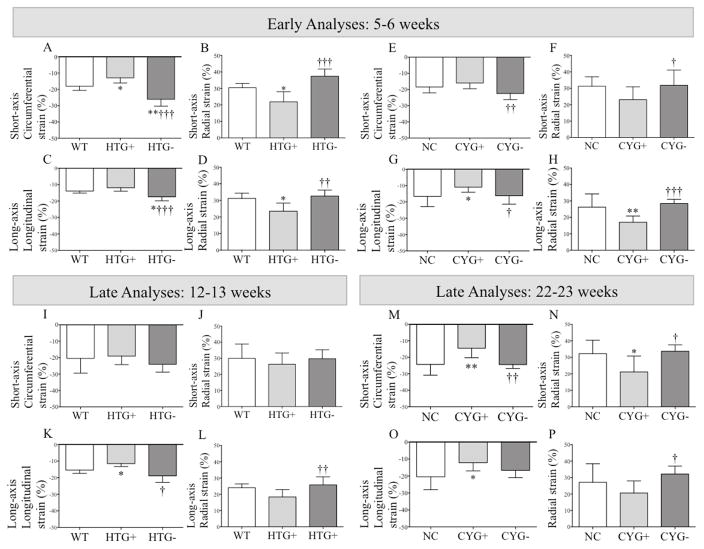
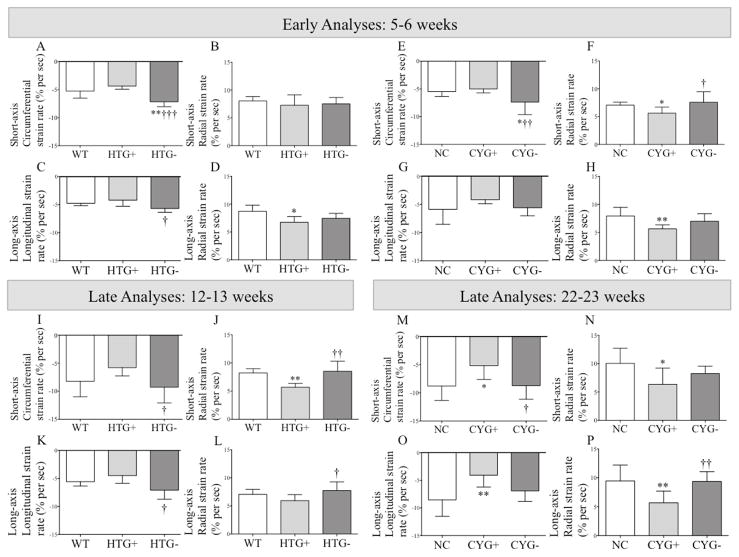
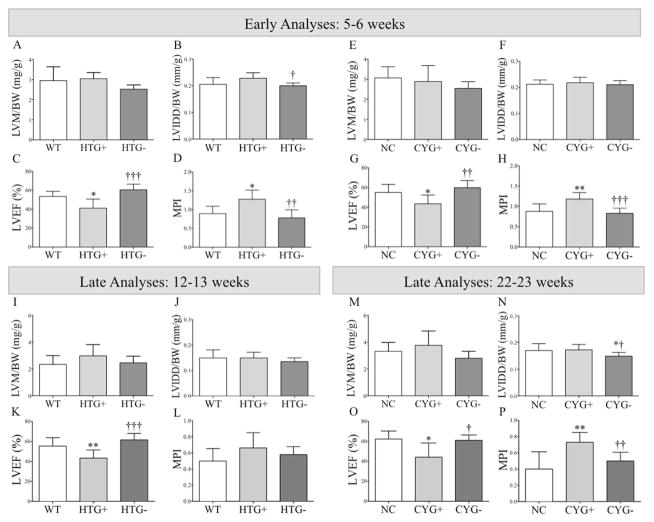
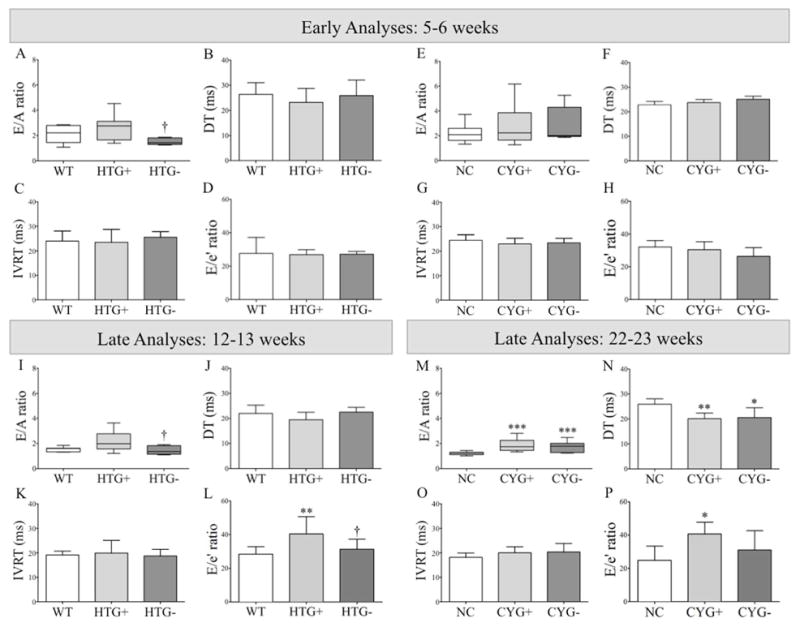
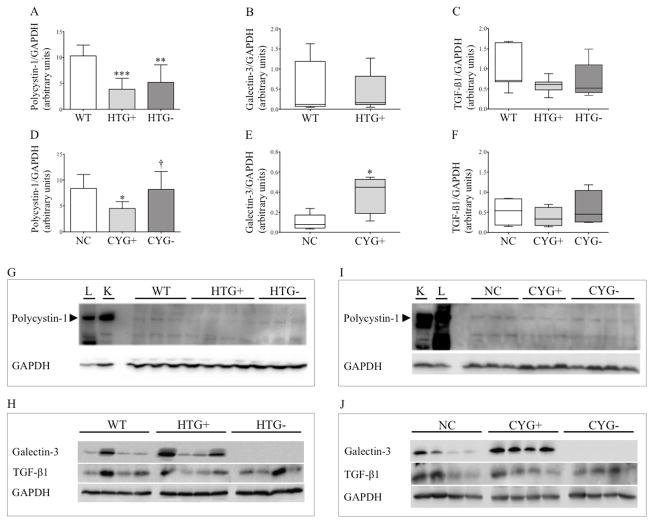
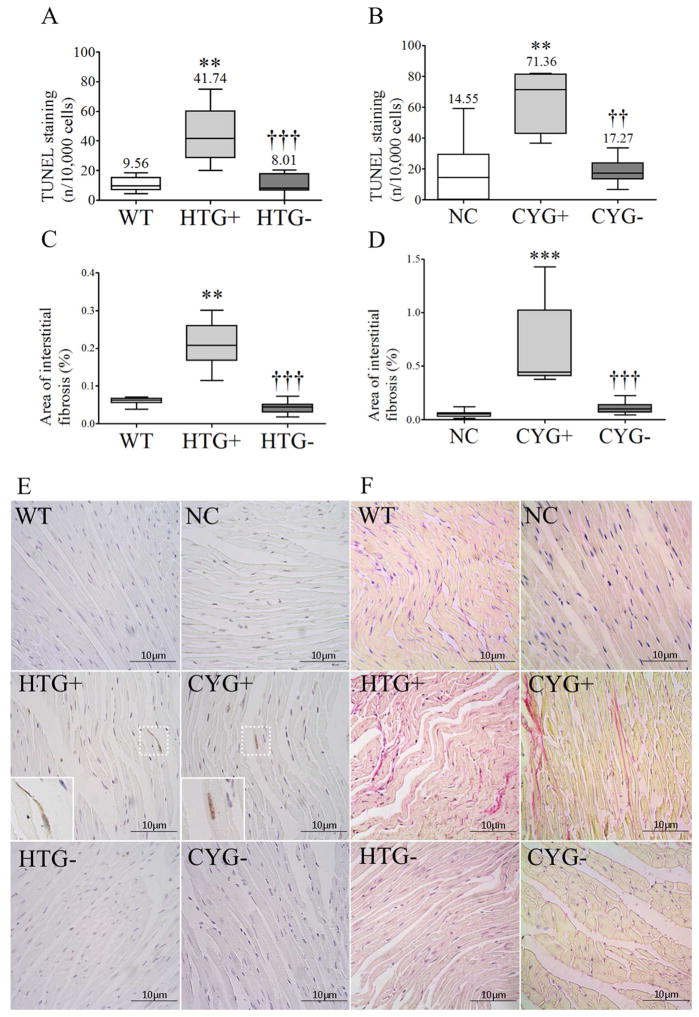
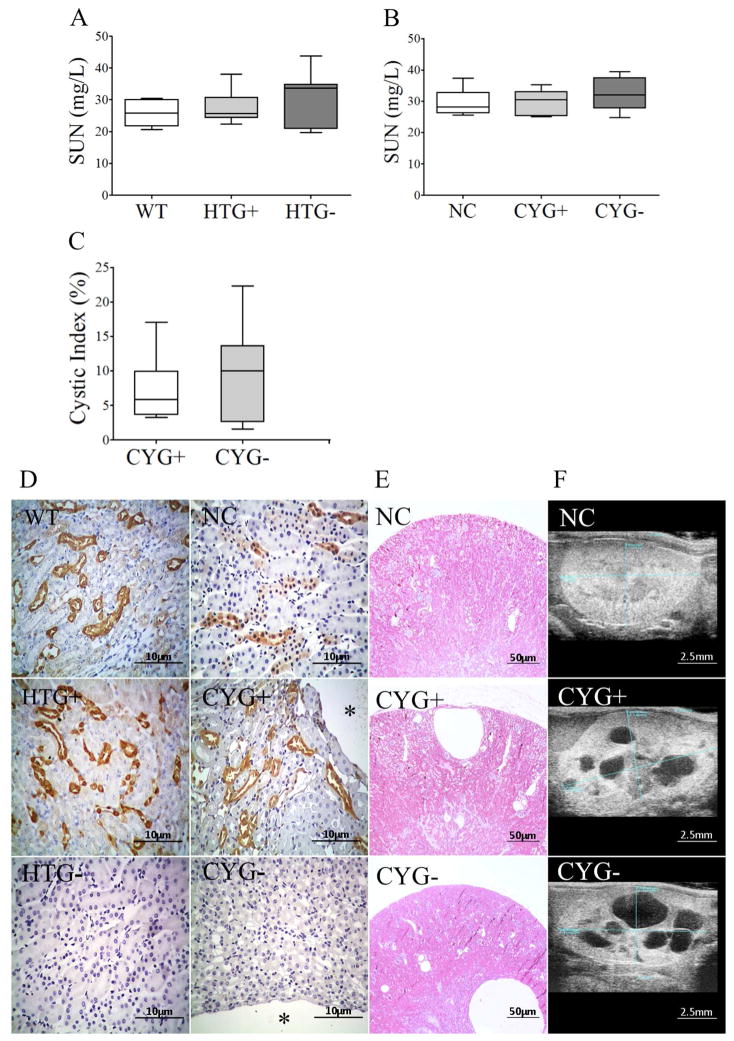
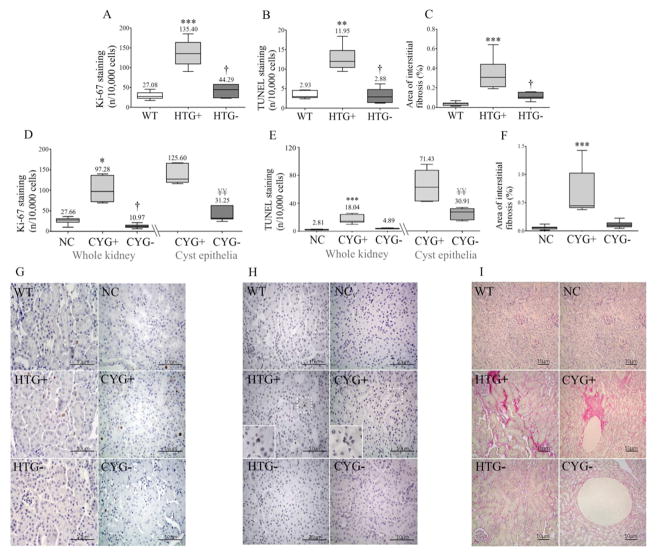
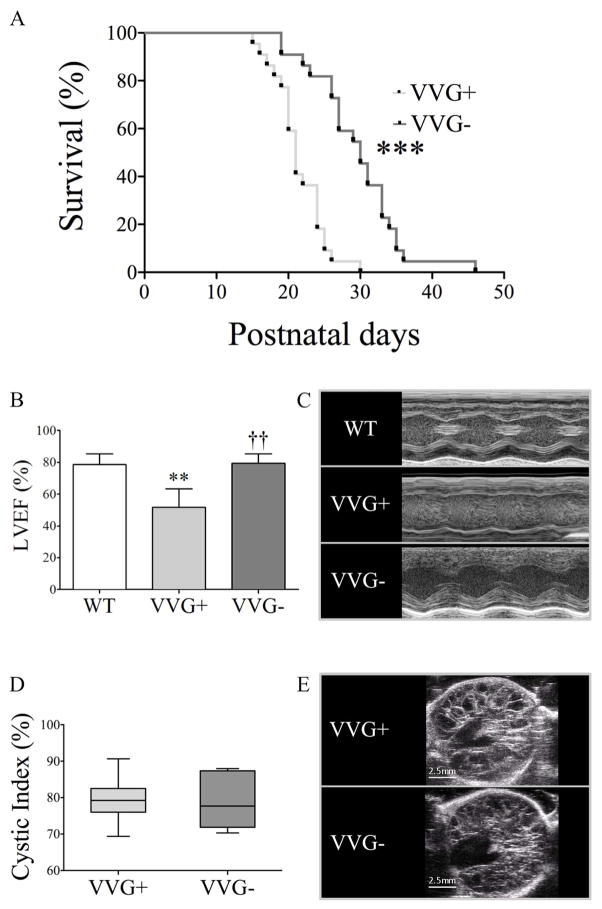
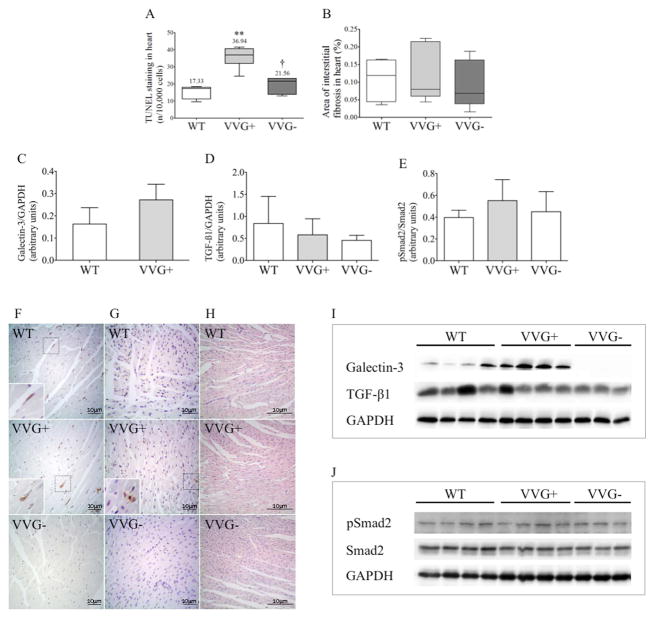
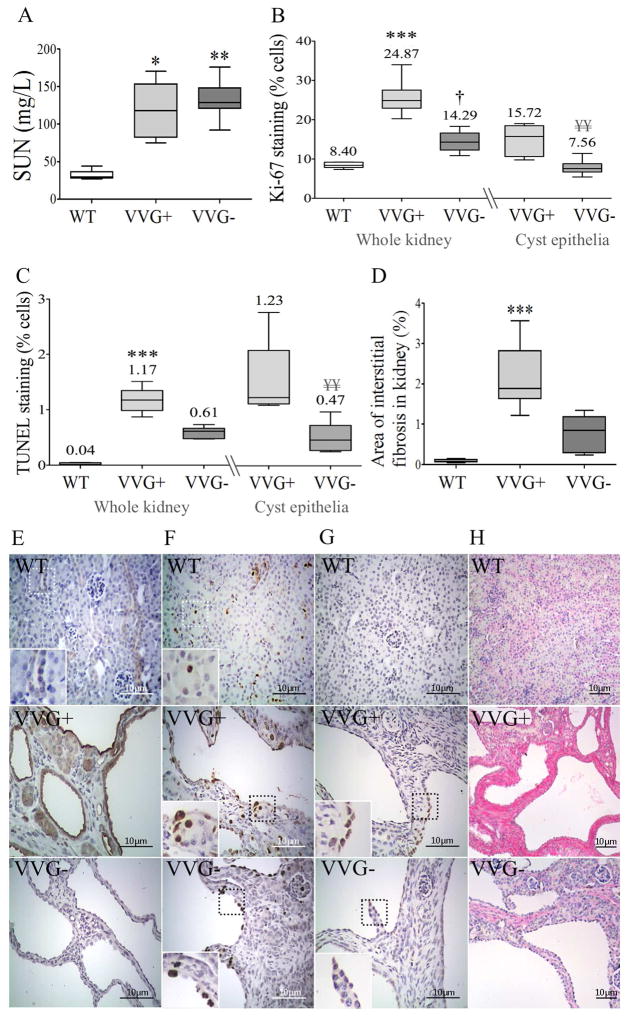
Alterations in myocardial wall texture stand out among ADPKD cardiovascular manifestations in hypertensive and normotensive patients. To elucidate their pathogenesis, we analyzed the cardiac phenotype in Pkd1(cond/cond)Nestin(cre) (CYG+) cystic mice exposed to increased blood pressure, at 5 to 6 and 20 to 24 weeks of age, and Pkd1(+/-) (HTG+) noncystic mice at 5-6 and 10-13 weeks. Echocardiographic analyses revealed decreased myocardial deformation and systolic function in CYG+ and HTG+ mice, as well as diastolic dysfunction in older CYG+ mice, compared to their Pkd1(cond/cond) and Pkd1(+/+) controls. Hearts from CYG+ and HTG+ mice presented reduced polycystin-1 expression, increased apoptosis, and mild fibrosis. Since galectin-3 has been associated with heart dysfunction, we studied it as a potential modifier of the ADPKD cardiac phenotype. Double-mutant Pkd1(cond/cond):Nestin(cre);Lgals3(-/-) (CYG-) and Pkd1(+/-);Lgals3(-/-) (HTG-) mice displayed improved cardiac deformability and systolic parameters compared to single-mutants, not differing from the controls. CYG- and HTG- showed decreased apoptosis and fibrosis. Analysis of a severe cystic model (Pkd1(V/V); VVG+) showed that Pkd1(V/V);Lgals3(-/-) (VVG-) mice have longer survival, decreased cardiac apoptosis and improved heart function compared to VVG+. CYG- and VVG- animals showed no difference in renal cystic burden compared to CYG+ and VVG+ mice. Thus, myocardial dysfunction occurs in different Pkd1-deficient models and suppression of galectin-3 expression rescues this phenotype.
Keywords: ADPKD; Pkd1-deficiency; apoptosis; cardiac dysfunction; cardiomyopathy; galectin-3.
Copyright © 2016 International Society of Nephrology. All rights reserved.
Figures
References
-
- Perrone RD, Ruthazer R, Terrin NC. Survival after end-stage renal disease in autosomal dominant polycystic kidney disease: Contribution of extrarenal complications to mortality. Am J Kidney Dis. 2001;38(4):777–84. - PubMed
-
- Rahbari-Oskoui F, Williams O, Chapman A. Mechanisms and management of hypertension in autosomal dominant polycystic kidney disease. Nephrol Dial Transplant. 2014;29(12):2194–201. - PubMed
-
- Chapman AB, Johnson AM, Rainguet S, et al. Left ventricular hypertrophy in autosomal dominant polycystic kidney disease. J Am Soc Nephrol. 1997;8(8):1292–7. - PubMed
-
- Bardají A, Vea AM, Gutierrez C, et al. Left ventricular mass and diastolic function in normotensive young adults with autosomal dominant polycystic kidney disease. Am J Kidney Dis. 1998;32(6):970–5. - PubMed
Publication types
MeSH terms
Substances
Grants and funding
LinkOut - more resources
Full Text Sources
Other Literature Sources
Molecular Biology Databases
