


Regulation of the host immune system by helminth parasites
- PMID: 27476889
- PMCID: PMC5010150
- DOI: 10.1016/j.jaci.2016.07.007
Regulation of the host immune system by helminth parasites
Abstract
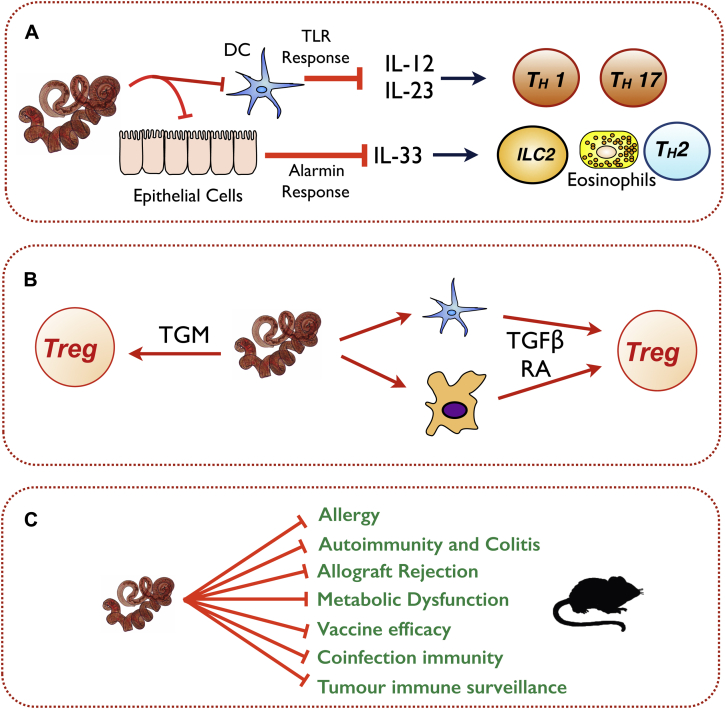
Helminth parasite infections are associated with a battery of immunomodulatory mechanisms that affect all facets of the host immune response to ensure their persistence within the host. This broad-spectrum modulation of host immunity has intended and unintended consequences, both advantageous and disadvantageous. Thus the host can benefit from suppression of collateral damage during parasite infection and from reduced allergic, autoimmune, and inflammatory reactions. However, helminth infection can also be detrimental in reducing vaccine responses, increasing susceptibility to coinfection and potentially reducing tumor immunosurveillance. In this review we will summarize the panoply of immunomodulatory mechanisms used by helminths, their potential utility in human disease, and prospective areas of future research.
Keywords: Allergy; infection; pathology; therapy; tolerance.
Copyright © 2016 The Authors. Published by Elsevier Inc. All rights reserved.
Figures
References
-
- Mishra P.K., Palma M., Bleich D., Loke P., Gause W.C. Systemic impact of intestinal helminth infections. Mucosal Immunol. 2014;7:753–762. - PubMed
Publication types
MeSH terms
Substances
Grants and funding
LinkOut - more resources
Full Text Sources
Other Literature Sources
