. 2016 Aug 19;81(16):6898-926.
doi: 10.1021/acs.joc.6b01449. Epub 2016 Aug 1.

Photoredox Catalysis in Organic Chemistry

Affiliations

Photoredox Catalysis in Organic Chemistry

Megan H Shaw et al. J Org Chem. .

Abstract

In recent years, photoredox catalysis has come to the forefront in organic chemistry as a powerful strategy for the activation of small molecules. In a general sense, these approaches rely on the ability of metal complexes and organic dyes to convert visible light into chemical energy by engaging in single-electron transfer with organic substrates, thereby generating reactive intermediates. In this Perspective, we highlight the unique ability of photoredox catalysis to expedite the development of completely new reaction mechanisms, with particular emphasis placed on multicatalytic strategies that enable the construction of challenging carbon-carbon and carbon-heteroatom bonds.


Conflict of interest statement

The authors declare no competing financial interest.

Figures
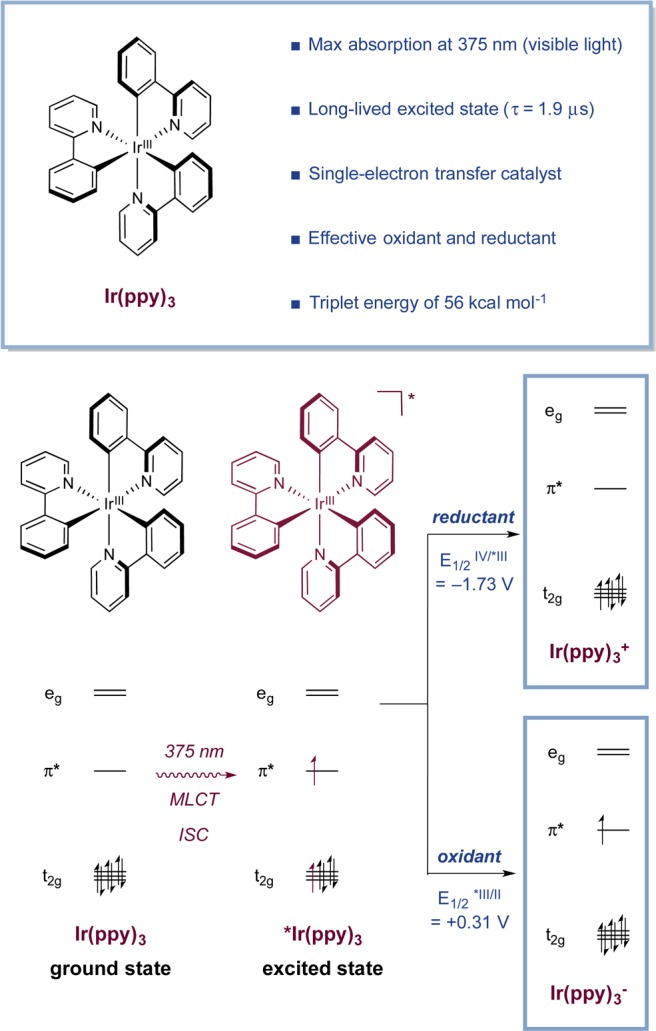
Figure 1
Figure 1
Iridium polypyridyl complexes: simplified molecular orbital depiction of Ir(ppy)3 photochemistry.
Scheme 1
Scheme 1. Seminal Contributions to Organic Photoredox Catalysis
Scheme 2
Scheme 2. Advent of Modern Organic Photoredox Catalysis
Figure 2
Figure 2
Chemical structures of some common photoredox catalysts.
Figure 3
Figure 3
Papers published per year in the field of organic photoredox catalysis.
Scheme 3
Scheme 3. Oxidative α-Amino Functionalization
Scheme 4
Scheme 4. Union of Oxidative α-Amino Functionalization and Other Modes of Catalysis
Scheme 5
Scheme 5. Photoredox-Catalyzed α-Amino C–H Arylations via Radical–Radical Coupling
Scheme 6
Scheme 6. Photoredox-Catalyzed Redox-Neutral α-Amino Functionalizations
Scheme 7
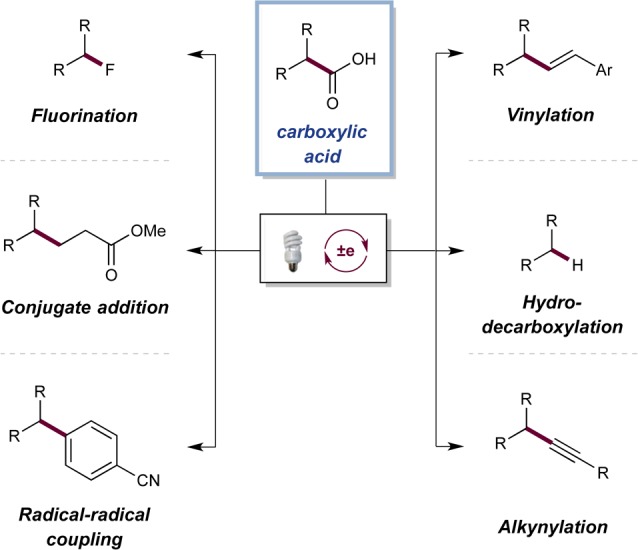
Scheme 7. Decarboxylative Transformations Using Photoredox Catalysis
Scheme 8
Scheme 8. Enantioselective α-Functionalization of Aldehydes via Dual Photoredox Organocatalysis
Scheme 9
Scheme 9. Enantioselective Radical Conjugate Additions to Enones
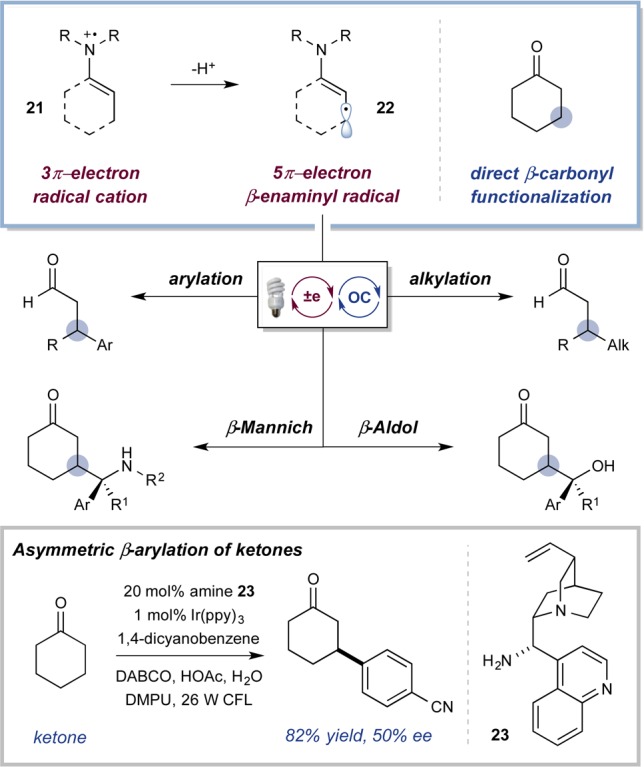
Scheme 10
Scheme 10. Direct β-Carbonyl Functionalization through the Merger of Photoredox and Organocatalysis
Scheme 11
Scheme 11. Enantioselective Radical–Radical Couplings Utilizing a Chiral Brønsted Acid Co-catalyst
Scheme 12
Scheme 12. Dual Photoredox Hydrogen Bonding Catalysis for Ketyl Olefin Cyclizations
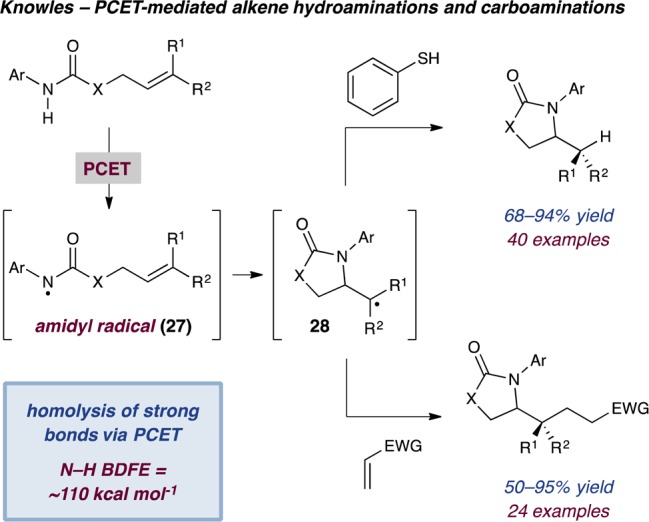
Scheme 13
Scheme 13. Dual Photoredox Hydrogen Bonding Catalysis for Amidyl Radical Cyclization Reactions via PCET
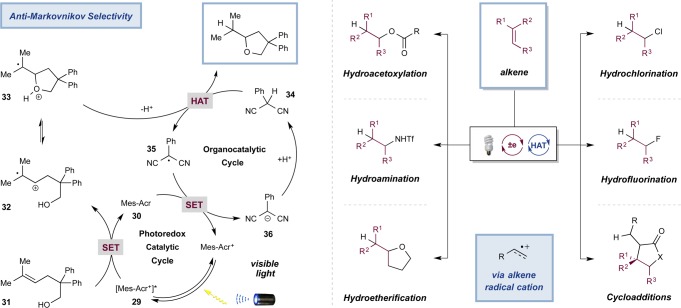
Scheme 14
Scheme 14. Dual Photoredox HAT Catalysis for the Generation and Trapping for Alkene Radical Cations
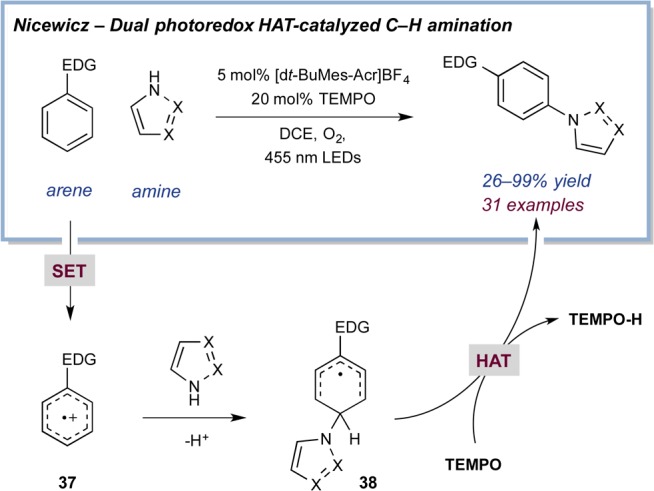
Scheme 15
Scheme 15. Oxidative Amination of Electron-Rich Arenes via Dual Photoredox HAT Catalysis
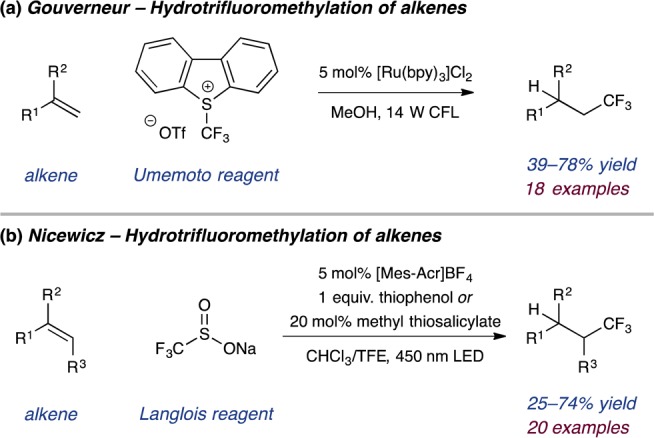
Scheme 16
Scheme 16. Dual Photoredox HAT-Catalyzed Hydrotrifluoromethylation
Scheme 17
Scheme 17. Photoredox HAT-Mediated Functionalization of Allylic and Benzylic C–H Bonds
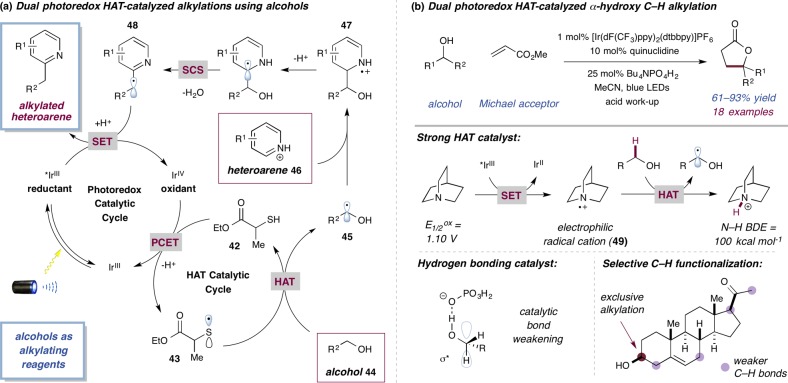
Scheme 18
Scheme 18. Dual Photoredox HAT Methodologies Involving Activation of α-Hydroxy C–H Bonds
Scheme 19
Scheme 19. Dual Photoredox Pd Catalysis for C–H Arylation
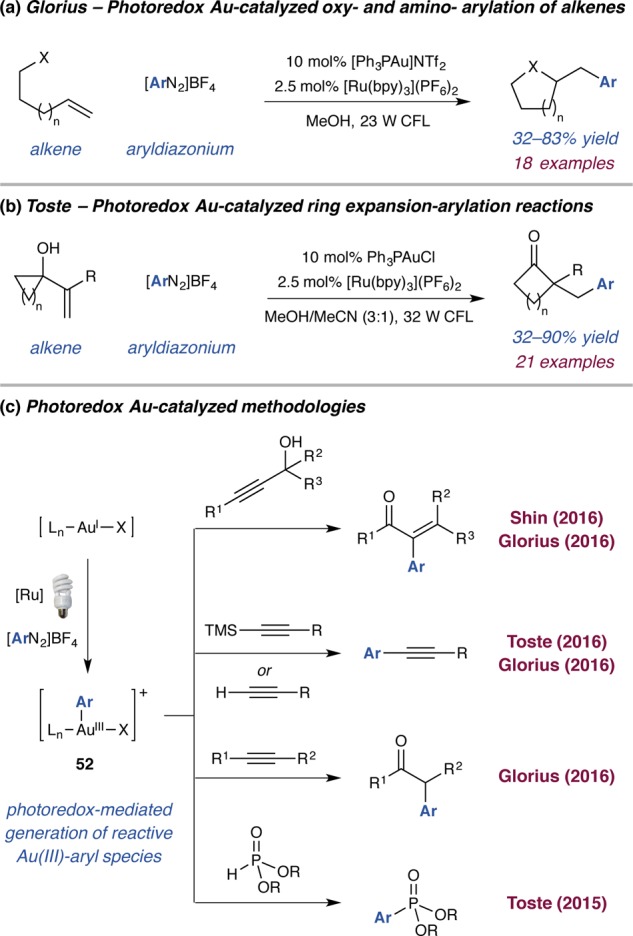
Scheme 20
Scheme 20. Dual Photoredox Au-Catalyzed Methodologies
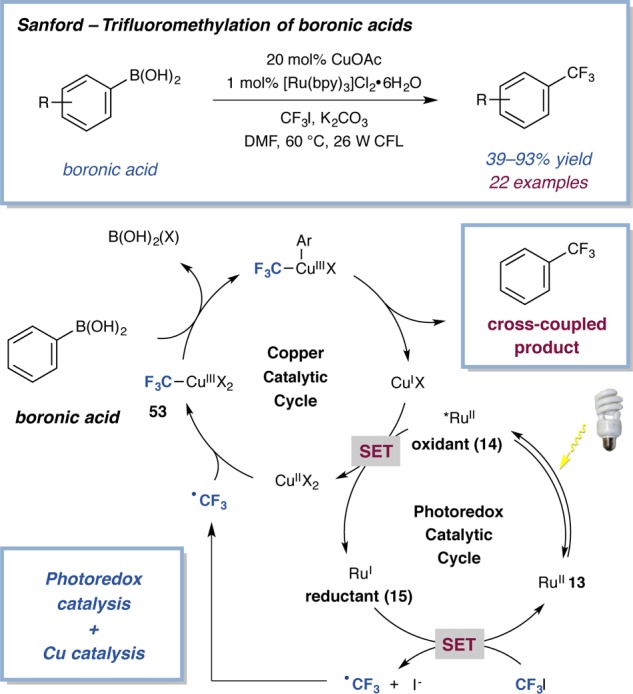
Scheme 21
Scheme 21. Dual Photoredox Cu-Catalyzed Trifluoromethylation of Boronic Acids
Scheme 22
Scheme 22. Dual Photoredox Ni-Catalyzed Cross-Couplings Using Various Oxidizable Radical Precursors
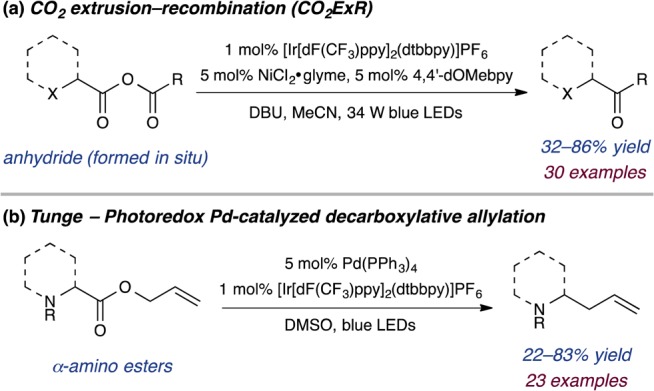
Scheme 23
Scheme 23. Metallaphotoredox-Catalyzed Intramolecular Decarboxylative Transformations
Scheme 24
Scheme 24. Direct Functionalization of C(sp3)–H Bonds through the Merger of Photoredox, HAT, and Ni Catalysis
Scheme 25
Scheme 25. Silyl Radical Activation of Alkyl Halides for Cross-Electrophile Couplings
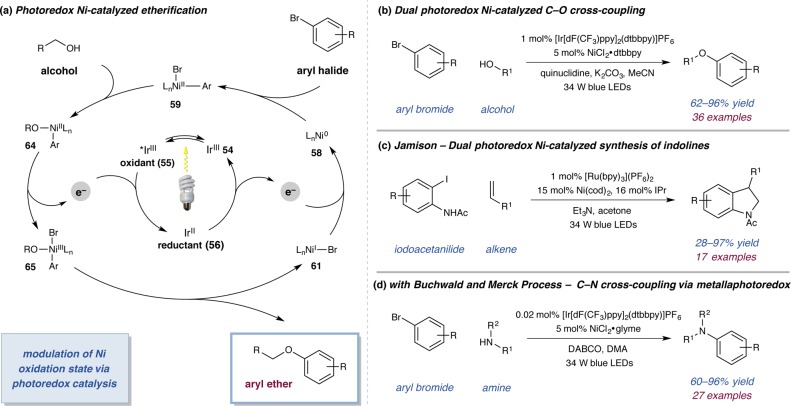
Scheme 26
Scheme 26. Dual Photoredox Ni-Catalyzed C–O and C–N Cross-Couplings
Scheme 27
Scheme 27. Dual Photoredox, Ni-Catalyzed C–S Cross-Coupling
Scheme 28
Scheme 28. Metallaphotoredox-Catalyzed Acceptorless Dehydrogenation for C–H Thiolation
Scheme 29
Scheme 29. Dual Photoredox Lewis Acid-Catalyzed Cycloadditions
Scheme 30
Scheme 30. Enantioselective Dual Photoredox Lewis Acid-Catalyzed Cycloadditions
Scheme 31
Scheme 31. Enantioselective Dual Photoredox Lewis Acid Catalysis
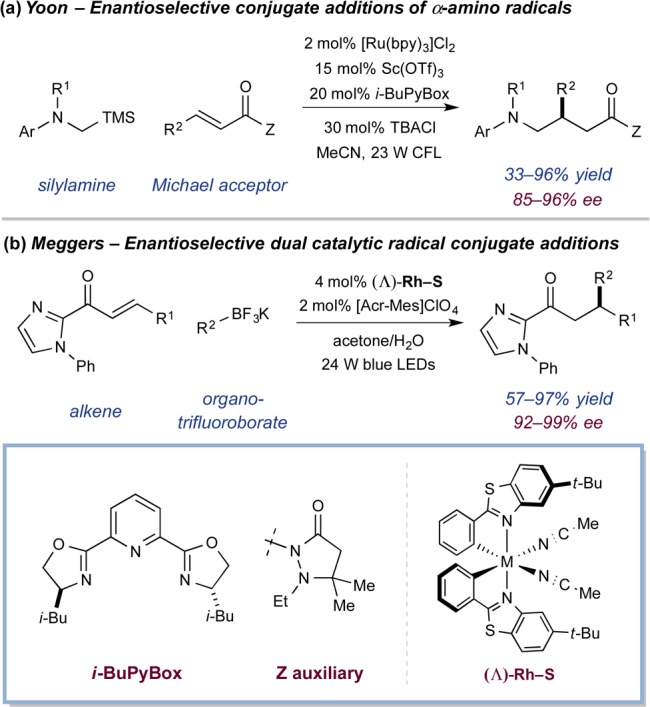
Scheme 32
Scheme 32. Enantioselective Photoredox Protocols Mediated by Chiral Ir and Rh Catalysts
Scheme 33
Scheme 33. Natural Product Syntheses Involving a Photoredox-Catalyzed Key Step
Scheme 34
Scheme 34. Photoredox-Mediated Syntheses of Pharmaceutically Relevant Compounds
Scheme 35
Scheme 35. Late-Stage Functionalization of Druglike Molecules via Photoredox-Catalyzed Methodologies
Figure 4
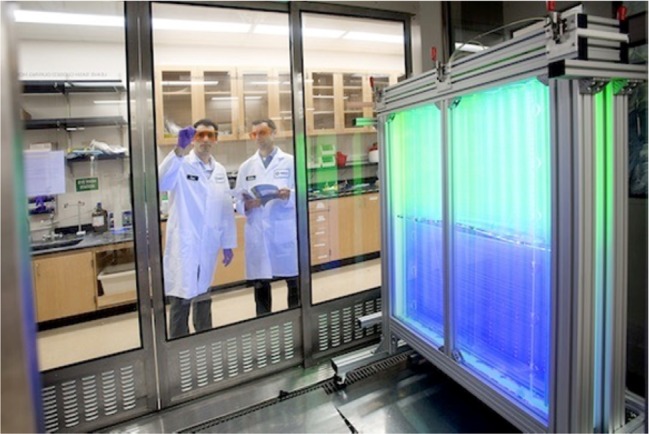
Figure 4
Process-scale photoredox flow reactor at Merck. Photo courtesy of Merck and Co. Inc. Copyright 2016 American Chemical Society.
Scheme 36
Scheme 36. Application of Continuous Flow Setup to Photoredox-Catalyzed Methodologies

References

    1. For reviews on the use of organic photochemistry in total synthesis, see:

    2. Kärkäs M. D.; Porco J. A. Jr.; Stephenson C. R. J. Chem. Rev. 2016, 10.1021/acs.chemrev.5b00760. - DOI - PMC - PubMed
    3. Bach T.; Hehn J. P. Angew. Chem., Int. Ed. 2011, 50, 1000–1045. 10.1002/anie.201002845. - DOI - PubMed
    4. Hoffmann N. Chem. Rev. 2008, 108, 1052–1103. 10.1021/cr0680336. - DOI - PubMed
    5. For a discussion on the early history of organic photochemistry, see:

    6. Roth H. D. Angew. Chem., Int. Ed. Engl. 1989, 28, 1193–1207. 10.1002/anie.198911931. - DOI
    7. For early publications on organic photochemistry, see:

    8. Trommsdorff H. Ann. Pharm. 1834, 11, 190–207. 10.1002/jlac.18340110207. - DOI
    9. Ciamician G.; Silber P. Ber. Dtsch. Chem. Ges. 1908, 41, 1928–1935. 10.1002/cber.19080410272. - DOI
    1. Grätzel M. Acc. Chem. Res. 1981, 14, 376–384. 10.1021/ar00072a003. - DOI
    2. Meyer T. J. Acc. Chem. Res. 1989, 22, 163–170. 10.1021/ar00161a001. - DOI
    1. Takeda H.; Ishitani O. Coord. Chem. Rev. 2010, 254, 346–354. 10.1016/j.ccr.2009.09.030. - DOI
    1. Kalyanasundaram K.; Grätzel M. Coord. Chem. Rev. 1998, 177, 347–414. 10.1016/S0010-8545(98)00189-1. - DOI
    1. For reviews on the field of photoredox catalysis, see:

    2. Narayanam J. M. R.; Stephenson C. R. J. Chem. Soc. Rev. 2011, 40, 102–113. 10.1039/B913880N. - DOI - PubMed
    3. Xuan J.; Xiao W.-J. Angew. Chem., Int. Ed. 2012, 51, 6828–6838. 10.1002/anie.201200223. - DOI - PubMed
    4. Reckenthäler M.; Griesbeck A. G. Adv. Synth. Catal. 2013, 355, 2727–2744. 10.1002/adsc.201300751. - DOI
    5. Prier C. K.; Rankic D. A.; MacMillan D. W. C. Chem. Rev. 2013, 113, 5322–5363. 10.1021/cr300503r. - DOI - PMC - PubMed
    6. Schultz D. M.; Yoon T. P. Science 2014, 343, 1239176–1–1239176–8. 10.1126/science.1239176. - DOI - PMC - PubMed
    7. Skubi K. L.; Blum T. R.; Yoon T. P. Chem. Rev. 2016, 10.1021/acs.chemrev.6b00018. - DOI - PMC - PubMed
    8. Romero N. A.; Nicewicz D. A. Chem. Rev. 2016, 10.1021/acs.chemrev.6b00057. - DOI - PubMed

Publication types