


Kaliopenic nephropathy revisited
- PMID: 27478593
- PMCID: PMC4957711
- DOI: 10.1093/ckj/sfv154
Kaliopenic nephropathy revisited
Abstract
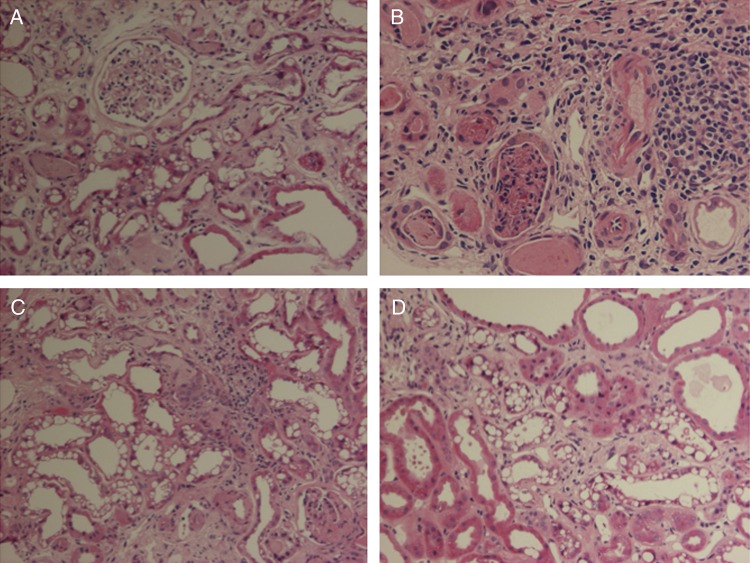
In the 'older' literature, a definitive renal pathology was described in patients with long-standing hypokalaemia and depletion of the body's potassium reserves. The topic is relevant because possibly a quite cheaply reversible element in the course of chronic kidney disease progression could be addressed. Earlier, pathologists drew attention to vacuolar changes in renal tubular epithelium accompanied by inflammatory interstitial changes in patients with potassium losses. The diagnostic term 'kaliopenic nephropathy' was coined to describe such patients. Kaliopenic nephropathy now receives less emphasis than in earlier times. However, with eating disorders, laxative abuse and other potential causes, we suggest that the syndrome should be resurrected.
Keywords: bisacodyl; hypokalaemia; laxatives; melanosis coli; potassium.
Figures
References
-
- Bock KD, Cremer W, Werner U. Chronic hypokalemic nephropathy: a clinical study. Klin Wochenschr 1978; 56 (Suppl 1): 91–96 - PubMed
-
- Fettman MJ. Feline kaliopenic polymyopathy/nephropathy syndrome. Vet Clin North Am Small Anim Pract 1989; 19: 415–432 - PubMed
-
- Wittoesch JH, Jackman RJ, McDonald JR. Melanosis coli: general review and a study of 887 cases. Dis Colon Rectum 1958; 1: 172–180 - PubMed
-
- Mennecier D, Nizou C, Moulin O et al. . Images in medicine. Melanosis coli. Presse Med 1999; 28: 106. - PubMed
LinkOut - more resources
Full Text Sources
Other Literature Sources
