


Inflammation Effects on Motivation and Motor Activity: Role of Dopamine
- PMID: 27480574
- PMCID: PMC5143486
- DOI: 10.1038/npp.2016.143
Inflammation Effects on Motivation and Motor Activity: Role of Dopamine
Abstract
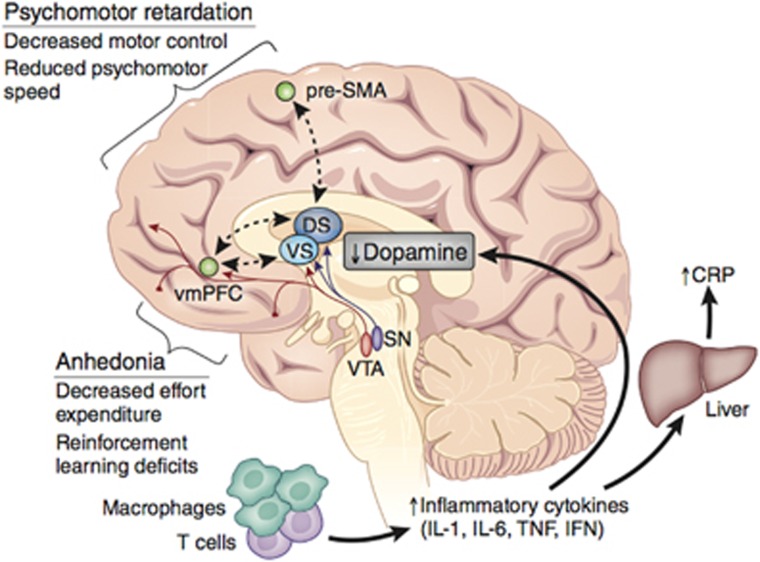
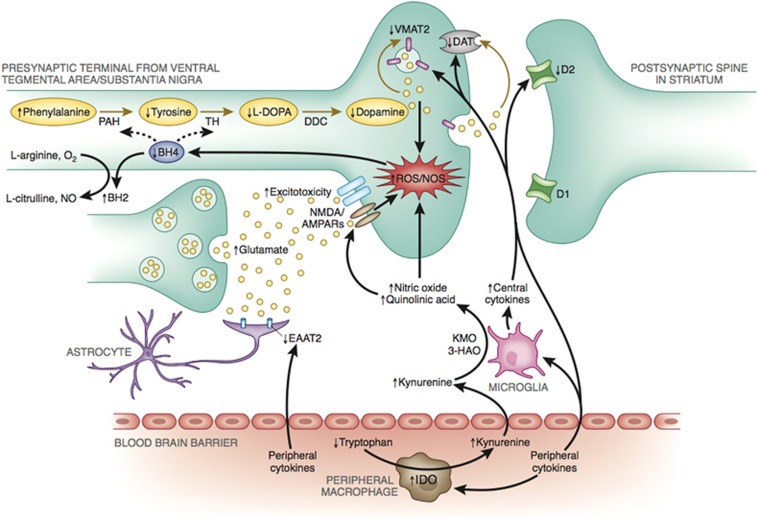
Motivational and motor deficits are common in patients with depression and other psychiatric disorders, and are related to symptoms of anhedonia and motor retardation. These deficits in motivation and motor function are associated with alterations in corticostriatal neurocircuitry, which may reflect abnormalities in mesolimbic and mesostriatal dopamine (DA). One pathophysiologic pathway that may drive changes in DAergic corticostriatal circuitry is inflammation. Biomarkers of inflammation such as inflammatory cytokines and acute-phase proteins are reliably elevated in a significant proportion of psychiatric patients. A variety of inflammatory stimuli have been found to preferentially target basal ganglia function to lead to impaired motivation and motor activity. Findings have included inflammation-associated reductions in ventral striatal neural responses to reward anticipation, decreased DA and DA metabolites in cerebrospinal fluid, and decreased availability, and release of striatal DA, all of which correlated with symptoms of reduced motivation and/or motor retardation. Importantly, inflammation-associated symptoms are often difficult to treat, and evidence suggests that inflammation may decrease DA synthesis and availability, thus circumventing the efficacy of standard pharmacotherapies. This review will highlight the impact of administration of inflammatory stimuli on the brain in relation to motivation and motor function. Recent data demonstrating similar relationships between increased inflammation and altered DAergic corticostriatal circuitry and behavior in patients with major depressive disorder will also be presented. Finally, we will discuss the mechanisms by which inflammation affects DA neurotransmission and relevance to novel therapeutic strategies to treat reduced motivation and motor symptoms in patients with high inflammation.
Figures
References
-
- aan het Rot M, Collins KA, Murrough JW, Perez AM, Reich DL, Charney DS et al (2010). Safety and efficacy of repeated-dose intravenous ketamine for treatment-resistant depression. Biol Psychiatry 67: 139–145. - PubMed
-
- Abi-Dargham A, Gil R, Krystal J, Baldwin RM, Seibyl JP, Bowers M et al (1998). Increased striatal dopamine transmission in schizophrenia: confirmation in a second cohort. Am J Psychiatry 155: 761–767. - PubMed
-
- Ahles TA, Saykin AJ, Furstenberg CT, Cole B, Mott LA, Skalla K et al (2002). Neuropsychologic impact of standard-dose systemic chemotherapy in long-term survivors of breast cancer and lymphoma. J Clin Oncol 20: 485–493. - PubMed
Publication types
MeSH terms
Substances
Grants and funding
LinkOut - more resources
Full Text Sources
Other Literature Sources
Medical
