


In Sickness and in Health: The Co-Regulation of Inflammation and Social Behavior
- PMID: 27480575
- PMCID: PMC5143485
- DOI: 10.1038/npp.2016.141
In Sickness and in Health: The Co-Regulation of Inflammation and Social Behavior
Abstract
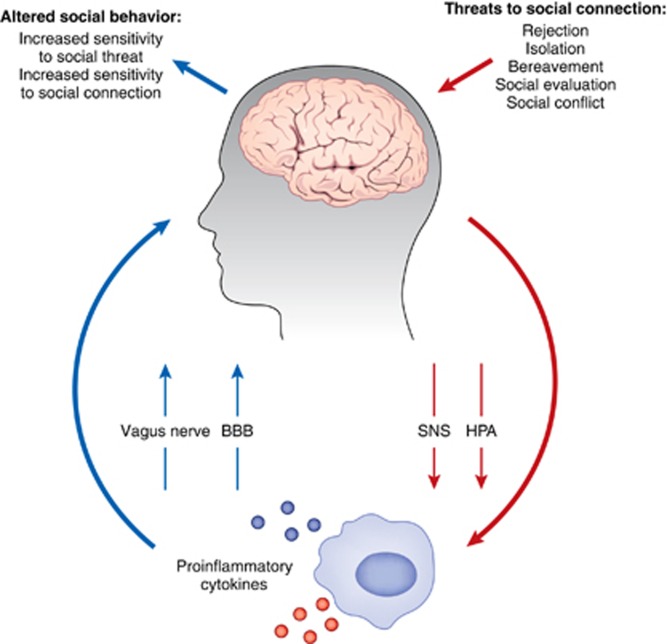
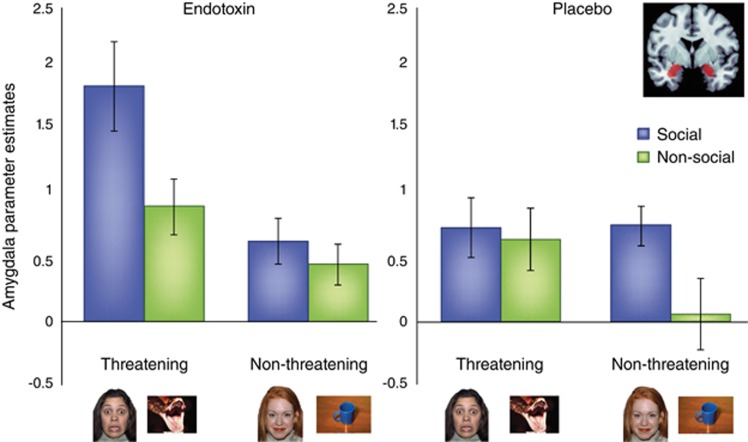
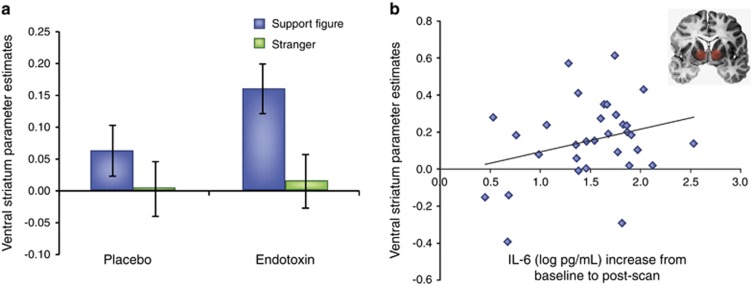
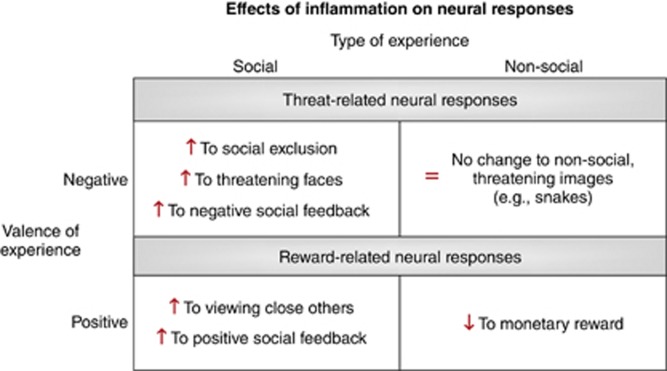
Although it has commonly been assumed that the immune system and the processes that govern social behavior are separate, non-communicating entities, research over the past several decades suggests otherwise. Considerable evidence now shows that inflammatory processes and social behavior are actually powerful regulators of one another. This review first summarizes evidence that inflammatory processes regulate social behavior, leading to characteristic changes that may help an individual navigate the social environment during times of sickness. Specifically, this review shows that inflammation: (1) increases threat-related neural sensitivity to negative social experiences (eg, rejection, negative social feedback), presumably to enhance sensitivity to threats to well-being or safety in order to avoid them and (2) enhances reward-related neural sensitivity to positive social experiences (eg, viewing close others and receiving positive social feedback), presumably to increase approach-related motivation towards others who might provide support and care during sickness. Next, this review summarizes evidence showing that social behavior also regulates aspects of inflammatory activity, preparing the body for situations in which wounding and infection may be more likely (social isolation). Here, we review research showing: (1) that exposure to social stressors increases proinflammatory activity, (2) that individuals who are more socially isolated (ie, lonely) show increased proinflammatory activity, and (3) that individuals who are more socially isolated show increased proinflammatory activity in response to an inflammatory challenge or social stressor. The implications of the co-regulation of inflammation and social behavior are discussed.
Figures
References
-
- Avitsur R, Stark JL, Sheridan JF (2001). Social stress induces glucocorticoid resistance in subordinate animals. Horm Behav 39: 247–257. - PubMed
-
- Bilbo SD, Klein SL, DeVries AC, Nelson RJ (1999). Lipopolysaccharide facilitates partner preference behaviors in female prairie voles. Physiol Behav 68: 151–156. - PubMed
-
- Bluthé RM, Dantzer R, Kelley KW (1992). Effects of interleukin-1 receptor antagonist on the behavioral effects of lipopolysaccharide in rat. Brain Res 573: 318–320. - PubMed
-
- Bluthé RM, Pawlowski M, Suarez S, Parnet P, Pittman Q, Kelley KW et al (1994). Synergy between tumor necrosis factor α and interleukin-1 in the induction of sickness behavior in mice. Psychoneuroendocrinology 19: 197–207. - PubMed
Publication types
MeSH terms
Grants and funding
LinkOut - more resources
Full Text Sources
Other Literature Sources
Medical
Miscellaneous
