


Treatment of Higher-Risk Patients With an Indication for Revascularization: Evolution Within the Field of Contemporary Percutaneous Coronary Intervention
- PMID: 27482004
- PMCID: PMC9117111
- DOI: 10.1161/CIRCULATIONAHA.116.022061
Treatment of Higher-Risk Patients With an Indication for Revascularization: Evolution Within the Field of Contemporary Percutaneous Coronary Intervention
Abstract
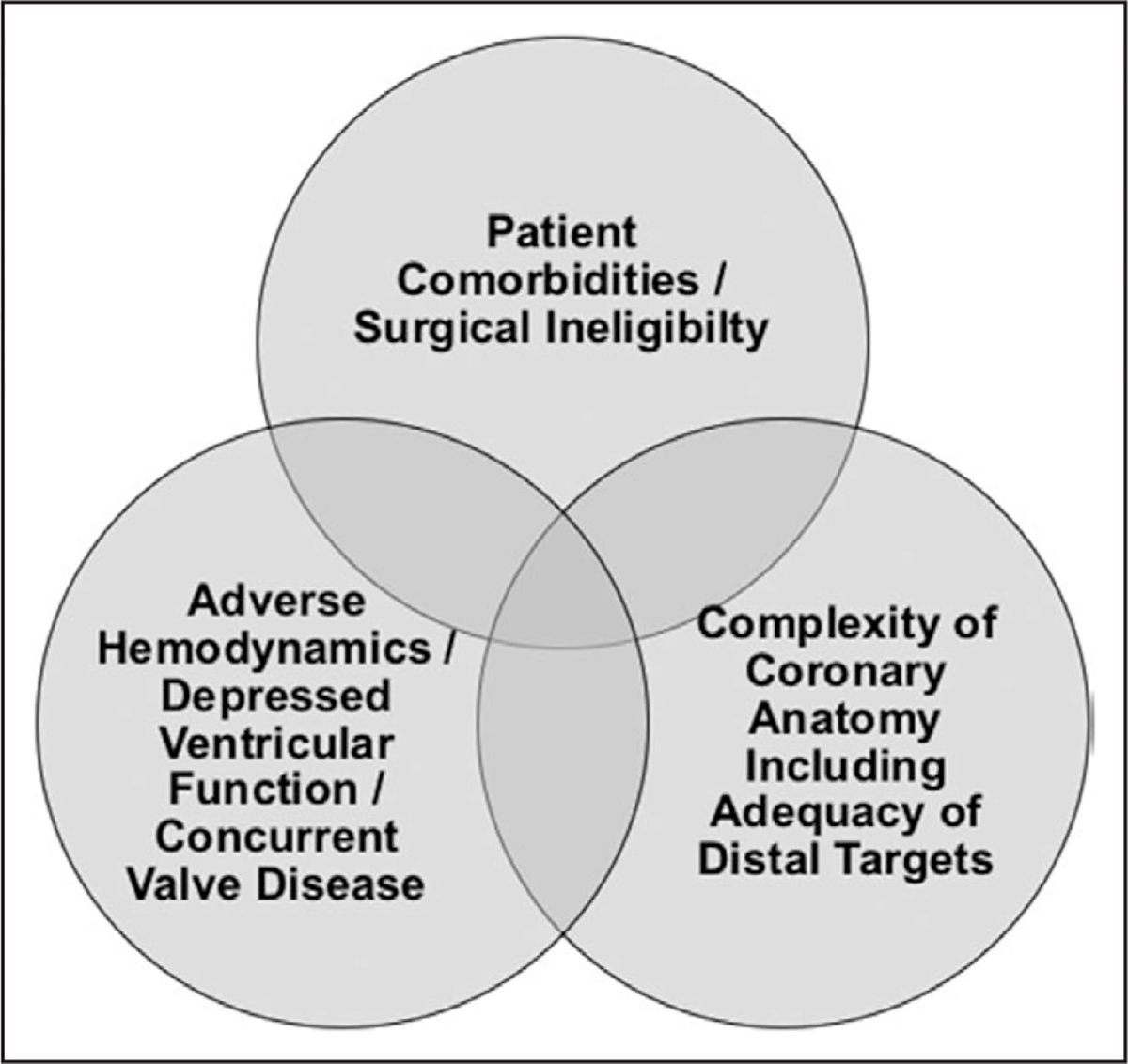
Patients with severe coronary artery disease with a clinical indication for revascularization but who are at high procedural risk because of patient comorbidities, complexity of coronary anatomy, and/or poor hemodynamics represent an understudied and potentially underserved patient population. Through advances in percutaneous interventional techniques and technologies and improvements in patient selection, current percutaneous coronary intervention may allow appropriate patients to benefit safely from revascularization procedures that might not have been offered in the past. The burgeoning interest in these procedures in some respects reflects an evolutionary step within the field of percutaneous coronary intervention. However, because of the clinical complexity of many of these patients and procedures, it is critical to develop dedicated specialists within interventional cardiology who are trained with the cognitive and technical skills to select these patients appropriately and to perform these procedures safely. Preprocedural issues such as multidisciplinary risk and treatment assessments are highly relevant to the successful treatment of these patients, and knowledge gaps and future directions to improve outcomes in this emerging area are discussed. Ultimately, an evolution of contemporary interventional cardiology is necessary to treat the increasingly higher-risk patients with whom we are confronted.
Keywords: angioplasty; coronary artery disease; coronary occlusion; heart failure; percutaneous coronary intervention.
© 2016 American Heart Association, Inc.
Figures
References
-
- Mozaffarian D, Benjamin EJ, Go AS, Arnett DK, Blaha MJ, Cushman M, de Ferranti S, Després JP, Fullerton HJ, Howard VJ, Huffman MD, Judd SE, Kissela BM, Lackland DT, Lichtman JH, Lisabeth LD, Liu S, Mackey RH, Matchar DB, McGuire DK, Mohler ER 3rd, Moy CS, Muntner P, Mussolino ME, Nasir K, Neumar RW, Nichol G, Palaniappan L, Pandey DK, Reeves MJ, Rodriguez CJ, Sorlie PD, Stein J, Towfighi A, Turan TN, Virani SS, Willey JZ, Woo D, Yeh RW, Turner MB; American Heart Association Statistics Committee and Stroke Statistics Subcommittee. Heart disease and stroke statistics–2015 update: a report from the American Heart Association. Circulation. 2015;131:e29–e322. doi: 10.1161/CIR.0000000000000152. - DOI - PubMed
-
- Abdallah MS, Wang K, Magnuson EA, Spertus JA, Farkouh ME, Fuster V, Cohen DJ; FREEDOM Trial Investigators. Quality of life after PCI vs CABG among patients with diabetes and multivessel coronary artery disease: a randomized clinical trial. JAMA. 2013;310:1581–1590. doi: 10.1001/jama.2013.279208. - DOI - PMC - PubMed
-
- Cohen DJ, Van Hout B, Serruys PW, Mohr FW, Macaya C, den Heijer P, Vrakking MM, Wang K, Mahoney EM, Audi S, Leadley K, Dawkins KD, Kappetein AP; Synergy between PCI with Taxus and Cardiac Surgery Investigators. Quality of life after PCI with drugeluting stents or coronary-artery bypass surgery. N Engl J Med. 2011;364:1016–1026. doi: 10.1056/NEJMoa1001508. - DOI - PubMed
-
- Norris CM, Saunders LD, Ghali WA, Brant R, Galbraith PD, Graham M, Faris P, Dzavik V, Knudtson ML; APPROACH Investigators. Health-related quality of life outcomes of patients with coronary artery disease treated with cardiac surgery, percutaneous coronary intervention or medical management. Can J Cardiol. 2004;20:1259–1266. - PubMed
MeSH terms
Grants and funding
LinkOut - more resources
Full Text Sources
Other Literature Sources
Miscellaneous
