


How Can People Be so Good at Intercepting Accelerating Objects if They Are so Poor at Visually Judging Acceleration?
- PMID: 27482367
- PMCID: PMC4954742
- DOI: 10.1177/2041669515624317
How Can People Be so Good at Intercepting Accelerating Objects if They Are so Poor at Visually Judging Acceleration?
Abstract
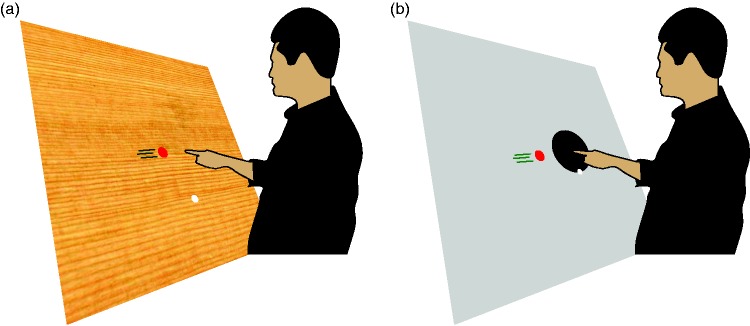
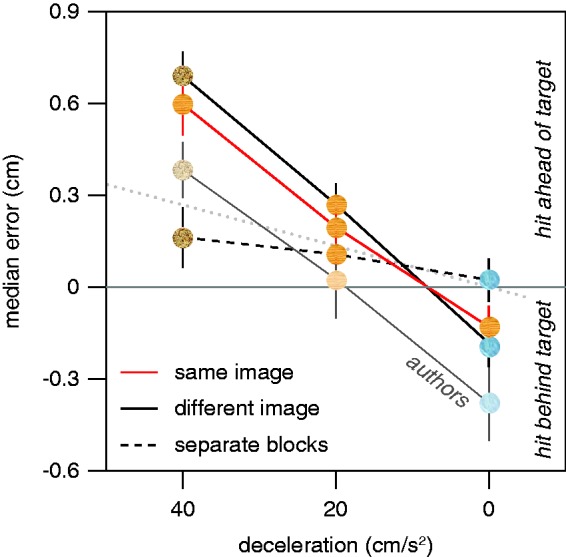
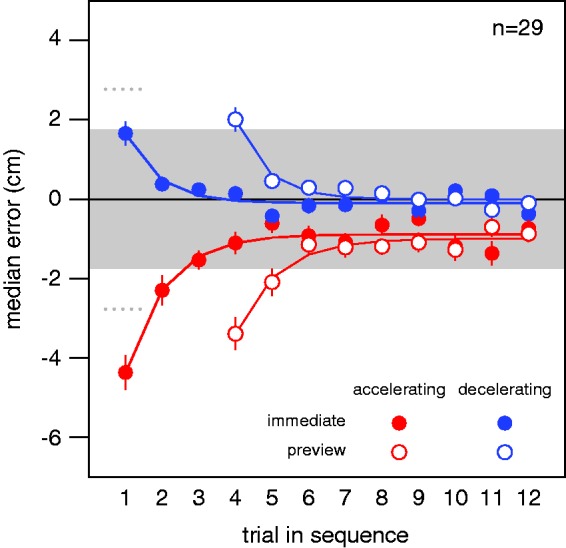
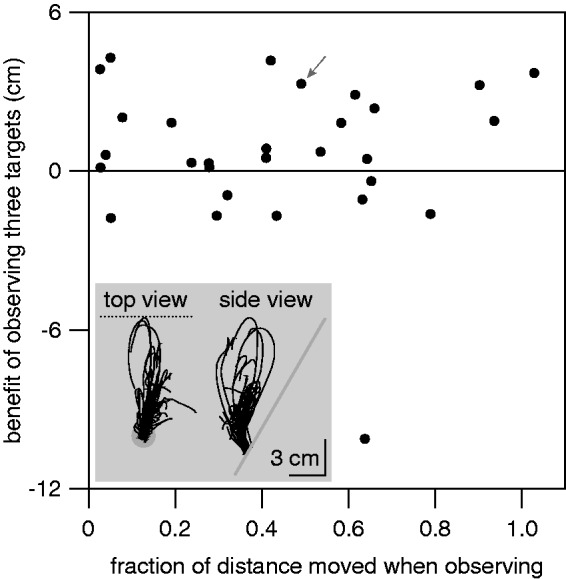
People are known to be very poor at visually judging acceleration. Yet, they are extremely proficient at intercepting balls that fall under gravitational acceleration. How is this possible? We previously found that people make systematic errors when trying to tap on targets that move with different constant accelerations or decelerations on interleaved trials. Here, we show that providing contextual information that indicates how the target will decelerate on the next trial does not reduce such errors. Such errors do rapidly diminish if the same deceleration is present on successive trials. After observing several targets move with a particular acceleration or deceleration without attempting to tap on them, participants tapped as if they had never experienced the acceleration or deceleration. Thus, people presumably deal with acceleration when catching or hitting a ball by compensating for the errors that they made on preceding attempts.
Keywords: Interception; acceleration; catching; learning; motion; motor control; vision.
Figures
References
-
- Benguigui N., Bennett S. J. (2010) Ocular pursuit and the estimation of time-to-contact with accelerating objects in prediction motion are controlled independently based on first-order estimates. Experimental Brain Research 202: 327–339. - PubMed
-
- Brenner E., Canal-Bruland R., van Beers R. J. (2013) How the required precision influences the way we intercept a moving object. Experimental Brain Research 230: 207–218. - PubMed
-
- Brenner E., de Lussanet M. H., Smeets J. B. J. (2002) Independent control of acceleration and direction of the hand when hitting moving targets. Spatial Vision 15: 129–140. - PubMed
-
- Brenner E., Smeets J. B. J. (2011) Continuous visual control of interception. Human Movement Science 30: 475–494. - PubMed
LinkOut - more resources
Full Text Sources
Other Literature Sources
Miscellaneous
