. 2016 Aug 1;72(Pt 4):439-59.
doi: 10.1107/S2052520616007447. Epub 2016 Aug 1.

Report on the sixth blind test of organic crystal structure prediction methods

Anthony M Reilly  1 Richard I Cooper  2 Claire S Adjiman  3 Saswata Bhattacharya  4 A Daniel Boese  5 Jan Gerit Brandenburg  6 Peter J Bygrave  7 Rita Bylsma  8 Josh E Campbell  7 Roberto Car  9 David H Case  7 Renu Chadha  10 Jason C Cole  1 Katherine Cosburn  11 Herma M Cuppen  8 Farren Curtis  11 Graeme M Day  7 Robert A DiStasio Jr  9 Alexander Dzyabchenko  12 Bouke P van Eijck  13 Dennis M Elking  14 Joost A van den Ende  8 Julio C Facelli  15 Marta B Ferraro  16 Laszlo Fusti-Molnar  14 Christina Anna Gatsiou  3 Thomas S Gee  7 René de Gelder  8 Luca M Ghiringhelli  4 Hitoshi Goto  17 Stefan Grimme  6 Rui Guo  18 Detlef W M Hofmann  19 Johannes Hoja  4 Rebecca K Hylton  18 Luca Iuzzolino  18 Wojciech Jankiewicz  20 Daniël T de Jong  8 John Kendrick  1 Niek J J de Klerk  8 Hsin Yu Ko  9 Liudmila N Kuleshova  21 Xiayue Li  2 Sanjaya Lohani  11 Frank J J Leusen  1 Albert M Lund  3 Jian Lv  4 Yanming Ma  4 Noa Marom  5 Artëm E Masunov  6 Patrick McCabe  1 David P McMahon  7 Hugo Meekes  8 Michael P Metz  10 Alston J Misquitta  11 Sharmarke Mohamed  22 Bartomeu Monserrat  23 Richard J Needs  23 Marcus A Neumann  12 Jonas Nyman  7 Shigeaki Obata  17 Harald Oberhofer  13 Artem R Oganov  14 Anita M Orendt  15 Gabriel I Pagola  16 Constantinos C Pantelides  3 Chris J Pickard  17 Rafal Podeszwa  20 Louise S Price  18 Sarah L Price  18 Angeles Pulido  7 Murray G Read  1 Karsten Reuter  13 Elia Schneider  18 Christoph Schober  13 Gregory P Shields  1 Pawanpreet Singh  10 Isaac J Sugden  3 Krzysztof Szalewicz  10 Christopher R Taylor  7 Alexandre Tkatchenko  4 Mark E Tuckerman  18 Francesca Vacarro  1 Manolis Vasileiadis  3 Alvaro Vazquez-Mayagoitia  2 Leslie Vogt  18 Yanchao Wang  4 Rona E Watson  18 Gilles A de Wijs  8 Jack Yang  7 Qiang Zhu  14 Colin R Groom  1
Affiliations

Report on the sixth blind test of organic crystal structure prediction methods

Anthony M Reilly et al. Acta Crystallogr B Struct Sci Cryst Eng Mater. .

Abstract

The sixth blind test of organic crystal structure prediction (CSP) methods has been held, with five target systems: a small nearly rigid molecule, a polymorphic former drug candidate, a chloride salt hydrate, a co-crystal and a bulky flexible molecule. This blind test has seen substantial growth in the number of participants, with the broad range of prediction methods giving a unique insight into the state of the art in the field. Significant progress has been seen in treating flexible molecules, usage of hierarchical approaches to ranking structures, the application of density-functional approximations, and the establishment of new workflows and `best practices' for performing CSP calculations. All of the targets, apart from a single potentially disordered Z' = 2 polymorph of the drug candidate, were predicted by at least one submission. Despite many remaining challenges, it is clear that CSP methods are becoming more applicable to a wider range of real systems, including salts, hydrates and larger flexible molecules. The results also highlight the potential for CSP calculations to complement and augment experimental studies of organic solid forms.

Keywords: Cambridge Structural Database; crystal structure prediction; lattice energies; polymorphism.


Figures
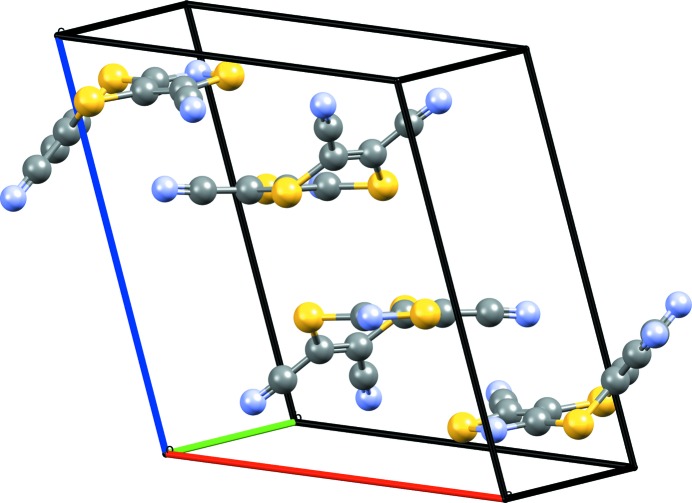
Figure 1
Figure 1
Experimental crystal structure of (XXII); C atoms are in grey, N in blue and S in yellow.
Figure 2
Figure 2
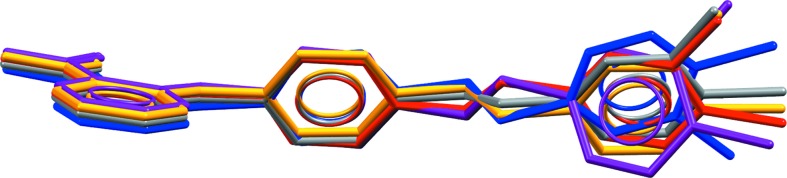
Molecular conformations found in forms AD of (XXIII), overlaid onto the fenemate group of the molecule; form A is in blue, form B in grey, form C molecule 1 is in red, form C molecule 2 in purple and form D in orange. H atoms are omitted for clarity.
Figure 3
Figure 3
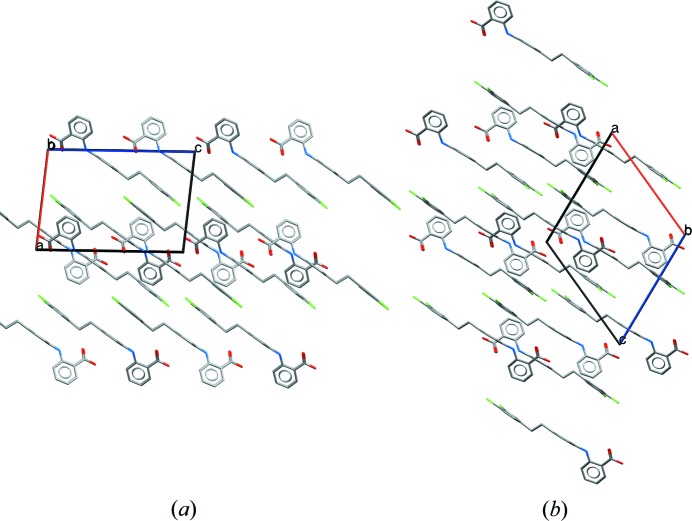
Crystal structures of (a) form A and (b) form D of (XXIII), showing the similar layers found in the two structures. H atoms are omitted for clarity.
Figure 4
Figure 4
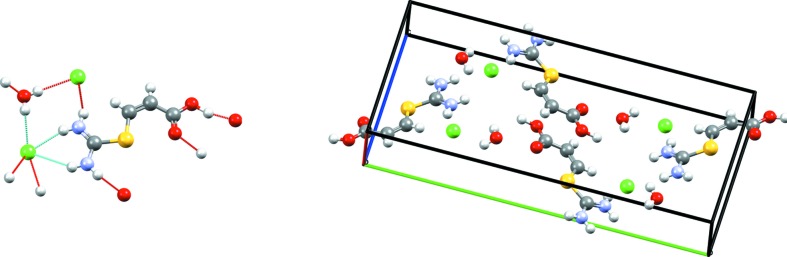
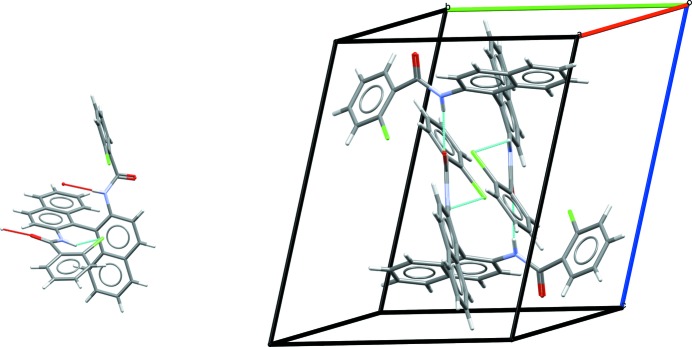
Experimental crystal structure of (XXIV) showing both the hydrogen bonds of the asymmetric unit and the unit cell; C atoms are in grey, H in white, O in red, N in blue, S in yellow and Cl in green.
Figure 5
Figure 5
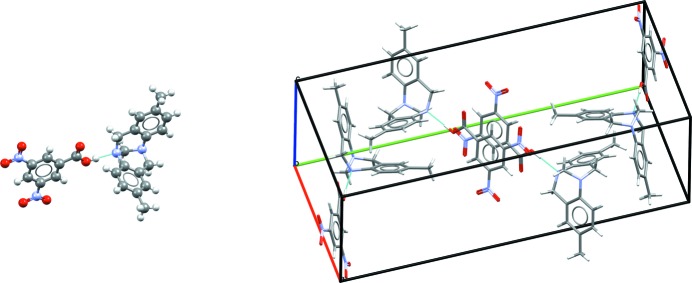
Experimental crystal structure of (XXV) at 300 K, showing the asymmetric unit and the unit cell; C atoms are in grey, H in white, O in red and N in blue. The proton is shown as originally refined at 300 K, attached to the carboxylic acid. Close analysis of the data and further data collected at 100 K suggest that a disordered structure with the H atom occupying two sites is more representative.
Figure 6
Figure 6
Experimental crystal structure of (XXVI), showing the molecular conformation and the unit cell, with hydrogen bonds shown by blue lines; C atoms are in grey, H in white, O in red, Cl in green and N in blue.
Figure 7
Figure 7
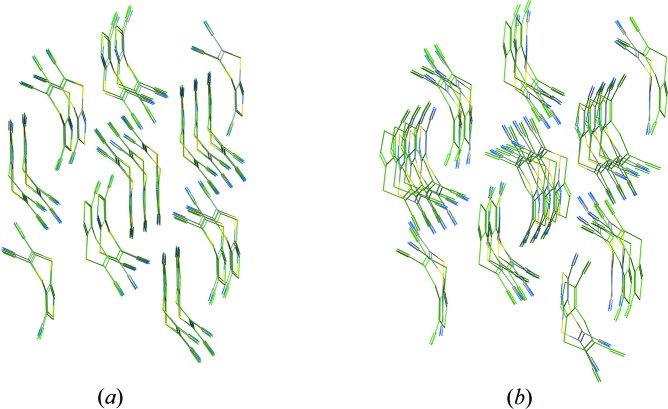
Two example overlays of the experimental crystal structure of (XXII) with predicted structures of (a) Tkatchenko et al. with an RMSD of 0.166 Å, and (b) Obata & Goto with an RMSD of 0.808 Å. The predicted structures are shown in green for clarity. With the smaller RMSD in (a) the two structures are difficult to distinguish visually, while for the larger RMSD in (b) the predicted and experimental molecules are clearly offset.

Comment in

  • Crystal structure prediction: are we there yet?
    Cruz-Cabeza AJ. Cruz-Cabeza AJ. Acta Crystallogr B Struct Sci Cryst Eng Mater. 2016 Aug 1;72(Pt 4):437-8. doi: 10.1107/S2052520616011367. Epub 2016 Aug 1. Acta Crystallogr B Struct Sci Cryst Eng Mater. 2016. PMID: 27484367

References

    1. Adamo, C. & Barone, V. (1999). J. Chem. Phys. 110, 6158–6170.
    1. Ambrosetti, A., Reilly, A. M., DiStasio, R. A. Jr & Tkatchenko, A. (2014). J. Chem. Phys. 140, 18A508. - PubMed
    1. Anwar, J. & Zahn, D. (2011). Angew. Chem. Int. Ed. 50, 1996–2013. - PubMed
    1. Augelli-Szafran, C. et al. (2002). WO Patent App. PCT/US2000/015,071.
    1. Axilrod, B. M. & Teller, E. (1943). J. Chem. Phys. 11, 299–300.