


Comfort experience in palliative care: a phenomenological study
- PMID: 27484497
- PMCID: PMC4971655
- DOI: 10.1186/s12904-016-0145-0
Comfort experience in palliative care: a phenomenological study
Abstract
Background: Palliative care aims to provide maximum comfort to the patient. However it is unknown what factors facilitate or hinder the experience of comfort, from the perspective of inpatients of palliative care units. This lack of knowledge hinders the development of comfort interventions adjusted to these patients. The aim of this research is to describe the comfort and discomfort experienced by inpatients at palliative care units.
Methods: A phenomenological descriptive study was undertaken. Ten inpatients were recruited from a Spanish palliative care unit and seven from a Portuguese palliative care unit. Data were collected using individual interviews and analysed following the method of Giorgi.
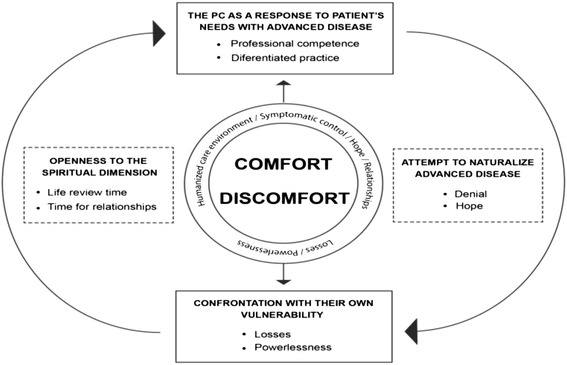
Results: Four themes reflect the essence of the lived experience: The Palliative Care as a response to the patient's needs with advanced disease, attempt to naturalize advanced disease, confrontation with their own vulnerability, openness to the spiritual dimension.
Conclusions: Informants revealed that they experience comfort through humanized care, differentiated environment, symptomatic control, hope and relationships. The discomfort emerges from the losses and powerlessness against their situation. Even if such findings may seem intuitive, documenting them is essential because it invites us to reflect on our convictions about what it means to be comfortable for these patients, and allows incorporating this information in the design of focused interventions to maximize the comfort experience.
Keywords: Comfort; End of life care; Inpatients; Palliative care; Phenomenology; Qualitative research.
Figures
References
-
- Worldwide Palliative Care Alliance . Global Atlas of Palliative Care at the End of Life. London: Worldwide Palliative Care Alliance; 2014.
-
- Tomás-Sábado J, Benito J. Variables relacionadas con la ansiedad ante la muerte. Rev Psicol Gen Apl. 2003;56(3):257–279.
Publication types
MeSH terms
LinkOut - more resources
Full Text Sources
Other Literature Sources
Medical
