


Health services research of integrative oncology in palliative care of patients with advanced pancreatic cancer
- PMID: 27485618
- PMCID: PMC4971628
- DOI: 10.1186/s12885-016-2594-5
Health services research of integrative oncology in palliative care of patients with advanced pancreatic cancer
Abstract
Background: Pancreatic cancer has a dire prognosis and is associated with a high mortality. Palliative patients have special needs and often seek help in integrative oncological concepts (IO) that combine conventional and complementary therapies. Nevertheless there are few recommendations regarding IO in current cancer guidelines. The aims of this study were to report on implementation of IO in everyday palliative care and to analyze patient survival in advanced pancreatic cancer.
Methods: This multicenter observational study investigates the implementation of IO and length of survival of patients suffering from advanced pancreatic cancer (stage IV). We analyzed patient's survival by employing multivariable proportional hazard models using different parametric distribution functions and compared patients receiving chemotherapy only, a combination of chemotherapy and Viscum album (VA) treatment, and VA treatment only.
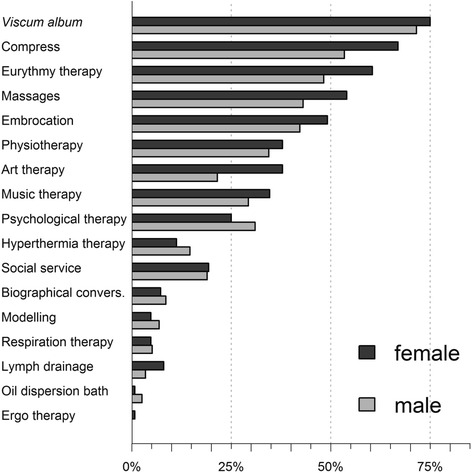
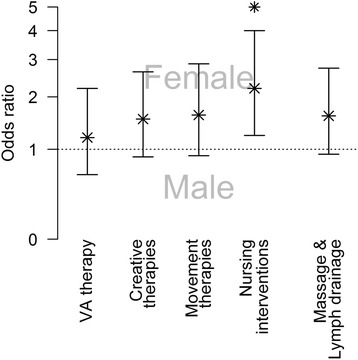
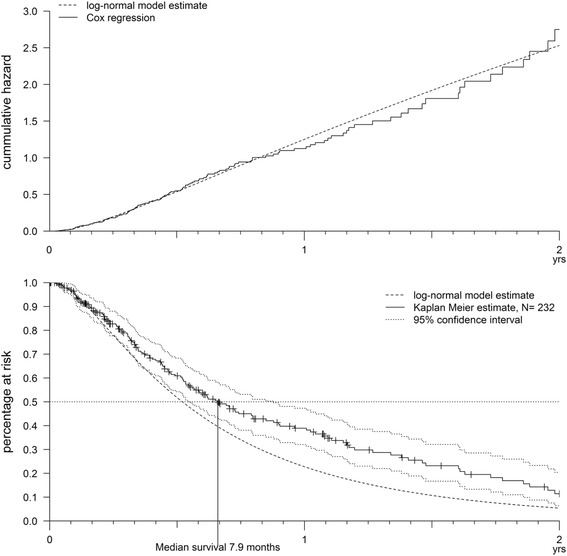
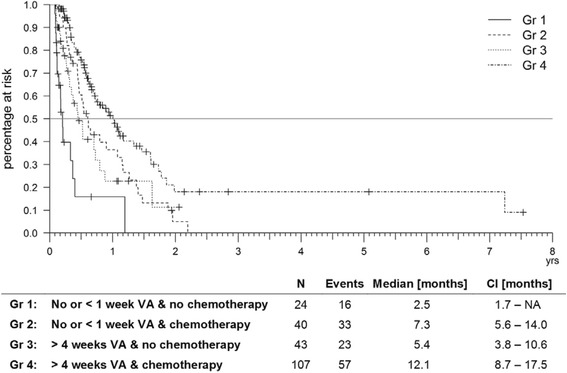
Results: Records of 240 patients were analyzed. Complementary therapy showed high acceptance (93 %). Most frequent therapy was VA treatment (74 %) that was often administered concomitantly to chemotherapy (64 %). Both therapies had positive effects on patient survival as they had significant negative effects on the hazard in our log-normal model. A second analysis showed that patients with combined chemotherapy and VA therapy performed significantly better than patients receiving only chemotherapy (12.1 to 7.3 month). Patients receiving only VA therapy showed longer survival than those receiving neither chemotherapy nor VA therapy (5.4 to 2.5 months). Our data demonstrates that IO can be implemented in the everyday care of patients without disregarding conventional treatment. Patients combining VA with chemotherapy showed longest survival.
Conclusions: Our data demonstrate the importance and potential of health services research showing that IO treatment can be successfully implemented in the every-day care of patients suffering from advanced pancreatic cancer. Patients combining VA with chemotherapy showed longest survival. To address patients' needs adequately, future cancer guidelines might increasingly include comments on complementary treatment options in addition to conventional therapies. Further studies should investigate the effect of complementary treatments on survival and quality of life in more detail.
Keywords: Integrative oncology; Mistletoe; Palliative care; Pancreatic carcinoma; Viscum album.
Figures
References
-
- Kaatsch P, Spix C, Hentschel S, Katalinic A, Luttmann S, Stegmaier C, et al. Krebs in Deutschland 2007/2008, in Robert Koch-Institut. 8th ed. Berlin:Robert Koch-Institut: 2012.
-
- Yip D, Karapetis C, Strickland A, Steer CB, Goldstein D. Chemotherapy and radiotherapy for inoperable advanced pancreatic cancer. Cochrane Database Syst Rev. 2006;19:CD002093. - PubMed
Publication types
MeSH terms
Substances
LinkOut - more resources
Full Text Sources
Other Literature Sources
Medical
