. 2016 Jul 19:7:129.
doi: 10.3389/fpsyt.2016.00129. eCollection 2016.

Cognitive Neuroscience and Causal Inference: Implications for Psychiatry

Affiliations

Cognitive Neuroscience and Causal Inference: Implications for Psychiatry

Nadine Dijkstra et al. Front Psychiatry. .

Abstract

In this paper, we investigate to what extent it is justified to draw conclusions about causal relations between brain states and mental states from cognitive neuroscience studies. We first explain the views of two prominent proponents of the interventionist account of causation: Woodward and Baumgartner. We then discuss the implications of their views in the context of traditional cognitive neuroscience studies in which the effect of changes in mental state on changes in brain states is investigated. After this, we turn to brain stimulation studies in which brain states are manipulated to investigate the effects on mental states. We argue that, depending on whether one sides with Woodward or Baumgartner, it is possible to draw causal conclusions from both types of studies (Woodward) or from brain stimulation studies only (Baumgartner). We show what happens to these conclusions if we adopt different views of the relation between mental states and brain states. Finally, we discuss the implications of our findings for psychiatry and the treatment of psychiatric disorders.

Keywords: causal exclusion problem; cognitive neuroscience; interventionism; mental causation; psychiatry.


Figures
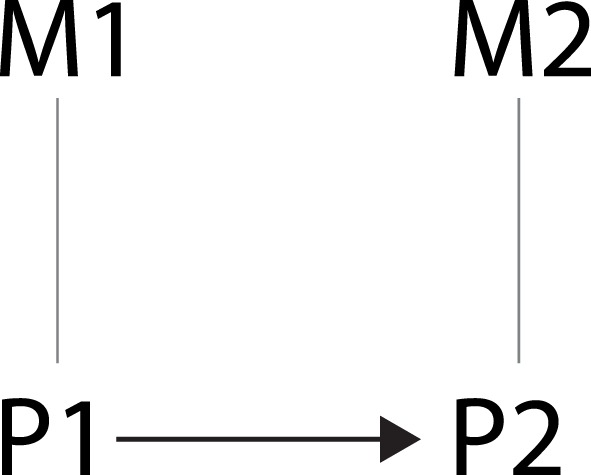
Figure 1
Figure 1
Schematic representation of the relation between brain states and mental states. Undirected edges indicate supervenience relations and the arrow indicates a causal relation.
Figure 2
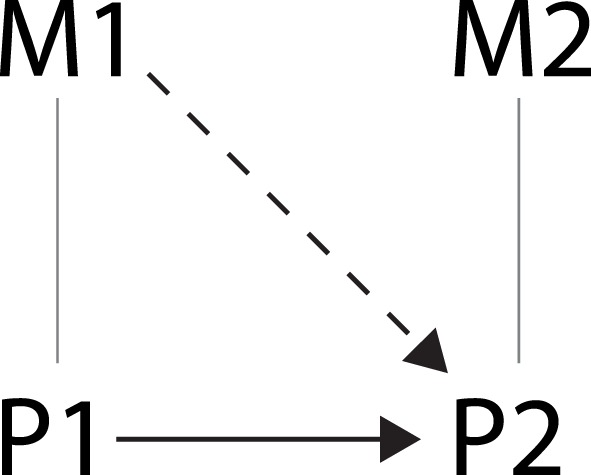
Figure 2
Schematic representation of the relation investigated in traditional cognitive neuroscience studies indicated by the dashed arrow.
Figure 3
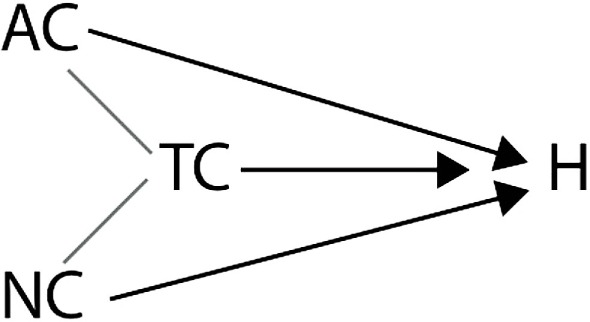
Figure 3
Schematic representation of the relation between AC, WC, TC, and H.
Figure 4
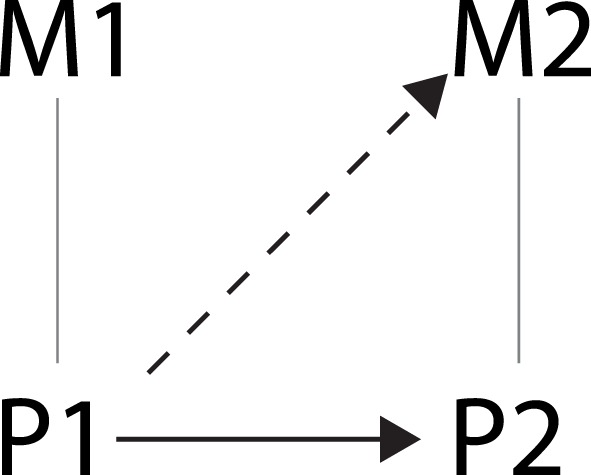
Figure 4
Schematic representation of the relation investigated in brain stimulation studies as indicated by the dashed arrow.
Figure 5
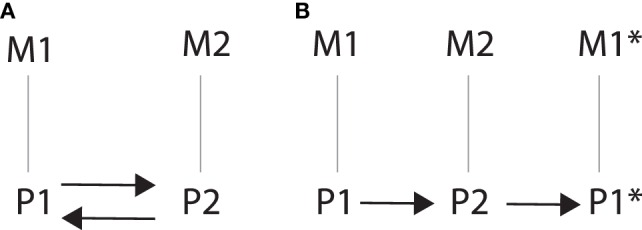
Figure 5
(A) Incorrect depiction of circular causation that fails to take into account the temporal relation between P1 and P2, and P2 and P1. (B) Correct depiction of circular causation that takes into account the spatial as well as the temporal relation between P1 and P2, and P2 and P1*, and illustrates the linear nature of circular causation.

References

    1. Sack AT. Transcranial magnetic stimulation, causal structure-function mapping and networks of functional relevance. Curr Opin Neurobiol (2006) 16(5):593–9. 10.1016/j.conb.2006.06.016 - DOI - PubMed
    1. Cleary DR, Ozpinar A, Raslan AM, Ko AL. Deep brain stimulation for psychiatric disorders: where we are now. Neurosurg Focus (2015) 38(6):E2. 10.3171/2015.3.focus1546 - DOI - PubMed
    1. Holtzheimer PE, Mayberg HS. Deep brain stimulation for psychiatric disorders. Annu Rev Neurosci (2011) 34:289–307. 10.1146/annurev-neuro-061010-113638 - DOI - PMC - PubMed
    1. Mayberg HS, Lozano AM, Voon V, McNeely HE, Seminowicz D, Hamani C, et al. Deep brain stimulation for treatment-resistant depression. Neuron (2005) 45(5):651–60. 10.1016/j.neuron.2005.02.014 - DOI - PubMed
    1. Woodward J. Making Things Happen: A Theory of Causal Explanation. (Vol. 14). Oxford: Oxford University Press; (2007).

LinkOut - more resources