


Smoking, physical inactivity and obesity as predictors of healthy and disease-free life expectancy between ages 50 and 75: a multicohort study
- PMID: 27488415
- PMCID: PMC6937009
- DOI: 10.1093/ije/dyw126
Smoking, physical inactivity and obesity as predictors of healthy and disease-free life expectancy between ages 50 and 75: a multicohort study
Abstract
Background: Smoking, physical inactivity and obesity are modifiable risk factors for morbidity and mortality. The aim of this study was to examine the extent to which the co-occurrence of these behaviour-related risk factors predict healthy life expectancy and chronic disease-free life expectancy in four European cohort studies.
Methods: Data were drawn from repeated waves of four cohort studies in England, Finland, France and Sweden. Smoking status, physical inactivity and obesity (body mass index ≥30 kg/m2) were examined separately and in combination. Health expectancy was estimated by using two health indicators: suboptimal self-rated health and having a chronic disease (cardiovascular disease, cancer, respiratory disease and diabetes). Multistate life table models were used to estimate sex-specific healthy life expectancy and chronic disease-free life expectancy from ages 50 to 75 years.
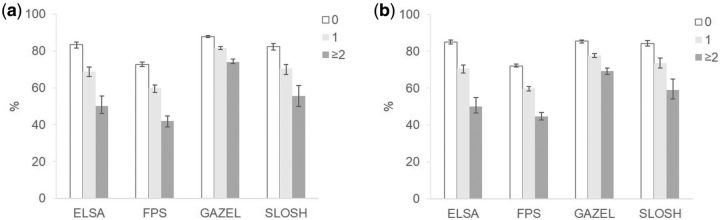
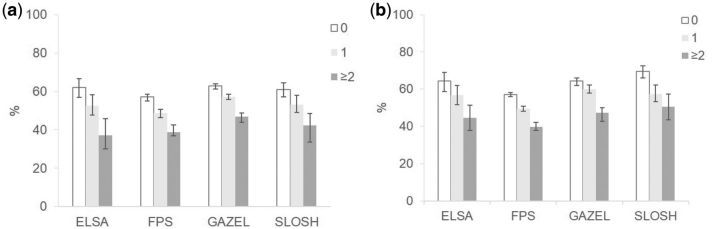
Results: Compared with men and women with at least two behaviour-related risk factors, those with no behaviour-related risk factors could expect to live on average8 years longer in good health and 6 years longer free of chronic diseases between ages 50 and 75. Having any single risk factor was also associated with reduction in healthy years. No consistent differences between cohorts were observed.
Conclusions: Data from four European countries show that persons with individual and co-occurring behaviour-related risk factors have shorter healthy life expectancy and shorter chronic disease-free life expectancy. Population level reductions in smoking, physical inactivity and obesity could increase life-years lived in good health.
Keywords: healthy life expectancy; obesity; physical inactivity; smoking, cohort study.
© The Author 2016. Published by Oxford University Press on behalf of the International Epidemiological Association.
Figures
References
-
- Kinsella K, He W. U.S. Census Bureau, International Population Reports, P95/09-1. An Aging World: 2008. Washington, DC: U.S. Government Printing Office, 2009.
-
- Knoops KT, de Groot LC, Kromhout D, et al. Mediterranean diet, lifestyle factors, and 10-year mortality in elderly European men and women: the HALE project. JAMA 2004;292:1433–39. - PubMed
Publication types
MeSH terms
Grants and funding
LinkOut - more resources
Full Text Sources
Other Literature Sources
Medical
