


Synthesis and Evaluation of New 1,3,4-Thiadiazole Derivatives as Antinociceptive Agents
- PMID: 27490523
- PMCID: PMC6273905
- DOI: 10.3390/molecules21081004
Synthesis and Evaluation of New 1,3,4-Thiadiazole Derivatives as Antinociceptive Agents
Abstract
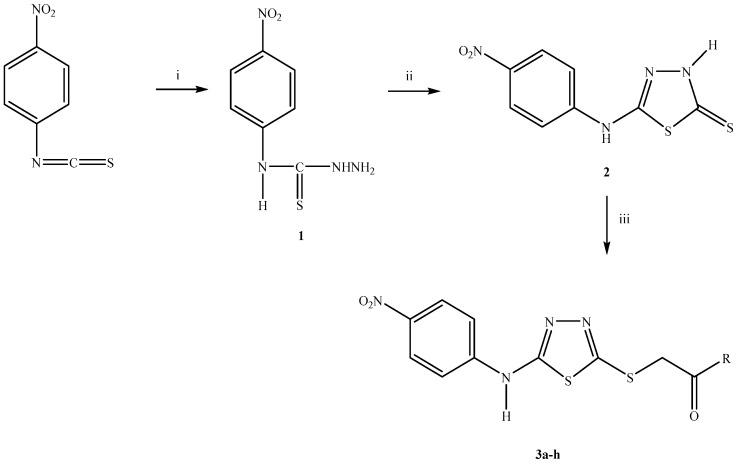
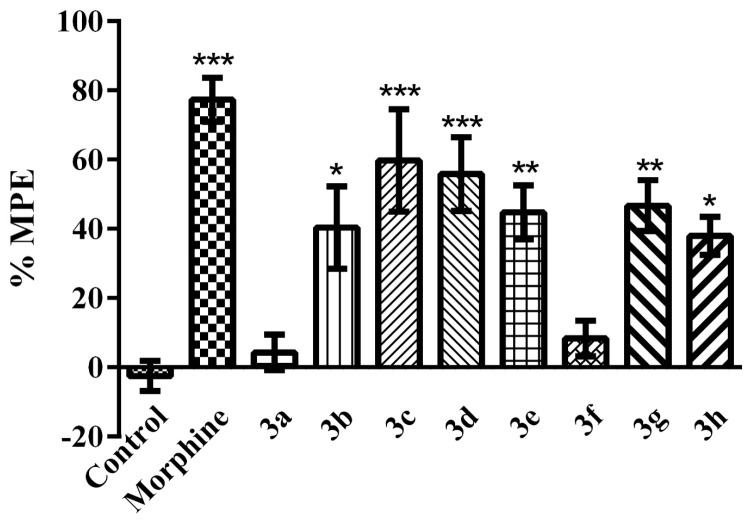
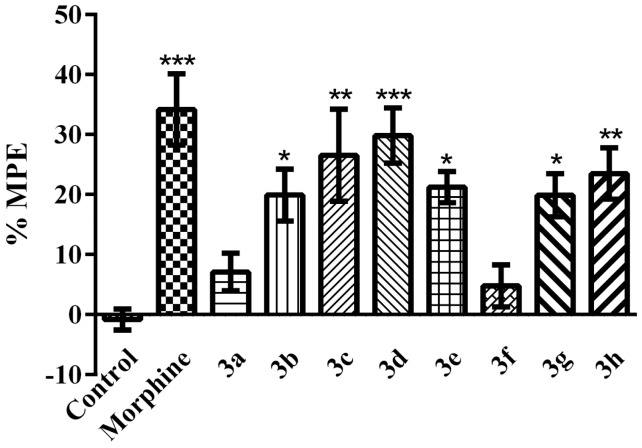
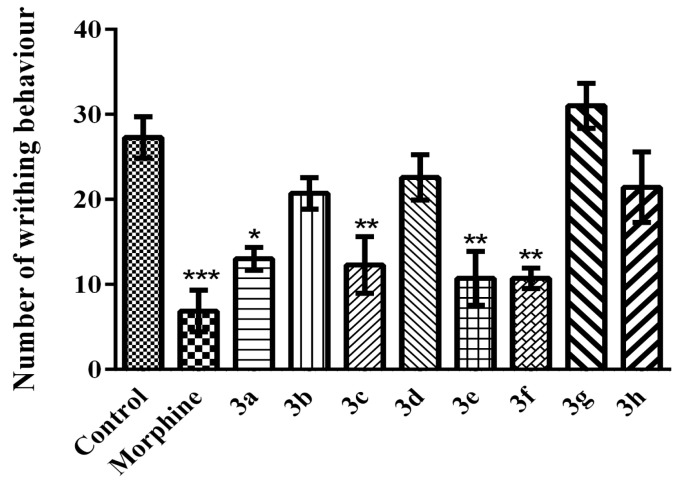
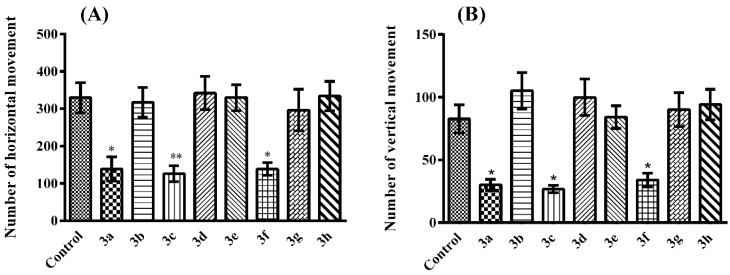
In the current work, new 1,3,4-thiadiazole derivatives were synthesized and investigated for their antinociceptive effects on nociceptive pathways of nervous system. The effects of these compounds against mechanical, thermal and chemical stimuli were evaluated by tail-clip, hot-plate and acetic acid-induced writhing tests, respectively. In addition, activity cage was performed to assess the locomotor activity of animals. The obtained data indicated that compounds 3b, 3c, 3d, 3e, 3g and 3h increased the reaction times of mice both in the hot-plate and tail-clip tests, indicating the centrally mediated antinociceptive activity of these compounds. Additionally, the number of writhing behavior was significantly decreased by the administration of compounds 3a, 3c, 3e and 3f, which pointed out the peripherally mediated antinociceptive activity induced by these four compounds. According to the activity cage tests, compounds 3a, 3c and 3f significantly decreased both horizontal and vertical locomotor activity of mice. Antinociceptive behavior of these three compounds may be non-specific and caused by possible sedative effect or motor impairments.
Keywords: activity cage; antinociceptive; hot-plate; tail-clip; thiadiazole; writhing.
Conflict of interest statement
The authors declare no conflict of interest.
Figures
References
-
- Moore N.D. In search of an ideal analgesic for common acute pain. Acute Pain. 2009;11:129–137. doi: 10.1016/j.acpain.2009.09.003. - DOI
-
- Buschmann H., Christoph T., Friderichs E., Maul C., Sundermann B. Analgesics: From Chemistry and Pharmacology to Clinical Application. Wiley-VCH; Weinheim, Germany: 2002. pp. 1–264.
MeSH terms
Substances
LinkOut - more resources
Full Text Sources
Other Literature Sources
Medical
