


Fibrous Dysplasia/McCune-Albright Syndrome: Clinical and Translational Perspectives
- PMID: 27492469
- PMCID: PMC5035212
- DOI: 10.1007/s11914-016-0317-0
Fibrous Dysplasia/McCune-Albright Syndrome: Clinical and Translational Perspectives
Abstract
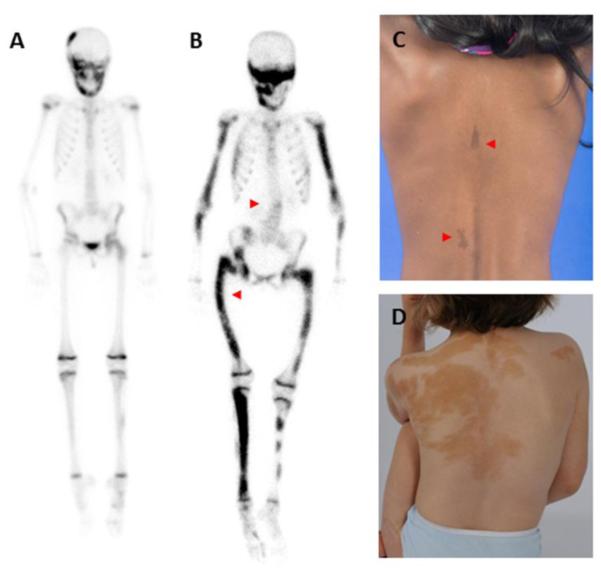
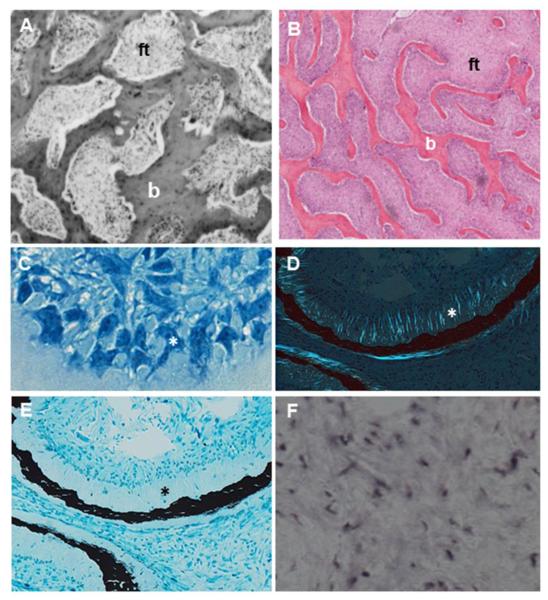
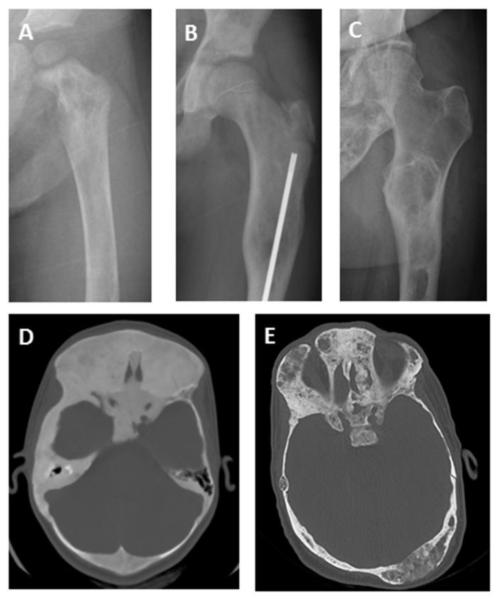
Fibrous dysplasia (FD) is an uncommon and debilitating skeletal disorder resulting in fractures, deformity, functional impairment, and pain. It arises from post-zygotic somatic activating mutations in GNAS, in the cAMP-regulating transcript α-subunit, Gsα. Constitutive Gs signaling results in activation of adenylyl cyclase and dysregulated cAMP production. In the skeleton, this leads to the development of FD lesions with abnormal bone matrix, trabeculae, and collagen, produced by undifferentiated mesenchymal cells. FD may occur in isolation or in combination with extraskeletal manifestations, including hyperfunctioning endocrinopathies and café-au-lait macules, termed McCune-Albright syndrome (MAS). This review summarizes current clinical and translational perspectives in FD/MAS, with an emphasis on FD pathogenesis, natural history, pre-clinical and clinical investigation, and future directions.
Keywords: FGF23; Fibrous dysplasia; GNAS gene; Gsα; McCune-Albright syndrome.
Figures
References
-
- Lichtenstein L. Polyostotic fibrous dysplasia. Arch Surg. 1938;36:874–898.
-
- Weinstein LS, et al. Activating mutations of the stimulatory G protein in the McCune-Albright syndrome. N Engl J Med. 1991;325(24):1688–95. - PubMed
-
- Bourne HR, Sanders DA, McCormick F. The GTPase superfamily: a conserved switch for diverse cell functions. Nature. 1990;348(6297):125–32. - PubMed
-
- Riminucci M, et al. Fibrous dysplasia as a stem cell disease. J Bone Miner Res. 2006;21(Suppl 2):125–31. - PubMed
Publication types
MeSH terms
Substances
Grants and funding
LinkOut - more resources
Full Text Sources
Other Literature Sources
Medical
